PHOENIX
Separated by only 100 miles, Phoenix and Tucson may seem to share little in common beyond triple-digit summer temperatures.
But if you think Phoenix is good for little more than swanky shopping and cheap summer resort rates, think again, say former Tucsonans who now live there.
With nearly 3 million more residents than Pima County's 1 million, Phoenix is a model of what can be done right — and wrong — in the face of rampant growth.
We surveyed former Tucsonans living in Phoenix, and a few Phoenicians who have ventured south to settle, to find out what Tucson can learn from the Valley of the Sun — even if the lessons come reluctantly.
Things Phoenix did well
Yes, freeways can work
People are also reading…
For decades, Tucson has stuck its nose up at the idea of a crosstown freeway.
The result: Roads are jam-packed.
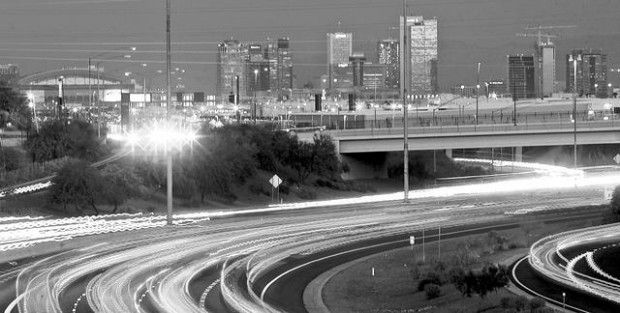
While building freeways in Tucson now would be expensive and painful, former Tucsonans say Phoenix's foresight led to a well-organized network of roads and highways that allows quick travel around the entire Valley.
Those who have lived in both places regularly cite Phoenix's transportation system as a major plus, though it's not immune to rush-hour gridlock.
"I'm an environmentalist and ardent supporter of growth management," says Brian Longenbaugh, a 36-year-old attorney and native Tucsonan who recently returned to the Old Pueblo after eight years in Phoenix.
"But planning for growth seems like it should have been a no-brainer to me. If we had planned even a rudimentary freeway system, the entire community would have been so much better off," he says.
And even though Maricopa County is larger and more dense, the U.S. Census Bureau says residents there spend just two more minutes commuting every day than drivers in Pima County.
Let business thrive
Phoenix has been blamed for handing giveaways to big business.
But as Tucson's Downtown struggles to find itself, Phoenix is on fire.
Sam Fox, who operates restaurants in both cities and lived in Tucson before relocating in 2002, says Phoenix has a more pro-business attitude that has allowed for dynamic ideas.
"When I moved up there, there was a lot more big business and it forced me to be a lot better at what I do," says Fox, 39. "I remember, when I opened up my second restaurant in Tucson, the theme I heard from people was: I was spreading myself too thin. Up here, it was: What a great place to go to with things."
Longenbaugh says he's found that Tucson listens well to neighborhood groups, whereas "The development and business communities dictate growth in Phoenix."
Noting the danger of that, he then added, "The good aspect of that is, things actually get done."
Cities work better than counties
In Maricopa County, only 6 percent of residents live in unincorporated areas. Compare that to a whopping 36 percent in Pima County.
Due to the state's method of divvying up money, that's a big disadvantage, because cities and towns get bigger rewards than counties. Last year alone, Tucson lost out on $11 million from the state because of population changes across Arizona.
And since county governments are nothing but an arm of the state, it's difficult for Pima County to pass new laws without permission from the Legislature, or to provide all the municipal services it needs to.
Incorporation may not be politically feasible in Pima County. But the bottom line is that the Tucson area loses out by not creating new cities or allowing Tucson to gulp up county land.
"We're becoming a big city but we have a political system that was designed more for a small rural cowtown," says Rep. Jonathan Paton, a native Tucsonan who spends half his time in Phoenix at the Capitol.
Learn to be hip
Without vibrant nightlife or destinations for young people in Tucson, forget about attracting good businesses and the brains that follow.
A report commissioned by the city of Tucson in 2004 found that companies with better-paying jobs and talented workers land in hipper cities.
And business leaders, like Fox, say recruiting top workers to Tucson is difficult, while many jump at the chance to take a position in Phoenix.
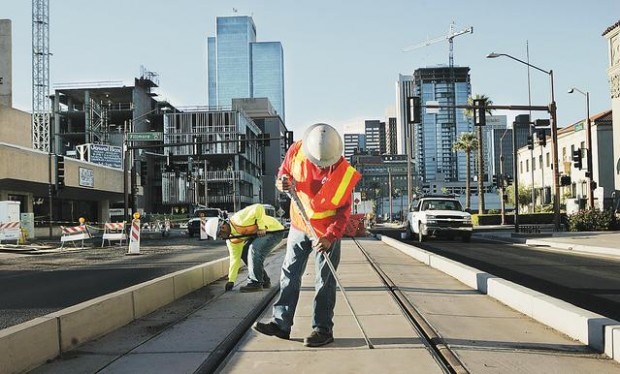
Phoenicians have a future-oriented attitude, they say, allowing them to make way for things like a 20-mile light-rail system and high-rise buildings galore.
In contrast, Tucson's "Old Pueblo" nickname says it all, some expatriates say.
Kyrsten Sinema grew up on Ina Road and lived in Tucson until she was 18. Today, she's a lawmaker representing downtown Phoenix, an area that's seen a restaurant and housing renaissance the past few years.
"There's this new mindset of the city as a place to be and live, not just to go to your high-rise job 9 to 5," says Sinema, 31.
"There is a core group of Phoenix business owners who are focused on taking Phoenix and making it much more modern, more sophisticated and a more hip city."
Tucson has designs on building a high-capacity streetcar line through the University of Arizona and into Downtown. But the plan relies on $75 million in federal money that has not yet been approved.
Create destinations
If you were bringing someone into Tucson for the first time, what route would you take into town?
Even before I-10 was torn into pieces, beautification was hit or miss. Heck, the I-19 interchange was completed three years ago, and the area is still surrounded by dirt and weeds.
Phoenix isn't without its sore spots, but former Tucsonans say our lack of streetlights, proper drainage and consistency in planning make Tucson an acquired taste for newbies and tourists.
Former Scottsdale resident Michael Dominguez, marketing director of the Loews Ventana Canyon Resort, says Tucson should take a hint from Scottsdale, Tempe and Phoenix.
Those cities have invested in shaping up their cores and creating anchors and walking districts. He's confident that despite some setbacks, the same thing will eventually happen with Rio Nuevo.
Pointing to North Fourth Avenue, Dominguez says, "Right now, it's great if you want a T-shirt and a tattoo, but if you want to make it a destination for tourists, you have to add to it."
Things Phoenix didn't do so well
Maintain, or create, an identity
Alexander Jacinto, an urban planner who grew up in Tucson, enjoys the freeway system he uses to drive every day from his downtown Phoenix apartment to his office in Tempe.
But Jacinto, a 27-year-old graduate of Canyon del Oro High School and Arizona State University, says Phoenix has lost something as it's grown at such a rapid rate.
"I think the most important lesson that Tucson should learn from Phoenix is not to grow too fast because it may lose its character and identity," he says. "Then, with no sense of community or place, it may begin to face many of the problems that major cities face today, such as Phoenix."
But in fast-growing Western cities like Phoenix and Tucson, with huge influxes of newcomers, what forms an identity may be different than in older cities back East.
"Our shared identity needs to be around our future and not our past," says geography professor Pat Gober, co-director of ASU's Decision Center for a Desert City.
Manage growth
With its booming population of 3.8 million people, the Phoenix metro area is spilling outside Maricopa County, notes Bert Sass, an anchor and reporter on KGUN Channel 9 back in the early 1980s.
"Phoenix has given lip service to the idea of infill, but it's not really happening," says Sass, 54, who now works as a special-projects producer at a Phoenix station. "The Phoenix area has sprawled clear into Pinal County. They're hop-scotching large plots of land."
Sass, who still visits Tucson frequently, says Tucson should do a better job of planning than Phoenix has. The key, as he sees it, is managing growth — not denying it.
"The theory was if you don't build it, they won't come," Sass says of Phoenix's own resistance to building freeways before the '80s. "Well, that didn't work. They came anyway. Trying to control the growth by not building the roads — that doesn't work."
Support homegrown restaurants and shops
Sprawl lends itself to blandness.
"Why is it exciting when a new strip mall opens with all the same stores you can find 3 miles away at an old strip mall?" asks Ace Thompson, a resident of Phoenix's East Valley and a former Tucsonan.
"People need to let their money do the talking and support local business owners to the greatest extent possible. I personally think Tucson is much better at this than the Phoenix area, and should focus on this as something to be proud of."
UA graduate Dave Cieslak, a 28-year-old public relations manager at Phoenix-based Moses Anshell, disputes the stereotype that Phoenix lacks places with character.
"But I have not yet found a place in Phoenix that rivals Mi Nidito and Micha's," he adds.
The desert isn't supposed to have grass
If Arizona's founding fathers found themselves plopped in the Phoenix of today, they might mistake it for just about anyplace else, with its grass, lakes and palm trees aplenty.
In Tucson, talk of using water for aesthetics causes controversy. But in downtown Tempe, city leaders spent $45 million back in 1999 pumping 900 million gallons of water into part of a riverbed to create a lake.
"People down here are more aware that we're in a desert," says Lauren Harmon, a 22-year-old University of Arizona political-science senior who grew up in Gilbert. "You're looked down on if you have a yard of grass."
Actually, both cities say they are taking steps towards using less water, but Tucson still uses about 22 gallons less a day per single-family home.
Prevent the "brown cloud" while you still can
A car culture may be inevitable in Arizona, but Tucson can take steps to prevent the Catalina Mountains from fading into a big cloud of dust.
In 2005, the American Lung Association gave Maricopa County its lowest grade for air quality in both ozone and particulates. That led Phoenix to launch a campaign called "Bring back blue" — referring to the skies.
On any given day, an ugly "brown cloud" hovers over metro Phoenix because of car exhaust, construction dust, power plants, gas-powered lawn mowers and the like.
"They've paid for their successes," says Sam Polito, a 73-year-old native Tucsonan who has spent 30 years dividing his time between Tucson and Phoenix, where he owns a condo and lobbies the Legislature.
"It all comes back to, Tucson has a soul, and we look at things like quality of life."