

The Arizona Eastern Railroad has a long tradition of serving Arizona’s mining and agricultural community.
It was incorporated in 1904 by the Southern Pacific in response to the arrival of Frank Murphy’s Phoenix & Eastern Railroad at Florence Junction.
But its inception dates back to 1885 when one of its earliest components, a rail line from Maricopa to Phoenix, was instituted.
During the 1880s, transportation was the greatest concern among the 3,000 residents of Phoenix, the future capital of Arizona.
Mule transportation proved inefficient due to the quicksand encountered along the Gila River. There was also the foresight of sustaining and developing of mining, cattle and farming interests in the Salt River Valley and southeastern Arizona.
Among attempts to resolve these matters were the efforts of N.K. Masten and associates, who organized the Maricopa and Phoenix Railroad Co. — engineered by H.R. Patrick — in 1886, whose line connected Phoenix with the Southern Pacific Railroad Co. at Maricopa.
People are also reading…
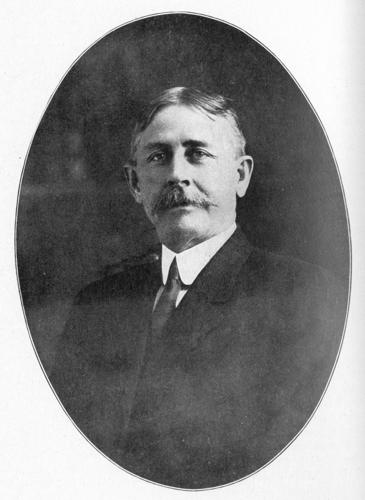
Epes Randolph, president of the Arizona Eastern Railroad and Southern Pacific line in Mexico, a major force in the expansion of the Arizona Eastern and other railroads in Arizona, hired surveyors to study the potential of building a low-grade rail line across Southern Arizona. Plans included building a water-grade railroad along the Gila River across Southern Arizona, beginning at Yuma and entering New Mexico in the proximity of Duncan, a span of more than 400 miles.
The reasoning behind the route was based on its projected railroad grade not exceeding one-half percent. This benefit would effectively cut company costs, as larger grades required helper steam locomotives to help locomotives climb steep gradients.
Litigation from irrigation proponents and the construction of the Coolidge Dam in 1928 prevented the reality of the proposed transcontinental line.
Competition between the Arizona Eastern Railroad and the Phoenix and Eastern Railroad over the same 18-mile area from Kelvin to Dudleyville along the Gila River in the early 1900s led to protracted litigation.
By 1907, the Southern Pacific Co. bought out the capital stock of the Phoenix and Eastern, and through 1910, Epes Randolph served as the company’s president.
The Arizona Eastern was consolidated in 1910, along with five other railroads known as the “Randolph Lines.” Those included the Gila Valley, Globe and Northern Railroad Co., Maricopa & Phoenix Railroad Co., Arizona Eastern Railroad Co. of New Mexico, Arizona and Colorado Railroad Co. of New Mexico and the Arizona & Colorado Railroad Co., to form the Arizona Eastern Railroad Co., which remained a separately operated affiliate of the Southern Pacific Co. until 1924, when it became part of that company’s “Pacific Lines.”
Mines served by the Arizona Eastern Railroad Co. included those around Globe, Miami, Ray and Superior.
Reports in 1910 confirmed haulage by Mikado engines of 3,000 to 10,000 tons of ore shipped by 90-pound rail from the Ray Mine to Hayden for smelting. The Ray Consolidated Copper Co. delivered its ore to the Arizona Eastern by using the Ray & Gila Valley Railroad at Ray Junction. The Magma Arizona Railroad also transported concentrates from Superior to the Arizona Eastern Railroad juncture at Magma.
By 1920, the Arizona Eastern Railroad Co. owned and operated 290 miles of track in Arizona, along with 91 miles of track formerly owned by the Phoenix and Eastern Railroad.
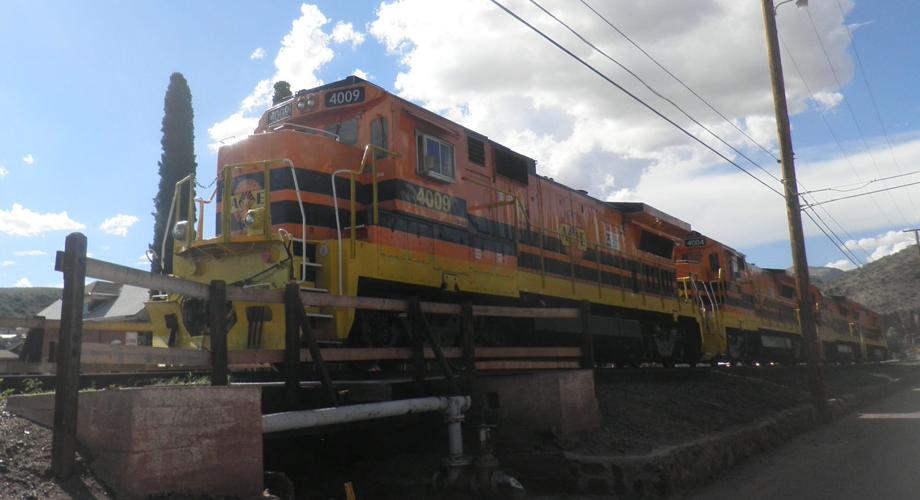
Today, the Arizona Eastern Railway Co. continues to serve Arizona’s mining industry, transporting copper concentrates, anodes, cathodes, rods and sulfuric acid, along with agricultural products. Freeport McMoRan’s smelter at Miami and mines at Safford and Morenci rely on these railroad services.
In 2011, the Arizona Eastern Railway Co. was acquired by Genessee & Wyoming Inc.
Its current lines run 133 miles between Bowie and Miami and also 70 miles between Clifton and Lordsburg, New Mexico. Both lines are connected by 52 miles of trackage rights owned by the Union Pacific Railroad.


