Developer Douglas Jemal wants to save the historic Great Northern grain elevator, and is urging Archer Daniels Midland not to proceed with an emergency demolition granted by the city Thursday.
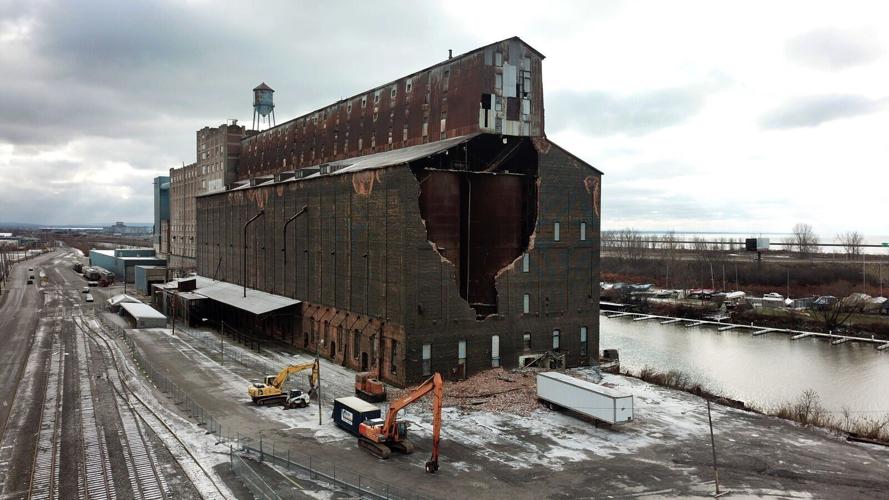
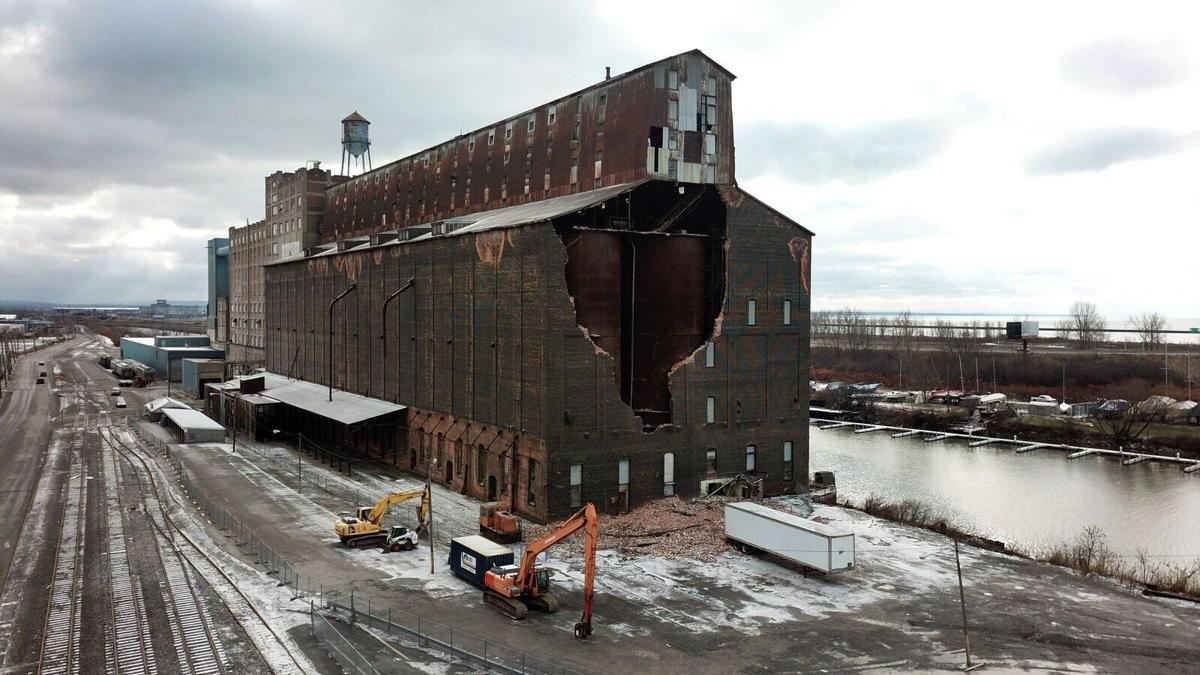
Jemal spoke as two excavators – one with a long boom – and a Bobcat were moved onto the site over the weekend, possibly in preparation for demolition.

The demolition order comes as Bakery, Confectionery, Tobacco Workers and Grain Millers Local 36G said it wanted to explore the feasibility of reusing the structure as a union hall, credit union office and public museum.
"I looked at that building very closely, and that building absolutely could be saved," Jemal told The Buffalo News. "It's a magnificent building. I have tackled a hundred times worse than that.
"If ADM wants to sell the building, I will buy the building and preserve and stabilize that building. ADM has a ready, willing and able buyer."
Jemal's interest comes as the Campaign for Greater Buffalo History, Architecture & Culture obtained a temporary restraining order from a State Supreme Court justice Sunday to halt demolition of the 1897 brick box-style grain elevator with steel bins, believed to be the last of its kind standing in the United States.
People are also reading…

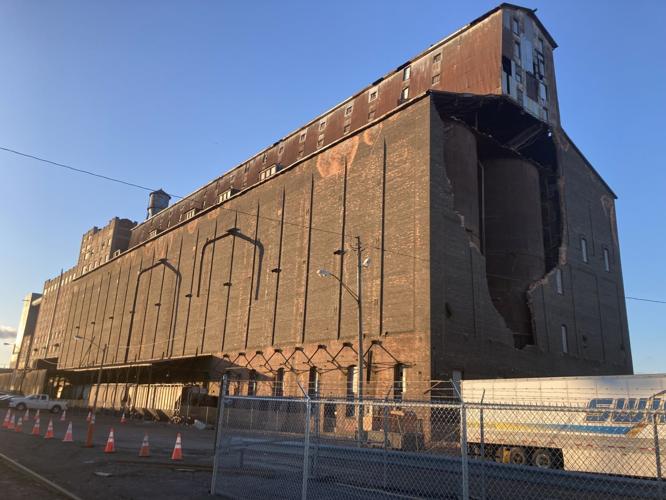
Archer Daniels Midland, in a statement, said the large hole in the flat brick northern wall, exposing large steel bins, posed a safety hazard, including to workers in its flour mill next door.
The restraining order by Justice Dennis J. Ward bars demolition or alteration of the building until Wednesday, when the parties are scheduled to appear again.
"It will take a powerful effort," said Tim Tielman, the Campaign for Greater Buffalo's executive director. "Our adversary, ADM, has a lot of resources and they have the City of Buffalo arguing with them by their side."
Jemal said he is having his own structural engineer look at the structure, and will join the Campaign for Greater Buffalo in court in an effort to convince the judge that the Great Northern can be saved and reused.
Mayor Byron Brown's spokesman, Mike DeGeorge, said the administration had "no comment" regarding Sunday's developments.
A message seeking comment from ADM, based in Chicago, was not returned.
A statement earlier in the week from the company warned of "significant safety concerns on-site and at adjacent properties and roadways" after last weekend's massive wind storm knocked a hole in the elevator's north wall.
The Brown administration could have forced ADM to repair the grain elevator after the wall was extensively damaged by high winds Dec. 11. Instead, James Comerford, commissioner of Permit and Inspection Services, ordered an emergency demolition based on public safety concerns raised by engineers and drone footage.
Brown then appealed to ADM to consider preserving all or part of the Great Northern, despite the company's past requests to demolish the site as recently as last year.
The historic Great Northern grain elevator suffered damage from the Dec. 11 windstorm. Archer Daniels Midland wants to demolish the structure, but developer Douglas Jemal wants to redevelop it.
Jemal said he was reluctant to come forward at first because he didn't want to ruffle any feathers, but he is now because he feels deeply protective of Buffalo's history.
"These silos are Buffalo's monuments. Those are our monuments," Jemal said.
"I'm sick and tired of people taking advantage of Buffalo and taking the magnificent architecture the city has and destroying it," he added. "Not on my .... watch."
Jemal said he needs time to make a careful assessment of the unused Great Northern's condition, and said cordoning off the site should be sufficient to protect the public.
"No one is in imminent danger over there," Jemal said, referring also to the flour mill next door. "It's on an island. No one's in there and it's not falling down on the flour mill.
"Old buildings don't fall, they stay. They're very strong. That building was built right."

The City of Buffalo landmark was built in 1897 and operated for nearly a century. Saturday's windstorm tore a hole in the northern wall, but the grain elevator is not in danger of collapse.
Rep. Brian Higgins, who has urged ADM to save the building using possible historic tax credits, welcomed Jemal's offer.
"If Doug Jemal wants to buy and save the Great Northern, that's a big, compelling statement of viability," Higgins said. "His offer requires serious consideration and collective effort."
Lorraine Pierro, president of the Industrial Heritage Committee, was encouraged by Jemal's expression of interest. The organization raised the funds to bring the National Park Service to Buffalo in 1991 to document all of the city's grain elevators.
"That's wonderful, because we don't have another grain elevator of that type in Buffalo," Pierro said. "It was an important step in the development of grain elevators that originated here in Buffalo in 1842."
Jemal is working on or has completed several large-scale projects in Buffalo, including the redevelopment of the Statler Building, the downtown Simon properties and modernizing the recently purchased Buffalo Hyatt Regency. He is also negotiating to develop the Richardson Olmsted Campus.
Jemal said some possibilities for reusing the Great Northern could be apartments – which he noted is being done at Silo City – manufacturing or, possibly, a tech hub.
"You can do anything with it," Jemal said. "You have to restore it, respect it and bring it back to its adaptive reuse life. It will have historic significance and be so damn cool. Who wouldn't want to be there?"
Jemal said he's rebuilt numerous historic structures in Washington, D.C., and elsewhere after being told they were unsafe and needed to come down.
"Guess what? I restored them and made a fortune," he said.
Jemal said he also would welcome the Bakery, Confectionery, Tobacco Workers and Grain Millers Local 36G, which said before the mayor's announcement Friday that it wanted to explore the feasibility of reusing the structure as a union hall, credit union office and public museum.
"Their hearts are in the right place and I will partner with them. Absolutely," Jemal said.
The union's interest triggered support from the National Trust for Historic Preservation, which urged the City of Buffalo and ADM to allow independent structural engineers, with expertise in historic buildings, to make an evaluation to develop a plan for preservation before rushing to raze the Great Northern.
"This is the City of Buffalo's and Archer Daniels Midland's obligation to the people of Buffalo," the statement said.
Mark Sommer covers preservation, development, the waterfront, culture and more. He's also a former arts editor at The News.