

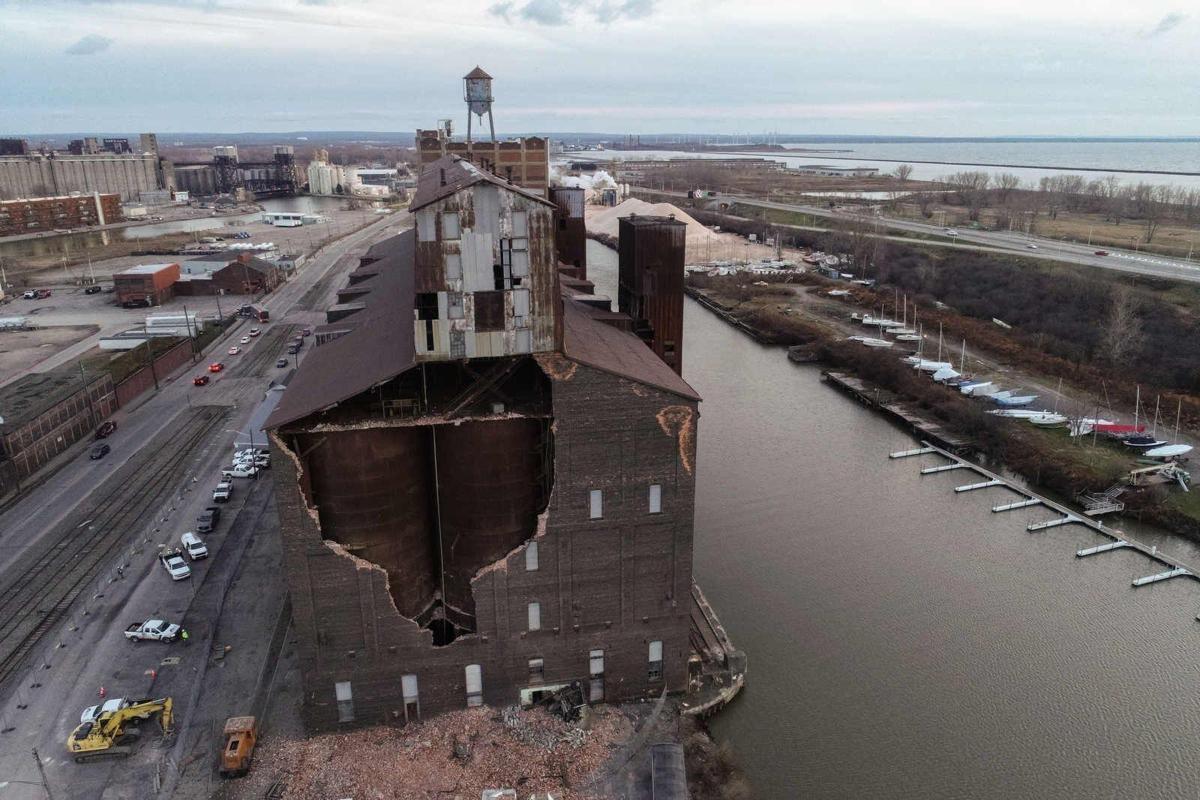
State Supreme Court Justice Emilio Colaiacovo on Thursday scheduled a fact-finding hearing for Monday as a prelude to rendering a decision about the fate of the wind-damaged Great Northern grain elevator in Buffalo.
Colaiacovo said his decision on the historic grain elevator will hinge on the legal interpretation of whether Jim Comerford, the city's commissioner of permit and inspection services, acted rationally in issuing an emergency demolition order following the Dec. 11 windstorm that blew a large hole in the north wall.
"This hearing will be limited to the issue of how the city reached its decision and, specifically, whether the commissioner had a rational basis for issuing the order for the demolition," Colaiacovo wrote.
What other witnesses or experts have to say will not be taken into consideration, he said.
People are also reading…
The Campaign for Greater Buffalo History, Architecture & Culture's requested the emergency demolition order be set aside.
"A more-developed record, outside what has been already submitted, is needed before the court can rule on the relief that is requested," Colaiacovo said.
The temporary restraining order granted to the preservation organization will be in effect until Monday's hearing, Colaiacovo said.
The 1897 Great Northern grain elevator is the last brick-box structure of its kind left in North America. Preservationists have rallied behind it, and developers Douglas Jemal and Rocco Termini, as well as structural engineers and contractors who also submitted materials to the judge, insist the structural integrity of the unused grain elevator is intact and it can be saved.
Jemal has offered to buy and restore the local landmark if Archer Daniels Midland, the building's owner, were to sell. The company maintains the building is not salvageable and for the fourth time during its ownership is seeking a demolition.
At a court hearing earlier this week, ADM attorney Brian Melber said debris falling from the structure poses an immediate safety risk to passersby, motorists, boaters on the City Ship Canal and customers at the Wonder Coffeehouse across the street. That risk, Melber said, trumped aesthetic and historic concerns.
Mark Sommer covers preservation, development, the waterfront, culture and more. He's also a former arts editor at The News.


