

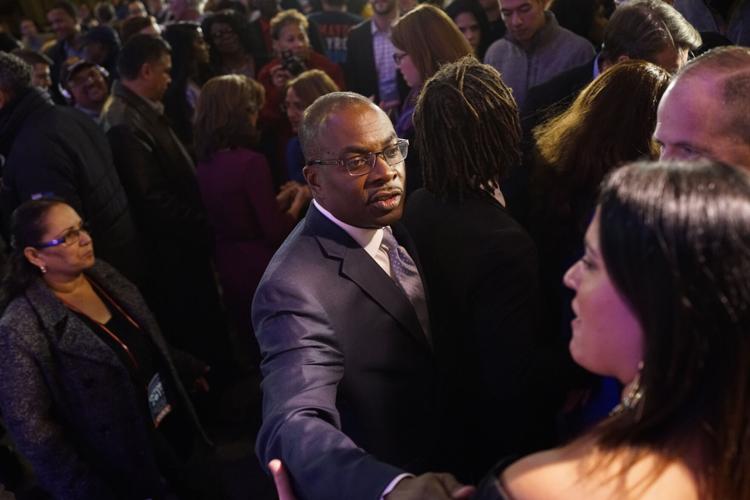
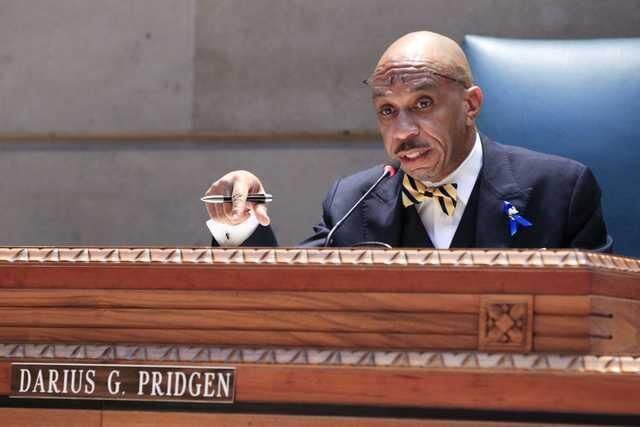
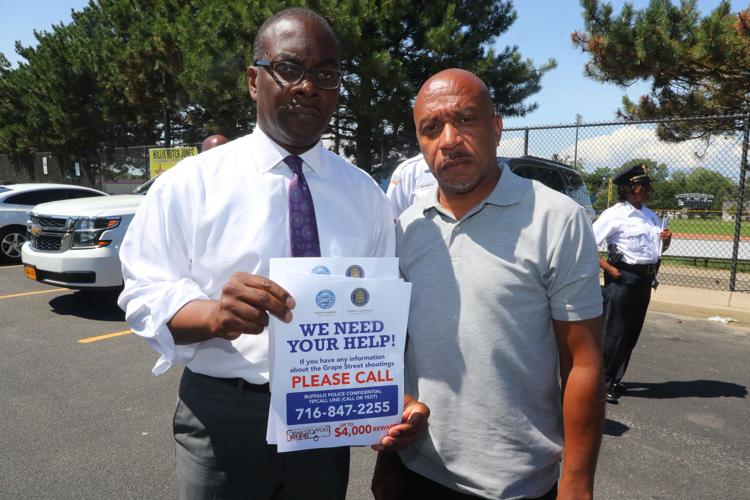
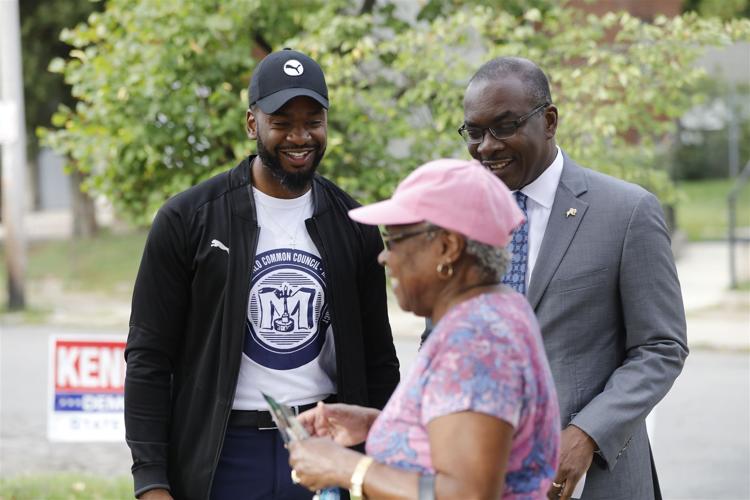
The Buffalo Common Council and Mayor Byron W. Brown haven’t seen eye to eye on the city’s School Zone Safety Program.
Council members also have been very vocal about their concerns over the mayor's handling of city finances.
And there’s even been tension within the Council over at least one member's perceived allegiance to the administration.
The friction in the last year and a half contrasts with the historically placid relationship Brown has had with the legislative branch during much of his 15 years as mayor.
“Maybe they’ve been unusually harmonious for a while, and maybe this is sort of more normal government. Even with some of the members who have been serving for a while, they’re more prepared to make more of a stand,” said Sam Magavern, senior policy fellow at Partnership for the Public Good.
People are also reading…
Past Councils had not done much legislating, or even taking strong stands on budgetary issues. Instead, they focused more on constituent services in their own districts, such as permitting and zoning issues, land use issues or serving as ombudsmen for their constituents.
But, Magavern said, this Council has been "getting more comfortable with the idea of themselves as legislators and as citywide policy voices."
"I think that’s healthy, regardless of whether they’re right or wrong about an individual issue or whether the mayor’s right about something," he said, adding that when multiple points of views are expressed, it forces everyone to be on their game and justify their positions.
He also said that citizens have had a lot to do with the Council's new assertiveness, as members are hearing from constituents and organizations such as PPG about citywide issues such as policing, budgets and the school zone speed camera program.
The frictions are not necessarily new, but they are being brought to light more often with the “twin pandemics of coronavirus and police brutality,” which “have laid a lot of things bare,” said J. Miles Gresham, a PPG policy fellow and member of Free the People WNY and the Minority Bar Association of WNY’s task force on criminal justice.
For their part, the mayor and Council members downplayed any friction.
Brown called his relationships with the Council "productive and successful" while saying, "we engage in vigorous debates at times."
"As two separate and independently elected branches of government, we're supposed to offer creative approaches and solutions to our problems and then work toward responsible and sensible compromise positions," he said in an interview.
Council members took a similar tack, with Majority Leader David A. Rivera saying "that's just part of government."
“Several things have occurred that none of us expected, especially the pandemic and the financial hit that the city has taken, and that is going to naturally raise some tensions,” said Council President Darius G. Pridgen.
Perhaps the most visible flash point has been the administration's controversial School Zone Safety Program, which imposes 15 mph speed limits around certain schools at arrival and dismissal times and uses cameras to fine violators.
Residents and some Council members called Brown's original plan for all-day enforcement a money grab, which the administration denied. Confusion about the initiative also led to blowback about early problems with the program.
But the administration accused lawmakers of spreading "incorrect or misinformation," such as about the hours that the speed cameras are on before school starts, leading motorists, for example, to call City Hall complaining that, "I got a ticket when school was closed."
But the program also had kinks that had nothing to do with the Council. For instance, the city dismissed some fines because citations were mailed out late.
Such issues have been resolved, the administration says, but they were enough to prompt Council members to take the unprecedented step of formally asking Brown at one point to pause the program. Brown initially refused, then essentially changed his mind when the administration announced Jan. 29 that no citations would be issued during the month of February.
The Council was even prepared to override Brown’s veto of its ordinance reducing the hours of speed camera enforcement. Brown said he has vetoed only one or two bills during his more than 15 years in office, and an override of this one would have been a first.
An 11th hour compromise limiting the hours of camera activation averted that showdown.
Less visible, but just as contentious, has been the push by some Council members for a formal policy – proposed by the city comptroller – to replenish Buffalo's reserves by requiring the city to maintain 60 days worth of operating expenses, essentially doubling what is currently maintained in the “rainy day” fund.
The idea got set aside when the pandemic hit, but Council members still want such a policy. The Brown administration? Not so much.
The effort comes as the city has repeatedly drawn down reserves to fill budget gaps while freezing or cutting property taxes, drawing a skeptical eye from credit rating agencies, two of which have lowered the city's rating or outlook in recent months.
But the wonky argument also, no doubt, reflects an administration resentment over what could be seen as a Council incursion on its ability to manage.
In pushing back, Brown frames it in terms of hampering the city’s ability to maintain jobs and services.
"Right now, we need to spend to help people who are hurting in our community, not constrain our ability to be nimble and flexible to help people in need in the city," Brown said. "No one in Washington or Albany is talking about a savings package right now. They're talking about a stimulus package, the idea that we spend money to recover. Implementing proven fiscal and economic policy, that's what we have to do."
But Council members contend that the appropriate time to establish such a policy is now, and several seem ready to act, despite the mayor's opposition.
“This is something that we talked about with the auditors when we discussed our financials, and they thought it was a great idea to have a policy in place, especially for our investors,” said University Council Member Rasheed N.C. Wyatt, Finance Committee chairman. He added that, with cities expected to get help in the Biden administration's Covid-19 relief package, "whatever we get, we need to be able to manage it a little bit better than we did in the past, so we need to have this in place.”
“We need to put this back on the table,” Rivera agreed, adding that pandemic aid could be a one-time revenue. “We have to look at the out years. We have to change how we do business in the City of Buffalo, or, after this stimulus is gone, we’re going to find ourselves in the same hole.”
Fillmore's Mitch Nowakowski agreed, as did Lovejoy's Bryan Bollman, who noted that auditors said, “This is important to have in place.”
The tension has become evident within the Council, as well. When freshmen members Bollman and Nowakowski ran in 2019, both categorized the Council's relationship with the mayor as "too cozy." And both were endorsed by the Unity Coalition, a rival to the Grassroots political club with strong ties to Brown.
But even among Council members who have been viewed as Brown allies, there has been friction. In a surprisingly terse exchange during a Jan. 19 caucus, Wyatt accused Masten representative Ulysees Wingo of acting on behalf of the administration as Wingo tried to spur action on the administration's request to fund the Beverly Gray Business Exchange Center.
After a back-and-forth in which he repeatedly cut Wingo off while making the point that the center wasn't even open, Wyatt said he had gotten only part of the information he needed from the Brown administration.
“I just asked you a question since you’re acting on their behalf," Wyatt said of his decision to keep the matter in committee. "No. 1, it’s not open right now. No. 2, I don’t have the information that I needed.
"They gave me some information, but all information is not good information, as you know."


