If you want to see how Latino immigration has altered tradition and culture, visit a Mexican bakery today.
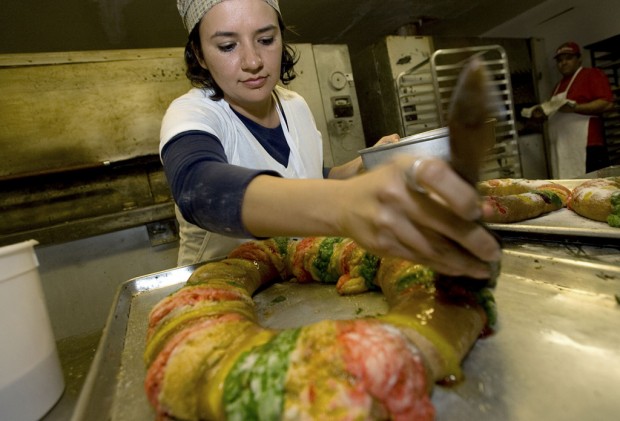
There you'll see a round bread, in the shape of a wreath, decorated with colors and fruit. The bread called a rosca de reyes, is the centerpiece of el Día de los Reyes, or Day of the Three Kings. The holiday, celebrated by many Latinos around the world on Jan. 6, also is the traditional day for children to receive gifts.
The sweet bread was unknown in the Portillo home while I was growing up in Tucson. Our family celebrated our Mexican-American roots and culture in many ways, but Christmas was reserved for gifts and tamales.
Times are a changing, however. These days, more Latinos in Tucson and around the country celebrate Day of the Epiphany with a rosca.
"It's because of immigration," said Erica Franco, whose family owns La Estrella Bakery at South 12th Avenue and West Nebraska Street.
People are also reading…
The rosca is another in the long list of foods introduced by Latino immigrants.
Estrella Bakery expects to make more than 600 roscas, most of which will be sold today.
When Antonio and Martha Franco opened their bakery in 1986, they sold a couple dozen of the crown-shaped breads.
Martha Franco said college instructors and their students, who were studying Spanish language and widening their appreciation of Latino culture, began to buy them. Also, there has been increasing immigration of Mexicans from that country's central and southern states, enriching Tucson's Sonoran legacy. And second- and third-generation Latinos are returning to their cultural roots by slicing into the roscas.
Like Sonoran hot dogs, Mexican teriyaki bowls and Korean kimchi tacos, food and culture are continually changing as immigration transforms our common landscape. Franco said non-Latino families also are increasingly buying the bread, an indication that this tradition, too, is entering the wider American culture.
Franco and her family are immigrants from the Mexican state of Jalisco. Antonio Franco brought the recipe with him. Today he and his two brothers, Juan and José Franco, who also work at the bakery, share the secret family recipe.
They each make the bread differently.
"They say I make the best rosca," said Antonio.
The tradition of the rosca says it must contain a small figure of the infant Jesus. In some countries a ring is buried in the bread.
The rosca is also known as King Cake in other countries and is associated with the Mardi Gras celebration in Louisiana and the Gulf Coast region.
When the bread is divided among family and friends, whoever gets the figurine is expected to host a party on Feb. 2, which is the day Mary and Joseph presented their son in the Jerusalem temple 40 days after his birth.
Erica Franco said in recent years, some families, hurt by the economic recession, have ordered their roscas with more than one baby Jesus figurine. That way they spread the cost of paying for the party.
That is just another sign of how fluid traditions can become as families alter customs to adjust to changes and demands.
I'll embrace the change, too. Today I'll enjoy a rosca de reyes with my fiancé, family and friends.
It's time to start a new tradition.
Ernesto "Neto" Portillo Jr. can be reached at (520) 573-4187 or at netopjr@azstarnet.com