Yelda Akbari's phone rang at 4 a.m. Monday. It was her mother calling from Afghanistan.
"The Taliban took over Kabul," her mother said in a panic.
The news shocked Akbari to her core. She had been following the news of the Taliban's rapid advancement through her home country but had never thought the capital, where she grew up and where her family still lives, would fall back into Taliban hands.
"I thought somebody threw boiling water over me from to top to bottom," she said.
Akbari, 32, came to the United States in 2009 with her now ex-husband and their two children. She lives in Amherst and works at Jericho Road Community Health Center in their front office and as a Farsi interpreter.
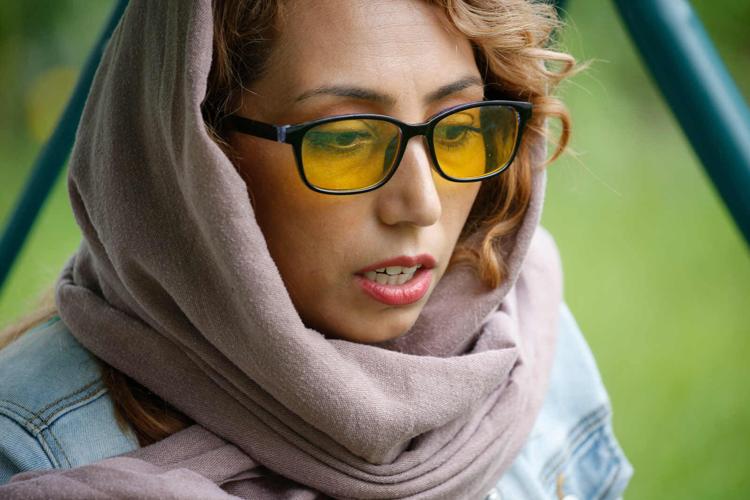
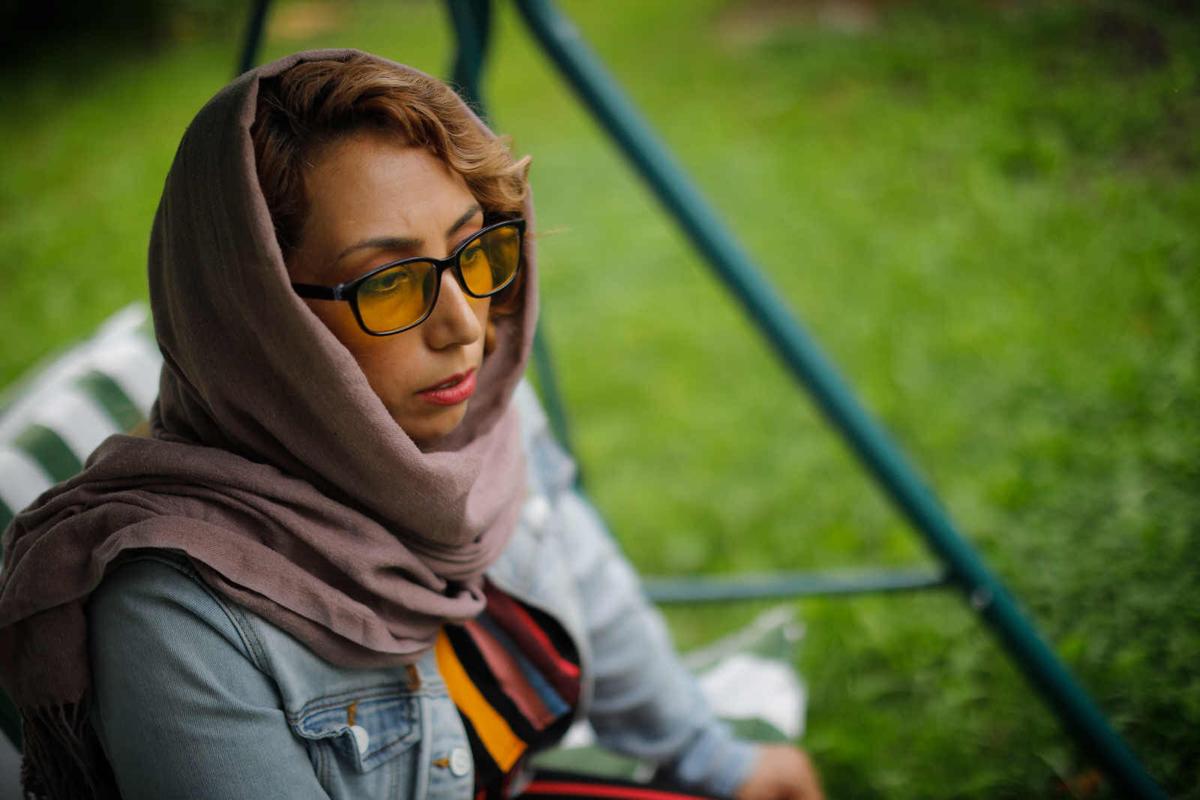
Yelda Akbari came to the United States from Afghanistan in 2009 after a lifetime experiencing war and has settled with her family in Amherst, NY. She shares her stark reaction to the Taliban takeover of Afghanistan following the United States' withdrawal after 20 years of war.
She is one of roughly 200 Afghans now living in the Buffalo area who are now scared for their loved ones who remain in Afghanistan.
People are also reading…
It's too early to know whether any now trying to flee Afghanistan may end up in Buffalo, but local agencies that work with refugees say they are monitoring the situation closely.
"All of us at the International Institute are heartbroken and deeply concerned by the scenes emerging from Afghanistan," said Eva Hassett, executive director of the International Institute, in a statement. "Our thoughts are with those who are still in the country seeking to escape the Taliban and with the Afghani community here in Western New York, who are grieving this continued instability and fearful for their family members abroad.... This situation highlights the moral imperative of expanded refugee resettlement in the United States. We bear a responsibility to protect the safety of the people of Afghanistan, especially their women and girls, who now face a return to the oppressive Taliban rule."

Weekly pop-ups will run until Khoshmazeh Afghan Cuisine open its own space and act as an introduction to a cuisine unfamiliar to most Buffalonians.
Mohamad Rahimi and Mohammad Alemyar are also among them. They run Khoshmazeh Afghan Cuisine, a pop-up restaurant at the Broadway Market, where they serve delicacies from their home country. Both served for several years as interpreters for U.S. forces – Rahimi with the Marines and Alemyar with the Army – which qualified them for Special Immigrant Visas to come to the U.S., the same visas that Afghans who worked with the U.S. are now desperately trying to obtain to get out of Afghanistan.
Rahimi is hoping that one of his brothers, who has such a visa, manages to leave.
He shared what his brother's ordeal earlier looked like this week.
The brother, a doctor and a member of the Afghan military, was able to get to the airport as Taliban fighters poured into Kabul.

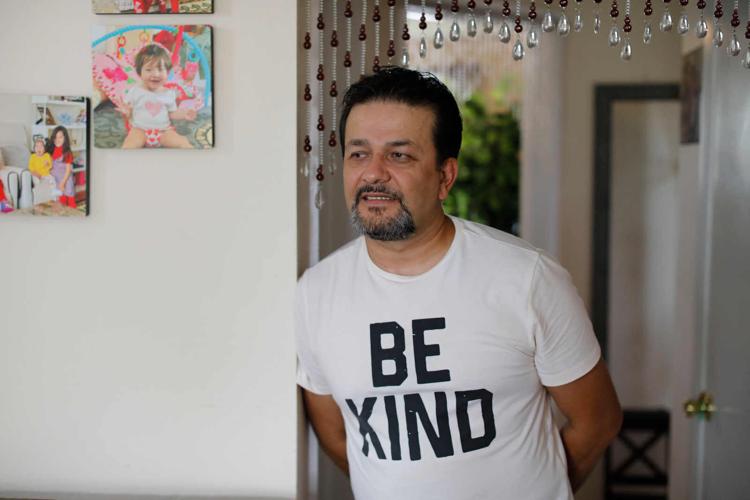
Mohamad Rahimi came to the United States from Afghanistan in 2017 after his work as a translator for the U.S. Marine Corps put his life in danger. He has photographs of his three daughters on the wall of his Cheektowaga apartment.
"I'm in the airport," his brother told him, Rahimi said. But soon the brother reported that it seemed all the Afghan security disappeared and the airport was soon overrun.
The brother managed to board his plane, but soon realized there was no pilot. More people kept trying to get inside the plane. The brother eventually gave up. He was in a taxi on his way home when it was stopped by a mob. Someone began punching him to try to get his cellphone, but the brother said he was able to hang on to it. The brother showed him his bruises during a video chat.
Now, Rahimi, 44, said, his brother is keeping quiet about his location. "He is somewhere but he doesn't want to say it to me," Rahimi said.
Rahimi teared up as he talked about what his daughters could have faced had his family stayed. The Taliban were notorious for their treatment of girls and women, banning them from schools and work.
The father believes he did the right thing for the sake of his daughters but feels anguish over the fate of the family he left behind. He fears it's just a matter of time before the Taliban show their true selves.
The Afghan expats are appalled by the Afghan President Ashraf Ghani fleeing their country and angry at the pervasive corruption. They have little faith in the Taliban's assurances that things will be different this time.
Some reports of violence already have been confirmed. While the U.S. military has regained control of the airport, Taliban fighters have formed checkpoints nearby and opened fire and harassed people trying to get in, the Washington Post reported. The Taliban also opened fire on a crowd of protesters in Jalalabad.
Alemyar, 34, said he heard from a friend who is in Afghanistan that the Taliban came looking for him on Monday.
"He never worked with the United States or did anything," Alemyar said. "But they arrested him." His friend said he was questioned and that the Taliban questioned many people who know him before releasing him.
He said people back home are scared and hungry, but don't know what to do. They feel they can't leave their homes. But they're running out of food, he said.

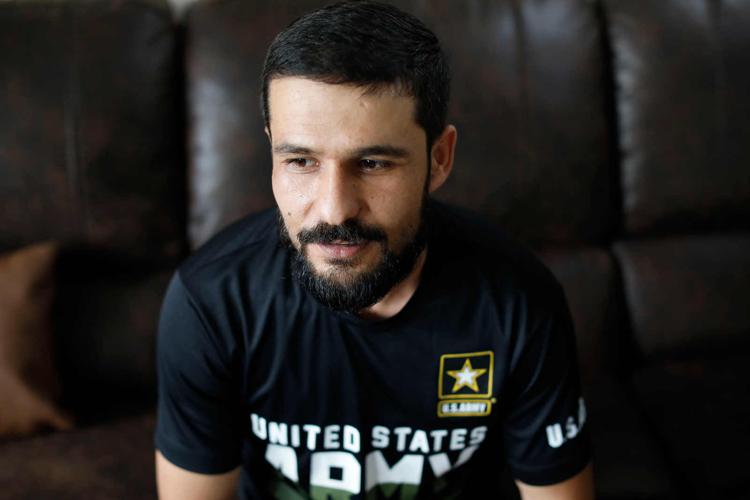
Mohammad Alemyar came to the United States from Afghanistan in 2017 with his young family after his work as a translator put their lives in danger.
The Afghan expats all remember what life was like when the Taliban took control of Afghanistan.
Akbari's family fled to Iran. "We had a lot of young girls in my family," she said. "My dad took all of us illegally to Iran."
The Taliban arrested Alemyar's father, a prominent doctor, for no reason, he said, and held him for 40 days. His family had no idea what had happened to him. He was eventually released.
Rahimi remembers seeing amputated hands dangling from overhead, reminders from the Taliban of what happens to suspected thieves and the cries of a neighbor's daughter as a Taliban commander took her away from her family to be his second wife.
They all feel helpless about the future for their loved ones.
Right now, they've assured their families that they will continue sending money to support them.
"I cannot do anything for you, but I can at least send some money," Rahimi said he has told his family.

Yelda Akbari came to the United States in 2009 from Afghanistan but many in her family remain there. She says she is worried for their future and wants to find a way to help them.
Akbari is trying to contact immigration officials to try to help her mother and other family members. They have already started the process to get the Special Immigrant Visas, but don't know how long it will take for their applications to be accepted.
"I've been trying to make an appointment to talk to a lawyer," she said. "I've tried many things. It doesn't work."
Alemyar is scared for his loved ones. He believes his best weapon is to tell the world about what's happening to the people of Afghanistan.
"Fighting against terrorism doesn't mean you have to have a gun or use your hand to fight," he said. "We fight through social media."
As for the Taliban's claims of having changed, Alemyar said the world should be wary.
"This is my view: It's the calmness before the storm."