

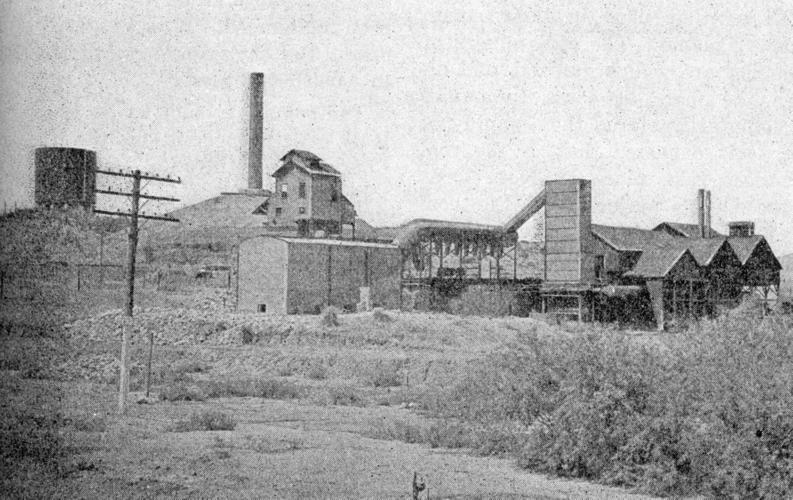
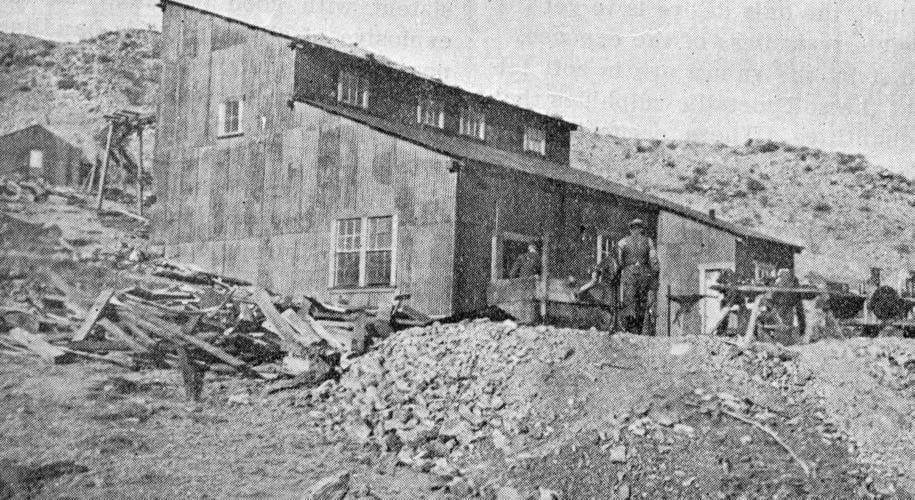
Benson served as a supply center to the mines in the Johnson, Patagonia, Helvetia and Yellowstone mining districts in February in the late 19th and early 20th centuries.
Founded after the arrival of the Southern Pacific Railroad in 1880, the town of Benson supplanted the early stagecoach stop Ohnesorgen located by William Ohnesorgen near a bridge along the San Pedro River.
The town was established in 1880 with modest structures, including the two-story Benson Hotel, several stores and saloons. It was named after William B. Benson, a California judge who was involved in mining operations in Arizona, California, Idaho and Mexico.
Benson served as a major transportation hub with three major railroads in 1894: the New Mexico & Arizona, which ran from Benson on the Southern Pacific extending to Guaymas, Mexico (acquired by the Southern Pacific Railroad in 1896-97); El Paso and Southwestern; and the Arizona & South Eastern Railroad. Local railroads were established to service mining districts and lumberyards.
People are also reading…
Although Benson was not itself a mining town, a small smelter operated there between 1882 and 1885, and thereafter intermittently through 1914. It treated silver ore carrying a high lead content from various mining localities, including several thousand tons of ore from the Flux Mine in the Patagonia Mountains.
Ore was even shipped to the Benson smelter, then operated by Salisbury & Co., from distant locales, including the Schuylkill Mine at Chloride in Mohave County. Mining operations in Tombstone and the subsequent milling operations along the San Pedro River, including Charleston, sent their silver ore to the Benson smelter for treatment.
John C. Furst served as the foreman for the furnaces of the Benson Smelting Co., though his tenure was short on account of getting poisoned by exposure to high lead concentrations. He left for San Francisco in 1884.
Located on the southeast side of Benson’s Tank Hill, the smelter treated silver and gold, averaging an annual value of $723,122 during the early years of operation. Later, the smelter was shipped to Mexico.
Attempts by the Arizona Smelting & Power Co. to initiate the 250-ton copper blast furnace at Benson in 1918 did not succeed.
A strike of rich gold ore in the Little Rincon Mountains in Cochise County, 14 miles northwest of Benson and in close shipping proximity to the Southern Pacific Railroad, produced up to $3,000 to the ton in gold in 1912. Massoletti Mines Co. of Boston successfully installed a five-stamp mill of 1,000-pound stamps for gold ore running $200 to the ton. The stamps, mortar and 34-foot-long by 33-foot-wide framework were constructed by the Llewellyn Iron Works of Los Angeles with electricity provided by a Westinghouse 75-kilowatt, direct-current generator. Some of Arizona’s richest fluorspar deposits occur 15 miles southwest of Benson at the Lone Star Mine in the Whetstone Mountains, which is believed to have been Arizona’s most productive fluorspar mine, containing coarse-grained, banded, greenish fluorspar deposits exceeding 85 percent CaF2.
Classified as a strategic nonmetallic industrial mineral, fluorspar, the commercial name for the mineral fluorite (CaF2), is a source of fluorine that’s used in the manufacture of hydrofluoric acid in the chemical industry. It is also used as a flux in the manufacture of steel.
Archivist, historian and author William Ascarza’s forthcoming book is “In Search of Fortunes: A Look at the History of Arizona Mining.” For more information, contact M.T. Publishing Co. at (812) 468-8022. http://mtpublishing.com/index.php/soon/arizona-mining-history-group.html#.VUzkSFCsi-0

 Historic bank vault now new Tucson speakeasy


