An international human-rights group is calling for the release of a Phoenix man after he was bound, beaten and "unlawfully" arrested in Equatorial Guinea this month, allegedly in retaliation for speaking out about the inhumane treatment of U.S. deportees imprisoned at a decommissioned hotel in the central African nation.
Ahmed Soliman, 31, and another U.S. deportee, Samson Birhane, are being held in an overcrowded police cell "in inhumane conditions," without access to their attorneys, Amnesty International said Friday.
The two men were beaten, and their heads covered with black bags, during the violent arrest on Sept. 11, the human-rights group said in a statement issued Friday, echoing accounts from lawyers and witnesses to the arrest.
The two men were accused of "breaking a mirror," which Soliman's attorneys called a pretext for silencing Soliman.
People are also reading…
"Police officers covered the two men’s heads with a bag and beat them in their heads, backs and ribs," the rights group said. "Amnesty International believes that police officers targeted them in reprisal for reporting the authorities’ violent threats to coerce them to agree to return to their countries of origin. ... The authorities must immediately release them, inform them of any charges against them and allow them unimpeded access to counsel."
As they beat the men, police officers kept "asking where they hid the phones," Amnesty International said.
"They pushed one of the men down the stairs of the hotel and said to others that they may never see Ahmed Soliman and Samson Birhane again," the statement said.
The Arizona Daily Star began reporting on Soliman's case in July and continued to follow the Phoenix man's arbitrary detention at Hotel Bamy in Equatorial Guinea, where dozens of deportees have been imprisoned since the U.S. deported them there without due process, lawyers say.

In this screenshot from a Sept. 5 video shared with the Arizona Daily Star, Ahmed Soliman, who grew up in Phoenix, is seen on his knees, in a white shirt as a kneeling police officer aims a firearm at him and another deportee. Soliman, 30, said police were demanding his phone, after he was caught recording them, but Soliman's phone had already been seized at this point, he said. Soliman was "unlawfully arrested" on Sept. 11, less than a week after sharing the video with journalists, his lawyers say.
Reuters and the New York Times have since reported on Soliman's efforts to publicize the treatment U.S. deportees were experiencing there, despite the risks to his personal safety.
Equatorial Guinea authorities sought to confiscate the phones of everyone held at the hotel on Sept. 9, to prevent them from communication with lawyers and journalists, attorneys told the Star.
Soliman was arrested two days later, in what his lawyers say is retaliation for his speaking out about the inhumane treatment and sharing a video with the news media of police holding him at gunpoint Sept. 5.
At the hotel, deportees from the U.S. say they live with daily threats and violence, as well as inadequate food, lack of hygiene items, broken water faucets and a lack of medical care.
In June, international rights groups filed a lawsuit before the African Commission on Human and Peoples' Rights that demands Equatorial Guinea improve detention conditions at the hotel and provide assurances the people held there won't be returned to their home countries, where they face torture or persecution.
Soliman has told the Star he's well aware of the risks of speaking out while imprisoned with other U.S. deportees at Hotel Bamy. But he said he already felt completely vulnerable and that his life was at risk every day.
"I'm at a point in life right now where I will do everything in my power to fight," he told the Star in July. "I'm doing this for the 17 people that live here, as well. It’s not just me."
U.S. Immigration and Customs Enforcement has continued to deport people to Equatorial Guinea, despite its "appalling human rights record," Amnesty International said. There are now nearly 30 people detained at the hotel.
Last month, the Star reported on several deportees' accounts of being dragged from their rooms, handcuffed and held at gunpoint the night of July 31, as armed men, who appeared intoxicated, threatened to shoot them if they didn't agree to return to their home countries.

Equatorial Guinea officials have not explained the basis for imprisoning U.S. deportees, none of whom have been charged with a crime in the country.
The Embassy of Equatorial Guinea and the U.S. State Department have ignored the Star's repeated questions about Soliman and others' treatment in Equatorial Guinea.
ICE spokesman Fernando X. Burgos has told the Star that ICE bears no responsibility for what happens to migrants once they leave ICE custody. Burgos did not immediately respond to the Star's request Friday for comment on Amnesty International's statement.
U.S. Rep. Adelita Grijalva, a Tucson Democrat, said the Trump administration "bears full responsibility" for Soliman's perilous circumstances. She has been advocating for Soliman's safe release since reading the Star's reporting on his case.
"I am horrified by the disturbing new reports of Ahmed's imprisonment and physical beating, and I fear his life is in immediate danger," Grijalva said in a Friday statement to the Star. "The Trump Administration deported Ahmed into harm's way and bears full responsibility for his treatment — and for what happens to him next. The Administration must act immediately to secure Ahmed's release before it is too late, along with the release of others being involuntarily held in Equatorial Guinea."
Third-country removal agreement
Soliman — whose family moved to Phoenix from Egypt when he was 4 — was deported without due process to Equatorial Guinea in late April, the Star reported. The other U.S. deportee arrested Sept. 11, Samson Birhane, was deported there in June. Birhane came to the U.S. as a refugee from Eritrea when he was 13, Amnesty International said.
Soliman and nearly all the others imprisoned at Hotel Bamy have been granted protection against return to their home countries, after U.S. immigration judges agreed they'd face persecution, torture or death there, lawyers say.
In a secretive agreement with Equatorial Guinea, the U.S. agreed to pay the Central African nation $7.5 million in exchange for the country receiving deportees from the United States who can't be returned to their home countries.
Soliman, and other detainees at the hotel, told the Star that ICE officials gave them no notice about where they were being deported to, and no opportunity for a fear screening, before they were forced onto a plane to Africa.
By denying migrants a credible-fear screening prior to deportation to a foreign nation, ICE is violating critical due process that aims to ensure people are safe in the countries to which they're deported, lawyers and human-rights advocates say.

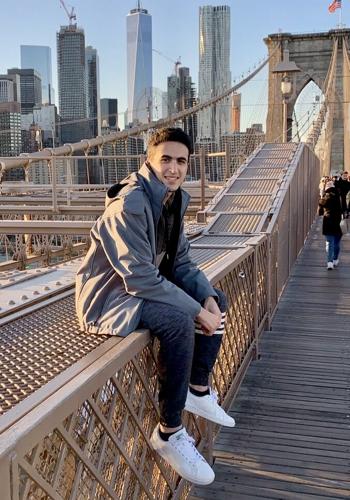
U.S. deportee Ahmed Soliman, now 30, pictured here on the Brooklyn Bridge in 2019, was violently arrested at the Hotel Bamy in Equatorial Guinea on Sept. 11, his lawyers say. Amnesty International issued a call for his release on Friday, as well as the release of another U.S. deportee arrested that day, Samson Birhane.
The Department of Homeland Security, ICE's parent agency, argues that as long as a country has provided "diplomatic assurances" to the U.S. State Department that deportees will be treated humanely, a fear screening isn't necessary.
But on Friday, a federal appeals court ruled against that argument, deciding those "diplomatic assurances," which the judges noted have not been publicly released, are insufficient.
The First Circuit court ruling said the U.S. can't deport people to third-world countries without "meaningful" notice and the opportunity to raise fear of being tortured or persecuted there, as required by current U.S. statutes.
The unanimous decision, upholding a lower-court ruling, may not go into effect anytime soon, according to Aaron Reichlin-Melnick, senior fellow at the American Immigration Council.
The new decision won't take effect until the U.S. Justice Department decides whether to appeal to the U.S. Supreme Court, Reichlin-Melnick wrote on X, formerly Twitter.
Contact reporter Emily Bregel at ebregel@tucson.com. On X, formerly Twitter: @EmilyBregel

Emily Bregel
Border reporter




 Arizona man hospitalized in Equatorial Guinea; U.S. officials mum on abuse claims