

Pima County is preparing to buy its seventh agricultural operation in a rural area far from the city of Tucson.
Unlike the other six purchases, however, this isn't a ranch. It's Buckelew Farms, better known until now for its annual October pumpkin fest than its wildlife habitat values.
County officials say that once they take over the property in September, they and the Buckelew family, which now owns the property, will come up with a plan that will enhance opportunities for wildlife while allowing the Buckelews to keep growing pumpkins and holding their three-week-long pumpkin fest.
The county will get two parcels: 429 acres north of the Ajo Highway that is about 75 percent farmed; and 85 acres south of the highway that is all desert.
The farm grows pumpkins, corn and cotton. For wildlife, the parcel contains semidesert grassland that potentially could become habitat for 14 of the 55 vulnerable species the county is trying to protect with its Sonoran Desert Conservation Plan.
People are also reading…
Last week, the county's Conservation Acquisition Commission voted to pay about $5.073 million for the two parcels of Buckelew Farms. The county Board of Supervisors must also approve the purchase, and the two parties are expected to close on the deal in September.
Buckelew Farms lies about five miles west of Three Points in a rapidly growing area, primarily due to unregulated or loosely regulated lot splitting of private land for subdivisions. The money would come from the 2004 County Open Space Bond of $174 million.
With this purchase, the county will have spent nearly $50 million to buy nearly 23,000 acres of agricultural land since the late 1990s, with all but one of those purchases coming since voters approved the 2004 bond. County Administrator Chuck Huckelberry advocates saving agricultural land as a way of forestalling the sprawl of suburbia into rural areas at what he sees as great cost to taxpayers for delivering roads and other public services there.
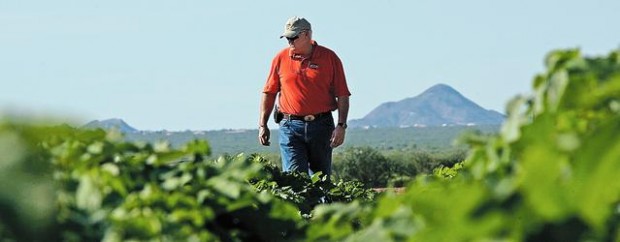
For Nick and Laurie Buckelew, ages 53 and 52, respectively, the purchase will continue a family farming tradition on the property that dates to the 1950s. That's when Nick's father, Robert, who is now 81 and lives in Montana, bought this farm from another party who had grown crops on it since the 1940s.
Nick Buckelew said he has had offers from developers to buy the land at higher prices than what the county has offered. But he said he would rather sell to the county so the farming can continue.
Under the agreement now pending between the Buckelews and the county, the family could continue farming the land for 10 years. The family would have an option to renew the agreement and keep farming for five years after that.
Nick Buckelew plans to retire in 10 to 15 years, and his "pipe dream" is to find a foundation to run the farm and continue the pumpkin festival after he quits working. The foundation would hire a manager or contractor to get the work done, and it would turn all profits from the operation over to charity, he said.
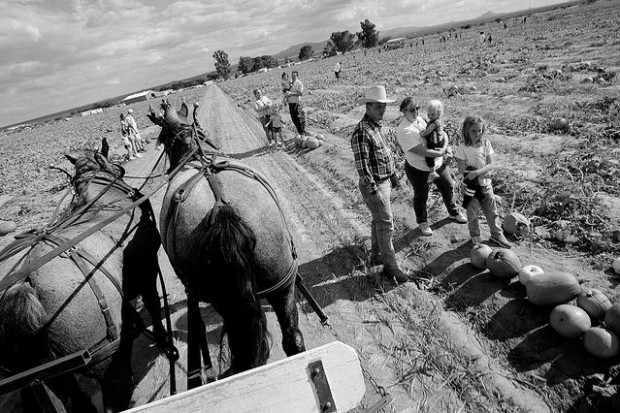
Today, the pumpkin fest draws 30,000 to 40,000 people over three weeks if the weather is good, Buckelew said. The festival includes a cornfield maze, horse-drawn-wagon rides, arts and crafts displays, a petting zoo, fresh-produce sales and food booths. In the future, he and the county will work together every year to establish an annual crop selection, rotation and grazing plan, under a management plan that the two parties will develop.
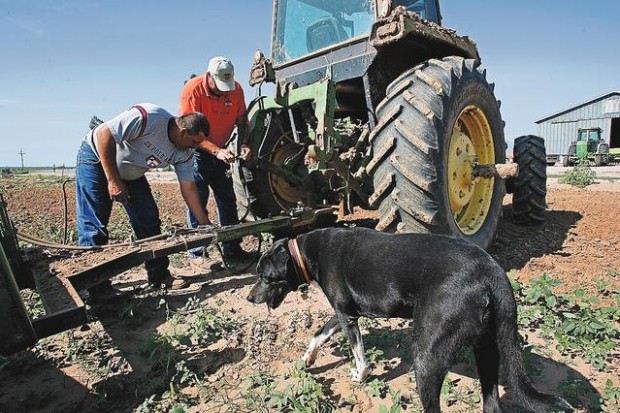
But cotton's future on the farm is unclear, partly because of its high water use and partly due to economics, Buckelew said. He will have the option every year of continuing to grow cotton, but now cotton prices aren't so good, he said.
One key habitat improvement that county officials hope will come from the purchase will focus on the Brawley Wash, which stretches across the farm's northern edge. This purchase would create a stretch of more than 30 miles of city-, county-, state- and U.S.-owned wash across the northern Altar Valley, according to the county's report on Buckelew Farms. The entire wash runs from near the Buenos Aires National Wildlife Refuge on the south to the Santa Cruz River in Avra Valley on the north.
Because portions of this wash have significantly degraded and eroded over time, county officials hope to bring various agencies together to try to improve water flows and wildlife habitats. Their hope is to reduce the destructiveness of the wash's periodic flooding and to convert some of the agricultural land into native grassland, the county report said.
"The Buckelew property is an important crossing point at (Arizona) Highway 86 . . . and an important linkage for the overall project vision," the county report said.
Today, because much of the water used to irrigate crops stays on the Buckelew property, the farm already has plentiful wildlife, Nick Buckelew said.
"We have deer, javelina, all kinds of rodents and birds. There've been mountain lions in that wash," he said. "We've had so much wildlife, they eat our crops."
● How Buckelew Farms would work as a wildlife habitat.
● A look at other farm and ranch purchases in Pima County.
● Non-farmed areas contain grassland now dominated by velvet mesquite, desert broom, burroweed, snakeweed, cholla cacti and graythorn that have invaded the area due to past grazing practices and climate changes.
● The land contains a section of the Brawley Wash. Its inclusion in this purchase would link more than 30 miles of wash stretching across state, federal, city and county properties at the north end of the Altar Valley.
● The land is potential habitat for the Swainson's hawk, the Bell's vireo, the cactus ferruginous pygmy owl, the Western yellow-billed cuckoo, the Pima pineapple cactus and nine other vulnerable species that the county wants to protect.


