You can understand why the Marana Town Council hesitates to resist the proposed immigration detention center in their fair town.
The building is a former prison zoned to allow this use.
The federal government wants it.
So do some Marana residents.
And resisting could potentially get them sued.
Inaction, from that narrow perspective, is logical.
So, Marana is preparing for business as usual with the company that used to run the facility as a state prison, Utah-based Management and Training Corp.
"The Town of Marana recently became aware of the sole-source notice and understands there is a possibility of a federal agreement with MTC to utilize the facility as an immigration detention center," the town council said in a statement sent to Arizona Public Media's Angela Gervasi, who just published a three-part series on these centers.
People are also reading…
"While this matter is a transaction between the federal government and MTC that the Town of Marana is not a party to, we have maintained a longstanding working relationship with MTC."
They've made a decision to do nothing. In today's context, though, that is a decision to do something.
It's a decision to go along with a shocking pattern of abuse by the federal government and its private contractors in savage fulfillment of a campaign promise: Mass deportation.
The sterile phrase "mass deportation" fails to capture the brutal reality that tens of thousands of people have suffered — many of them in the country legally or with still-viable immigration cases; some others actually citizens caught in dragnets.

The planned new immigration detention center in Marana has prompted disapproval from many residents over several month, but little response from town officials.
Mistreatment well documented
You don't have to search far for horrific stories of mistreatment as the Trump administration overfills immigration detention centers, seeking to fulfill deportation quotas.
Probably the worst case in Arizona was that of Emmanuel Damas. He's the Haitian asylum-seeker who spent months in detention at a facility in Florence after being arrested in Boston Sept. 14.
Damas, 56, developed a bad toothache Feb. 12 but received only ibuprofen, my colleague Emily Bregel reported. It worsened, and on Feb. 19, he was taken to a Phoenix hospital.
He continued to go downhill, though, and died March 2. Damas' family members and advocates believe he had an untreated tooth infection that traveled to the lungs, leading to pneumonia, and later sepsis, which killed him.
Again this is a relatively sterile summary of the story, but you can imagine the torture Damas went through as a tooth infection apparently worsened and spread. Now realize there have been an unprecedented 46 deaths in ICE custody since Pres. Trump took office 14 months ago, around three per month.
People are held, often unneccessarily, in detention centers where they lose access to life-sustaining medications and adequate food. They deteriorate mentally and physically. That was the case with 79-year-old Cuban asylum-seeker Julia Benitez, held in Eloy as her dementia progressed, until Bregel wrote about her, leading to her release.
Those running the centers either are spread too thin, as correctional companies keep costs low and profits high, to offer minimal attention, or they are using abusive treatment to convince people to self deport.
Whatever it is, it's beneath us and something to work actively against, not to passively accept.
Supporters show up too
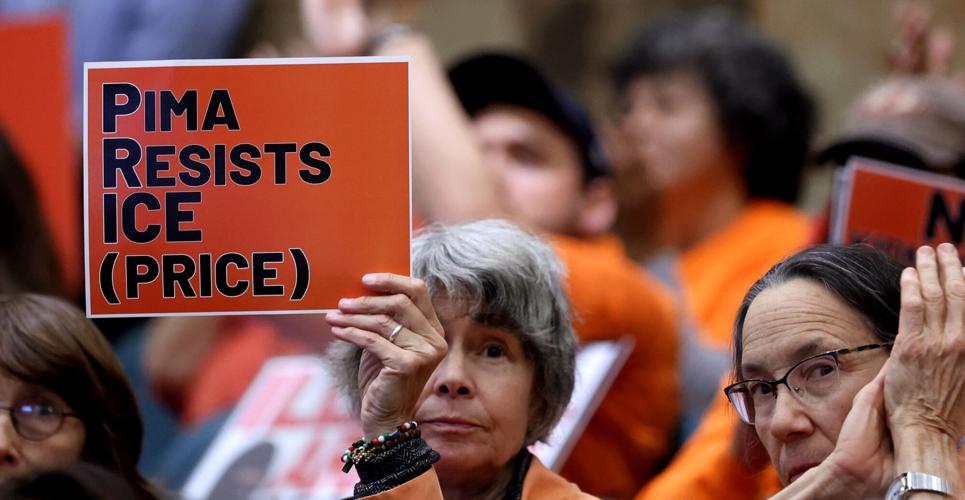
In November, local activists began asking Marana officials to stop the detention center during the regular call-to-the-audience sessions at council meetings.
Bennett Burke, a member of the coalition called Pima Resists ICE, cited Bible verses in arguing against the center in November.
"When Trump and his masked thugs persecute immigrants, they are persecuting Jesus himself," Burke said.
Over the months, it was mostly opponents speaking, but more recently, supporters of the project have started to show up to speak. After Mayor Jon Post limited the call-to-the-audience to 30 minutes at the last meeting, most of the speakers supported the detention center.
"I would ask you that you not to give in to this far-left temper tantrum that is occurring and that has put the town of Marana at the center of it," Betsy Brantner Smith said at the March 17 meeting. "These people, most of whom don’t live here, want to make Marana Tucson. Don’t let them do it."
So far, only Post, along with Town Manager Terry Rozema, and council member Patrick Cavanaugh have met with members of Pima Resists ICE, said coalition member Dennis Shannon.
"What we have been asking for from the town council specifically is to take steps that we have researched to either stop or slow down the opening of this detention center," Shannon said in an interview. "It could be a legal step or a land-use step."
"So far we have not been able to get the town council to feel that they want to take any action."
That's not been the case outside Marana Town Hall, in parts of the Tucson area where feelings run stronger against ICE. Pima County, the city of Tucson and the city of South Tucson have all passed resolutions opposing the opening of the detention center in Marana.
"There are lawyers putting their heads together, looking at what other neighbors have done and are doing, looking at what other cities, towns, counties, states have done and are doing around the country," said Jen Allen, chair of the Pima County Board of Supervisors.
Operator has troubling history
It's not just liberal cities like Tucson who have been fighting immigration detention centers around the country. Resistance is occurring in more conservative places like Surprise, outside Phoenix, and Social Circle, Georgia.
A big difference in many of those places is that ICE is buying warehouses to convert into detention centers, whereas Marana's facility was already a minimum-security prison. In fact, it was previously operated by the same company, MTC.
That fact seems to comfort Marana town officials. They said in their statement: "MTC previously operated a detention facility at this location for many years, during which the Town experienced a professional and cooperativer relationship."
"We have communicated with MTC and have been assured they are open to meeting with the Town and residents to address concerns and answer questions should the agreement move forward."
It would be naive to think that MTC would subject itself to oversight by anyone outside the federal agency they contract with.
MTC previously worked as a state contractor and became notorious. Their poor performance in Kingman led to a massive riot, exposing how the company disregarded state policies, and convincing then-Gov. Doug Ducey to cancel their contract in 2015.
Across the country, MTC has been caught repeatedly understaffing its immigration detention centers and providing inadequate treatment to detainees.
There's no reason to think they'll do better in Marana, under pressure from their federal government sponsor to pack in inmates. In fact, the prison that was built to hold 500 inmates would need capacity for up to 775 immigration detainees, under the proposed federal contract.
So, while it's simpler for town officials to let the federal government and its private-prison contractor have their way in Marana, that requires ignoring what's going on in these detention centers more broadly, or — worse — approving of it.
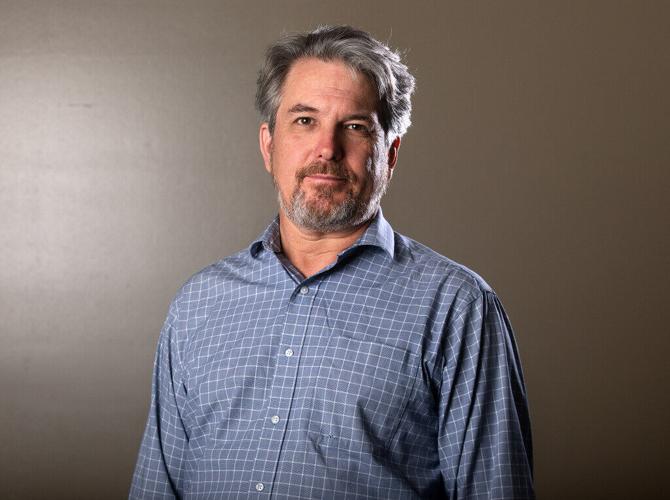
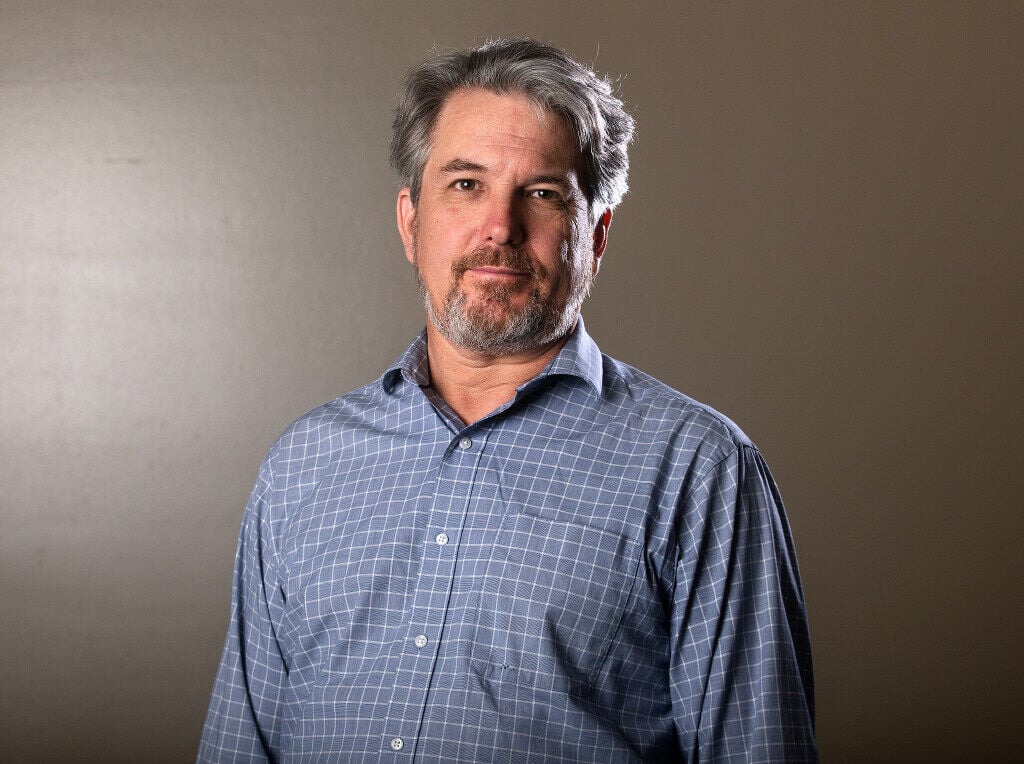
Contact columnist Tim Steller at tsteller@tucson.com or 520-807-7789. On Bluesky: @timsteller.bsky.social

Tim Steller
Columnist


 Tim Steller's column: Survey narrows Tucson's focus from social issues to unreported crime