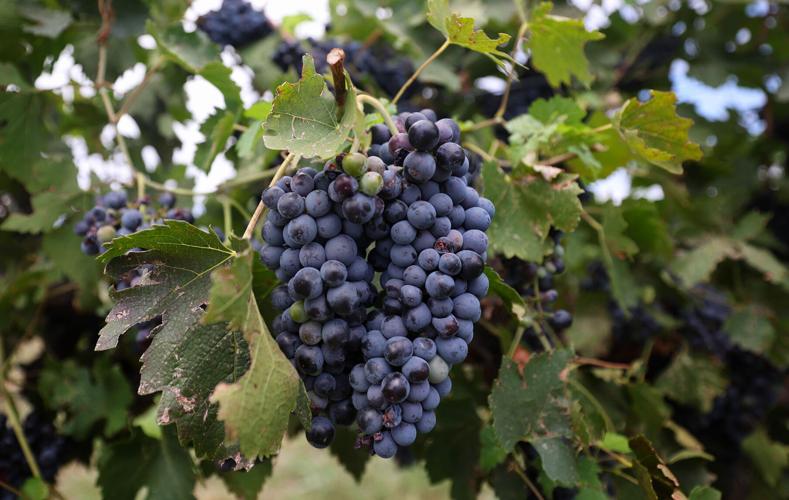
Usually by this time in September, most winegrowers around the state are just getting into the harvest.
In the far southeastern corner of Cochise County last week, Sonoran Wines of Pearce had already harvested 3 tons each of petite sirah and grenache and a ton and a half combined of Mourvèdre and grenache for its rosé.
All that was left was around 3 tons of Mourvèdre.

The harvest came early for Sonoran Wines in Pearce, which brought in 3 tons of its petite sirah in early September. Arizona vineyards usually harvest in mid-September or early October, but a hotter spring and summer ripened the fruit faster than usual.
“It's kind of sitting a little below where we want it, so we're kind of watching the weather before we pick,” vineyard manager Lisa Wagenheim said.
This is the earliest harvest on record for Eric Glomski’s Page Springs Cellars, which he launched in Cornville 22 years ago. Glomski has 13 acres under vine at the Verde Valley estate vineyards and another 9 acres across the state at his Colibri Vineyard in the Chiricahua Mountains near Portal.
People are also reading…
“I think the combination of a warm spring and then we had a pretty warm summer and now we have these rains,” said Glomski, who was 90% through the harvest as of early last week.
James Callahan was also nearing the finish line at Rune Wines vineyards in Sonoita, which he has farmed since 2013.
“It's been an interesting growing year,” he said, estimating that his harvest would total around a ton and a half of fruit — enough to produce about 100 cases of his Glyph estate wines. “Two years ago, we did about 250 cases off those vineyards so the crop level was down this year.”
While it’s too early to evaluate this year’s harvest, one industry expert expects to see a repeat of last year’s pattern where some vineyards left fruit to die on the vine.
“The word on the streets is that a lot of people are leaving fruit out there, and we know from last year … that there were something like almost 200 acres left unharvested,” said Yavapai County Extension Director and veteran viticulturist Matt Halldorson. “It was a lot of fruit left last year.”
Of the 703.5 acres of wine grapes planted statewide in 2025, 171.3 acres was not harvested, according to the University of Arizona Cooperative Extension’s 2025 Wine Grape Harvest Report.
What the report doesn’t explain is the why.
Since 2022, global wine consumption has dropped by 2% to 4% year-after year. And while wine production saw a slight uptick last year over 2024, it was still at historically low levels, according to a report in Forbes.

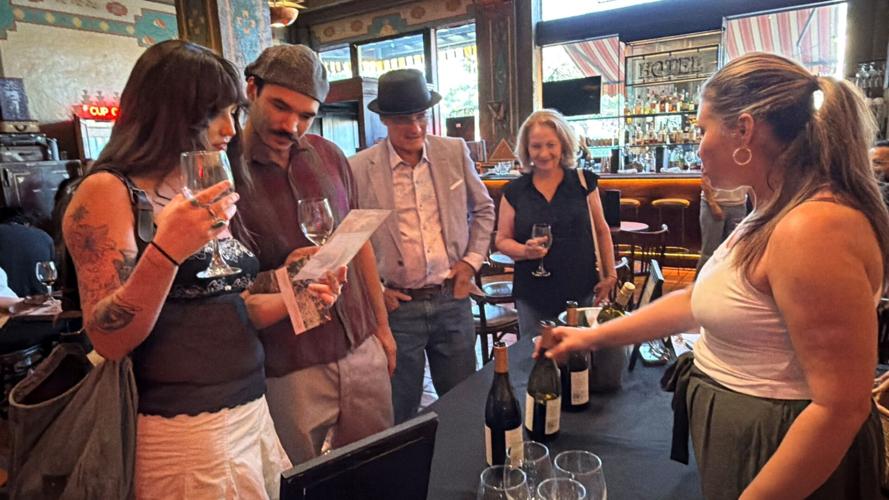
From left, Rees Hart, Crispin Carter and William and Connie Poorten listen as Sonoran Wines director of sales Emilie Bain, right, explains the nuances of the boutique winery’s vintages at Hotel Congress.
In Arizona, winegrowers realized when they were bringing in the 2024 harvest that they were sitting on too much wine and fruit. A number of vineyards including Flying Leap Vineyards in Elgin let part of their yield sit unharvested and sold the bulk of their fruit at discounted prices, if they could sell it at all.
“I talk to people that say, you know, if people know what's good for them, they will start taking in less less fruit because they're just not selling it right now,” Halldorson said, a sentiment echoed by Flying Leap’s Mark Beres.
With the exception of some of the white wine grapes, Beres said he left the majority of his 60 planted acres on the vine. With minimum wage at $15.15, the cost to hire workers to bring in the grapes outpaces the value of the fruit, he said.
Last year, Flying Leap left 30% of its crop unharvested.
“Anybody harvesting grapes right now is making the market's oversupply condition worse,” Beres said. “The wine market today is oversupplied. There is too much wine on the market and that oversupply condition is what is wrecking the wine industry because it's driving prices down. It's putting wineries out of business left and right.”
Halldorson and his University of Arizona Cooperative Extension colleague Michael Pierce released the Wine Grape Harvest report early this year after analyzing the results of 67 Arizona vineyards that volunteered to fill out the 2025 survey. The wineries reported on several aspects of their operations, from the size of the vineyards and types of grapes grown to the amount of fruit harvested and the price of fruit sold.
Some key points of the report included:
Arizona vineyards produced 1,139 tons of fruit, averaging 2.2 tons per acre. Of that, winegrowers used 722 tons of fruit in their own wine production and sold 417 tons.
Vineyards statewide grew 76 different varieties — 42 were red wine, 34 white.
The average Arizona vineyard was 10.5 acres; Willcox vineyards are the state’s largest, averaging 18.4 acres. Sonoita/Elgin operations, meanwhile, averaged 6.1 acres while those in the Verde Valley were a smidge larger at 6.2 acres.
500.3 vineyard acres statewide were devoted to red wine grapes; 203.2 acres to white wine grapes.
Beres said there’s no convincing argument for growing grapes given today’s market conditions.
“The only reason to grow grapes is so that you can make wine cheaper than you can buy wine,” he said. “But that is not the case today. We're in winery bizarro world, and right now there is so much wine being stockpiled that there is this massive bulk of wine that's available.”
A 2023 Arizona Office of Tourism study conducted by Northern Arizona University found that the state’s wine industry contributed $350 million to overall tourism revenue.
“That number may be down a little bit this year, but people come to Arizona and they want to have a drink. And if we can convince them to drink Arizona wine, then that will really bolster our Arizona wine industry,” he said. “I think the problem here is we need more support from some of these local businesses, getting Arizona wine out there to people so that tourists can enjoy them. I think the wine will sell itself if it's in the right hands.”
Growing pains and big gains
Sonoran Wines produces a half dozen vintages including a trio of blends named after Southern Arizona missions.
To say the wines have been well-received is a bit of an understatement when you consider that since Wagenheim and her partners — Demion Clinco, Jocelyn Stoller, Michael Fassett and Richard and Shana Oseran, who own Hotel Congress — acquired Sonoran Wines in 2019, they have won a number of statewide awards and a couple of prestigious national honors, including last year’s Gold Medal in the San Francisco Chronicle Wine Competition for its 2021 Real de San Bernardino.
That win came two years after Sonoran Wines landed the prestigious “Double Gold” and “Best in Class” titles at the 2023 Sunset International Wine Competition for its 2018 Real de Terrenate.
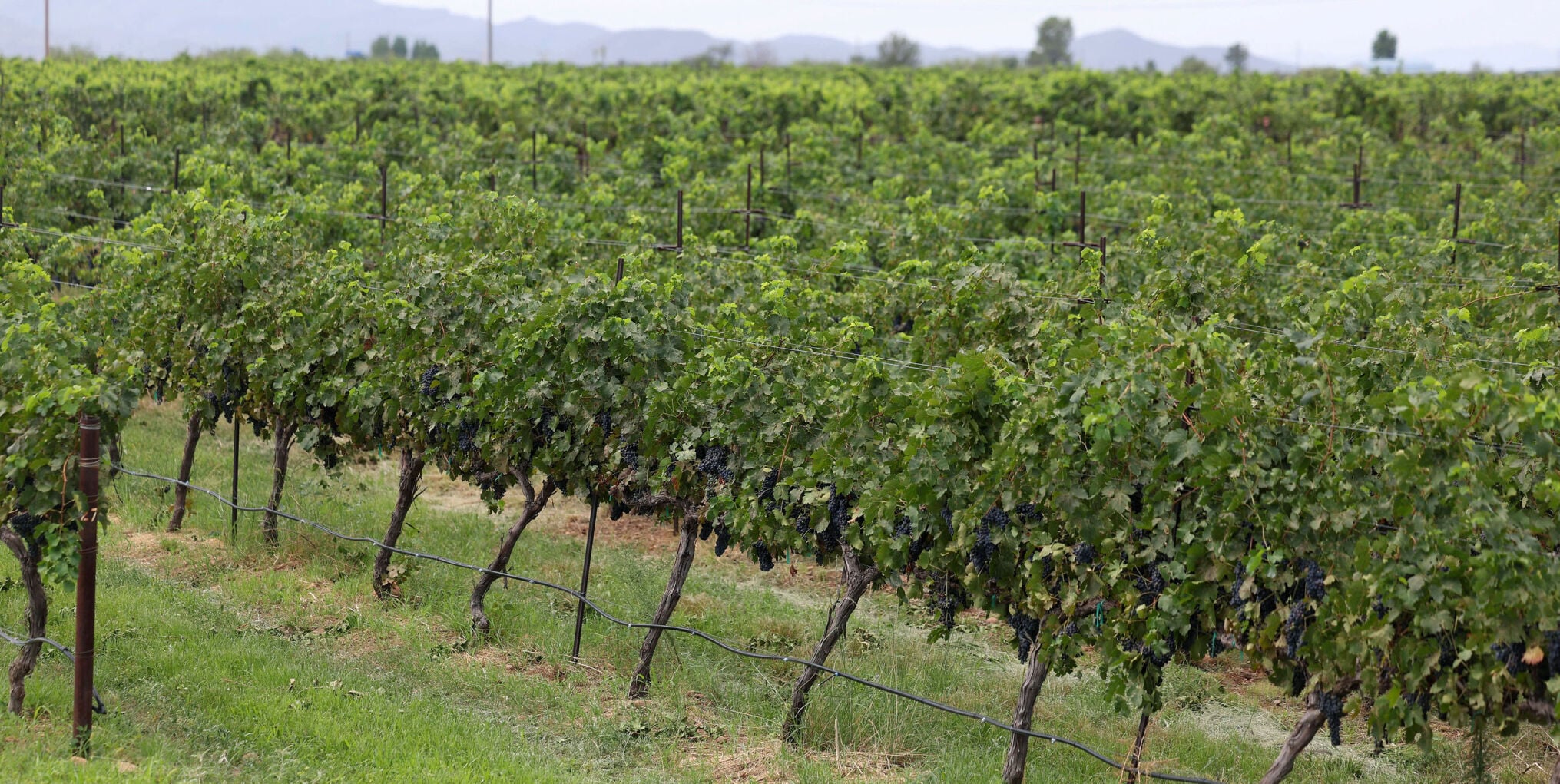
Sonoran Wines supplements the grapes it grows on its 15-acre vineyard in Pearce with fruit from other Southern Arizona growers.
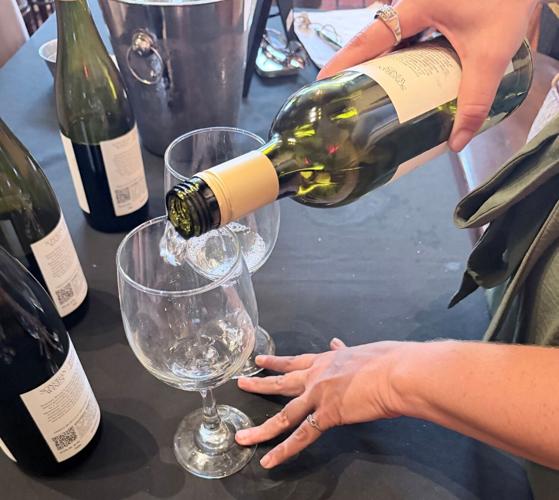
“We were shocked because that was our first bottling ever,” Wagenheim said on a recent Friday as she hosted a tasting event at Hotel Congress. “Those awards do make a difference. That kind of attention makes a difference, especially when people don't know about you.”
Wagenheim admitted that when they started, they faced a big learning curve. Early on, before they had an understanding of the market, they bought too much fruit and made too much wine.
“Now that we've learned to kind of balance and really understand things, we've been much more measured in the last couple years in making those decisions,” she said. “So I think we're doing a lot better.”
Including with this year’s harvest.
Last year, everything that could go wrong did, including bouts of bad weather and broken tractors that “you just can’t anticipate.”
“But this year's gone — knocking on wood — much, much smoother,” she said.
Sonoran Wines anticipates producing 700 cases of wine, most of which will be sold from the winery in Pearce. Although they don’t have an on-site tasting room, the winery hosts monthly tasting events on the last Saturday at the winery, which sits on 15 remote acres — 10 under vine — at the base of the Chiricahua Mountains along Turkey Creek.
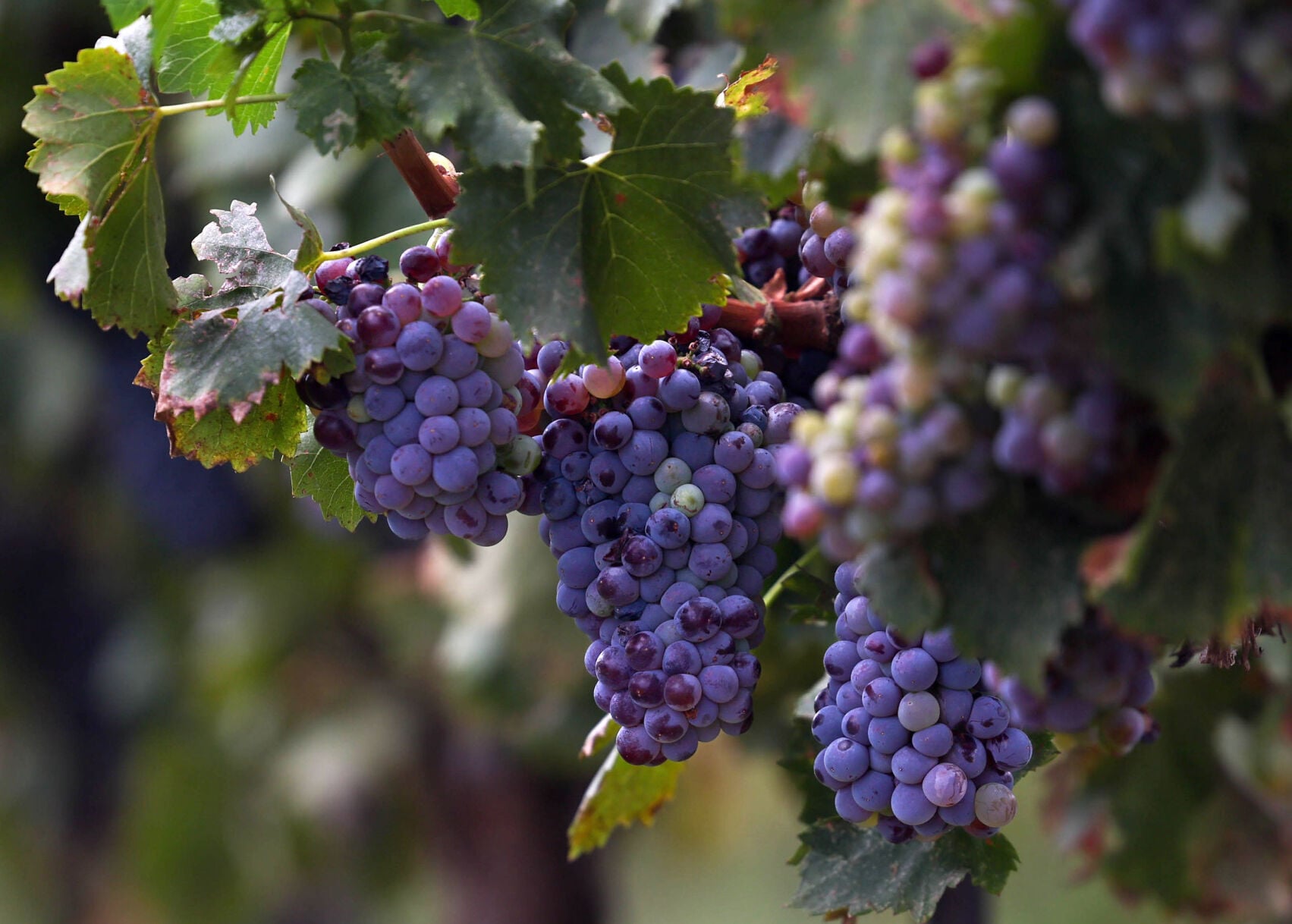
Sonoran Wines is celebrating their 2026 harvest with a couple of events including a wine tasting at their Pearce vineyards.
Launching a new line
Rune Wines’ Callahan has his hands full as he navigates a trio of labels under one roof in Sonoita.
By year’s end, he hopes to open a separate tasting room for his Brigand label, launched in 2020 and targeted primarily to wholesale accounts, including restaurants.
Brigand specializes in blends while Rune, which Callahan launched in 2013, is single varietals.
“My idea was just let's give this place a home and let's kind of build this brand up, too, because we don't really do blends with Rune,” he said. “We started planning for another tasting room a few years ago, and we've been working on it for the last year and a half.”
The grapes he grows on two acres of his 27-acre Sonoita vineyard go to his Glyph estate label, while fruit for the Rune and Brigand wines is sourced from area vineyards. He also has another 100 acres outside of his estate vineyard, but “we’re just kind of holding it.”
“At this point, planting grapes is super capital intensive and takes a lot of time and effort and energy,” he said. “And we're trying to make some more money before we invest into that.”

Sonoran Wines of Pearce hosted a wine tasting event in the Hotel Congress lobby during Sonoran Restaurant Week earlier this month.
In Verde Valley, motto is slow to grow
Eric Glomski’s Page Springs Cellars produced 20,000 gallons, or 8,400 cases, of wine last year.
He’ll match that again this year.
While the wine industry universally is clawing out of a years-long downturn, Page Springs has seen modest upticks in sales through the tasting room at its picturesque Cornfield vineyard and through its wine club.
“We grew modestly the first half of this year, and so we're holding on to our fruit, and we're going to very conservatively grow and make a little more wine,” said Glomski, who started making wine as a hobby in the 1990s before turning it into a career when he opened his winery in 2003. “We're taking very, very conservative and judicious steps forward.”

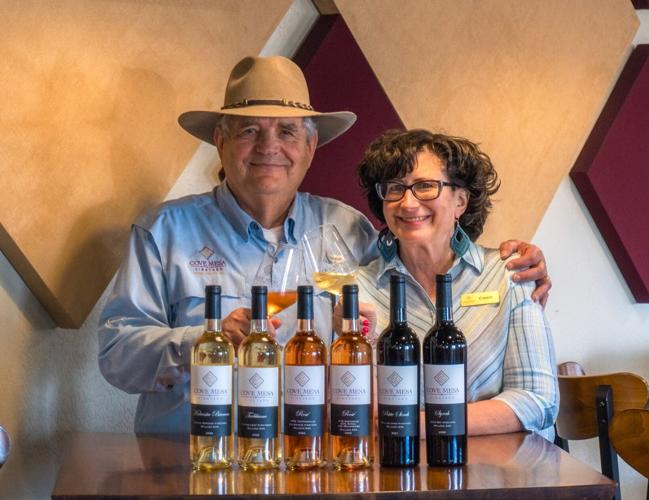
Emil and Cindy Molin launched Cove Mesa Vineyard in 2020 and have seen their wines sweep a number of national competitions.
His Cornville neighbors, Emil and Cindy Molin at Cove Mesa Vineyards, are moving at a little faster pace with their 6-year-old award-winning vineyard.
Emil Molin said he recently signed on with a distributor to help get his wines, numbering 50 vintages, into more venues. On his own, he has been able to place his wines alongside much more tenured labels at some of the state’s finest restaurants, including Cafe Monarch, named nine times over the past dozen years as one of the Top 100 Best Restaurants in America by OpenTable, and the James Beard-nominated FnB, both in Scottsdale.
His European-styled wines also are poured at Sedona’s Seasons at Seven Canyons restaurant, which is part of the exclusive Seven Canyons private golf and residential community that caters to what Molin described as “extremely wealthy” people.
“We're the only Arizona wine they have on their wine list, and they have, I think, 12 or 13 of our wines,” he said.
Cove Mesa has two small vineyards with a dozen acres, nine of which are under vine. Last year was the first year they got usable fruit, about a half ton combined of the Greek varietal Assyrtiko and Aglianico from Italy.
Molin anticipated that this year’s harvest would be about the same.
“We're doing a lot of work in our vineyards. The soil is almost solid limestone, so it's very poor soil as far as nutrients and so forth,” he said. “That really makes great grapes, but it makes it very difficult to get the plants to thrive and be established. So we're doing a lot of soil amendments, trying to stimulate growth.”
The couple, who lived in Tucson for 16 years before moving to Cornville in 2015, also source sangiovese, malbec, syrah, tempranillo, picpoul and viognier grapes from Willcox and from their Verde Valley neighbors, including Page Springs Cellars and Yavapai College, home to the state’s only viticulture program.
Among the awards Cove Mesa’s wines have won are three Double Gold, 23 bronze, 51 silver and 13 gold medals from the San Francisco Chronicle Wine Competition since 2023.
“I think Arizona fruit is some of the best in America,” Molin said. “Our wine really reflects the soil, and in fact, we've made quite a few wines where, in some vintages, maybe we've made three different wines from the same grape, but from different vineyards, and all made exactly the same way, but taste completely different because the grapes from those vineyards have different character.”
Contact reporter Cathalena E. Burch at cburch@tucson.com. On Bluesky @Starburch

Cathalena E. Burch
Reporter