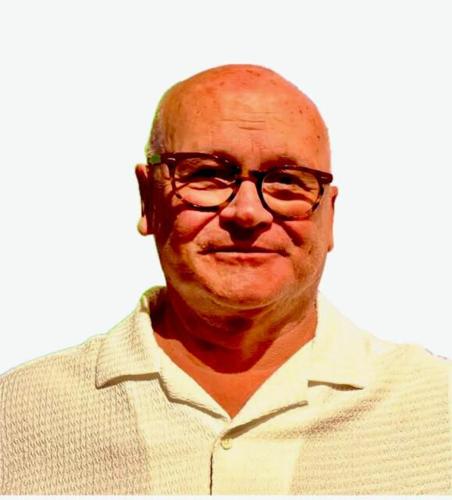
WASHINGTON — John Durnell was the “spray guy.”
For more than two decades, he used the popular weedkiller Roundup to spruce up parks, playgrounds and sidewalks near his home in the historic St. Louis Soulard neighborhood.
But after developing blood cancer, Durnell became one of the tens of thousands of Americans suing the maker of Roundup.
In 2023, a jury agreed with Durnell that the weedkiller was a cause of his non-Hodgkin lymphoma and said Monsanto owed him $1.25 million.
Now Durnell is at the center of a Supreme Court case to be argued today that tackles whether Monsanto can be sued for failing to warn of cancer risks from glyphosate. The chemical was the active ingredient in Roundup, though Monsanto has subsequently stopped using glyphosate in Roundup products sold for residential use.
People are also reading…
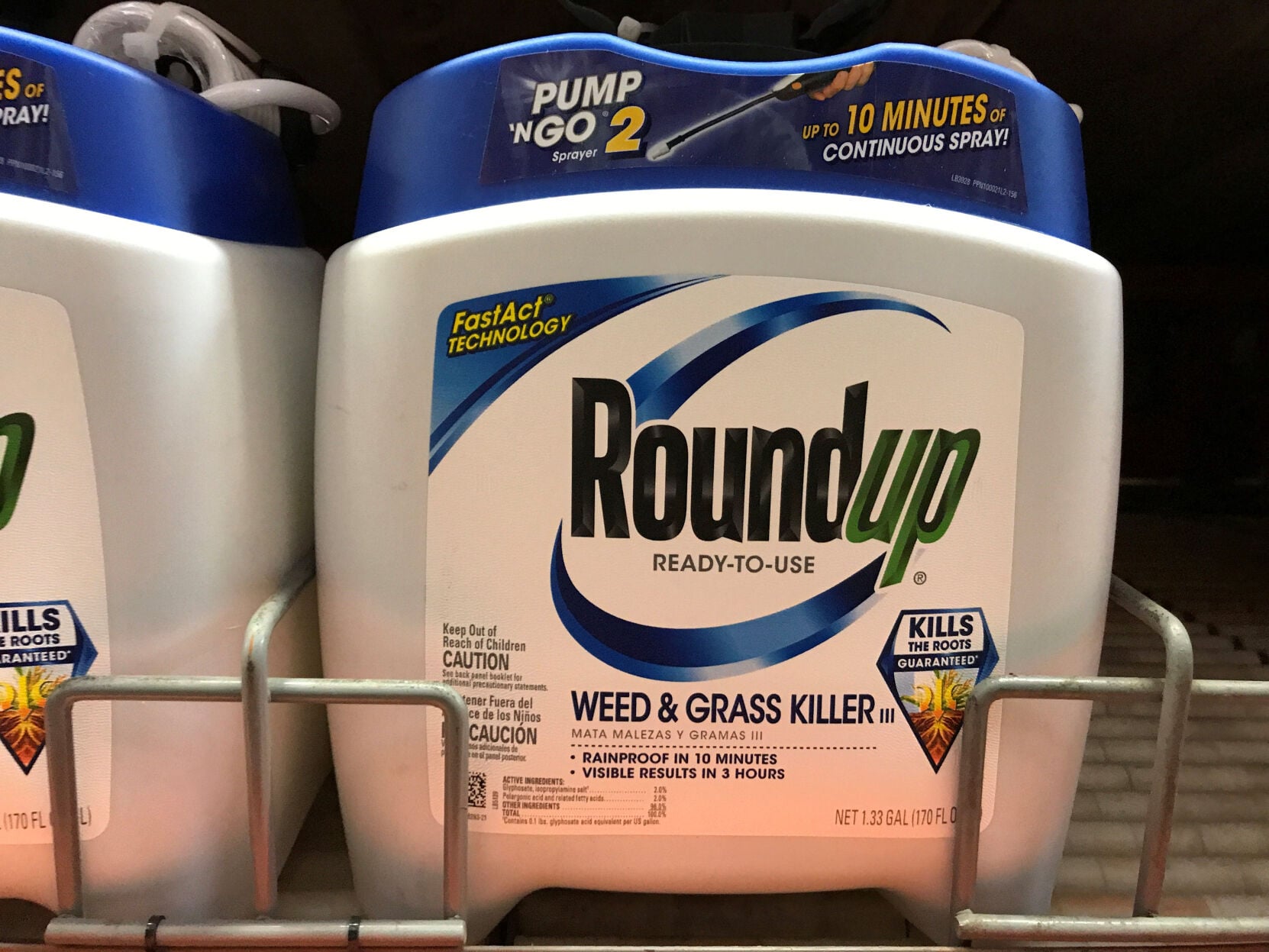
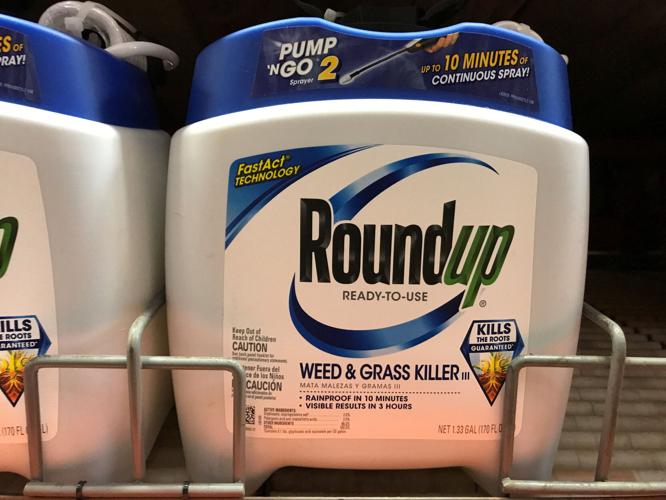
Monsanto Co's Roundup is shown for sale in Encinitas, California,
The company faces billions of dollars in potential liability and has said it may have to stop selling glyphosate to U.S. farmers if the lawsuits continue, a scenario major agricultural groups say would pose a "devastating risk to America’s food supply.”
Public health groups say the lawsuits are needed because the Environmental Protection Agency has failed to protect Americans from risks associated with glyphosate. U.S. Health Sec. Robert F. Kennedy Jr., who sued Monsanto over Roundup when he was a practicing lawyer, co-founded one of the groups that filed a brief supporting Durnell.
Yet in a move that has alarmed the Make America Healthy Again crowd (who want a more organic lifestyle and distrust pharmaceutical companies), the Trump administration is backing the company. And that's not all.

John Durnell of Missouri is at the center of a Supreme Court battle over whether he can sue Monsanto for failing to warn about cancer risks from glyphosate, the active ingredient in the Roundup weedkiller he used for more than two decades.
President Donald Trump has also pushed to spur domestic production of glyphosate and to protect manufacturers from liability, saying there’s no comparable alternative.
The fight is playing out as a proposed $7.25 billion class settlement with the company that could resolve many of the lawsuits.
The uncertainty over how the Supreme Court will rule could be an extra inducement for people suing Monsanto to accept the pending deal, which is not dependent on the outcome of the case.
“I don’t trust the Supreme Court in this situation,” said Howard Kornblue, another former Roundup user with non-Hodgkin lymphoma. “The possibility of coming away with zero (compensation) is not good.”
Bayer, the German pharmaceutical and biotech giant that acquired Monsanto in 2018, hopes that both the Supreme Court and the pending settlement will limit the extent of future lawsuits. The company is also pushing for legislation to shield it from liability.
Glyphosate 'revolutionized farming'
Introduced in the 1970s, Roundup quickly became the top-selling herbicide in the U.S. and integral to farming.
The American Farm Bureau Federation and other major agriculture groups told the Supreme Court in a filing that glyphosate “revolutionized farming by providing a highly effective, broad-spectrum, and low-cost weed control solution.”
The Environmental Protection Agency, which regulates pesticides, has never required a cancer-warning label for glyphosate.
But in 2015, a World Health Organization agency said glyphosate was “probably carcinogenic to humans,” prompting lawsuits. In December, a widely cited 2000 scientific review, purporting to show the chemical’s safety, was retracted over the authors' conflicts of interest with Monsanto.
Monsanto maintains glyphosate is safe
Monsanto maintains glyphosate is safe for people to use. The company attributes the flood of lawsuits to the popularity of Roundup, to non-Hodgkin lymphoma being a “very common and naturally occurring cancer,” and to heavy advertising by trial lawyers trying to drum up business.
The company’s lawyers told the Supreme Court that the EPA "considered and rejected" the idea of mandating the kind of warning that the jury in Durnell's case recommended.
“EPA has concluded again and again that glyphosate doesn’t cause cancer,” they said in a filing. “A warning stating otherwise is neither required nor permitted under federal law.”
Roundup user argues cancer warning needed
Durnell's cancer is in remission, but his lawyers say multiple rounds of chemotherapy have left a lasting mark, including continuing issues with his legs.
He can no longer help improve his neighborhood because, he told the jury that heard his lawsuit, “I’m not that physical any longer.”
His lawyers argue that nothing in federal law or the EPA’s regulations prohibits Monsanto from adding a cancer warning to its labels.
"Walmart gives a better warning to people when they have a spill of milk in the store than Monsanto's ever given to a Roundup lawn and garden buyer," Roe Frazer, one of Durnell’s lawyers, told the jury.
Instead, "Monsanto has marketed Roundup as safe to spray in a t-shirt and shorts," his lawyers told the Supreme Court in written arguments.
A group of former EPA officials filed a brief supporting Durnell, telling the Supreme Court that EPA-approved labels don’t always include all the appropriate warnings. The manufacturer, the officials said, is responsible for keeping both the EPA and the labels up to date with necessary safety information.
EPA's safety review is overdue
The government is required to conduct its own safety review every 15 years. But the latest update is years overdue because a federal court in 2022 said the EPA didn’t adequately consider whether glyphosate causes cancer when it reached an interim decision during the first Trump administration.
During the Biden and Trump administrations, the Justice Department has taken opposite positions on whether people like Durnell can sue over the label. The government currently sides with Monsanto.
The government’s lawyers told the Supreme Court in a written filing that the EPA uses a cost-benefit analysis to determine whether a product poses an “unreasonable risk,” a more balanced approach than what juries consider.
“Even when millions of people benefit from a product that is safe and effective in 99.99% of uses, those benefits are often deemed not worth the price for the one plaintiff who suffers a rare injury or illness and attributes it to the product,” Justice Department lawyers wrote.
Should Roundup users sue or settle?
Plaintiffs have lost about half the Roundup suits that have gone to trial, according to Christopher Seeger, an attorney who helped negotiate the pending $7.25 billion class settlement.
Most of the clients represented by the Seeger Weiss law firm are backing the deal, a decision they will likely have to make before knowing how the Supreme Court will rule.
“It makes it a little riskier to stay out,” said Seeger.
Kornblue, a Seeger Weiss client who supports the settlement, said his 2019 diagnosis was “devastating news, because there’s no history of blood cancer in my family.”
The 84-year-old retiree said he used Roundup for decades to fight weeds around his home in Scottsdale, Arizona, assuming he could trust products he found on the shelf at Costco.
Now, because of his compromised immune system, Kornblue has given up going to the symphony and avoids crowds. His regular blood tests feel like playing Russian roulette.
“My situation will never get better,” he said. “We just hope it doesn’t get worse.”
If his health deteriorates, Kornblue hopes any compensation he might get from Bayer will cover some of his medical bills. He also sees the settlement as a more likely route than the Supreme Court to hold accountable the company he blames for his cancer.
“I don’t think the Supreme Court in this day and age,” he said, “is on the side of the consumers.”
A decision is expected by the end of June or early July.