The United States, Denmark and Greenland entered into an agreement for the U.S. to develop a significant military presence on Greenland, while prohibiting U.S. adversaries from building their own bases on the island, President Donald Trump said Friday.
In a social media post, the Republican president wrote that no U.S. enemies would be able to make sensitive investments on the island without the approval of the United States, and the agreement has no expiry date.
"At my direction, we worked with representatives of Denmark and Greenland to guarantee that the United States will FOREVER have the complete ability to do what is necessary in Greenland in order to secure and defend the security of Greenland, and the United States of America," Trump wrote.

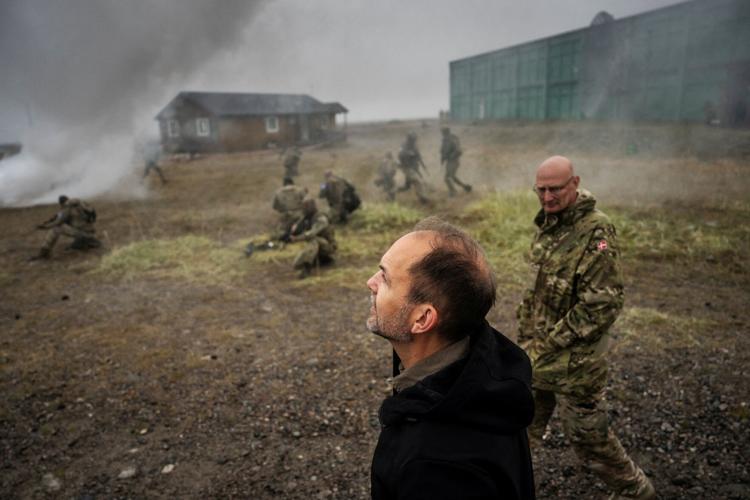
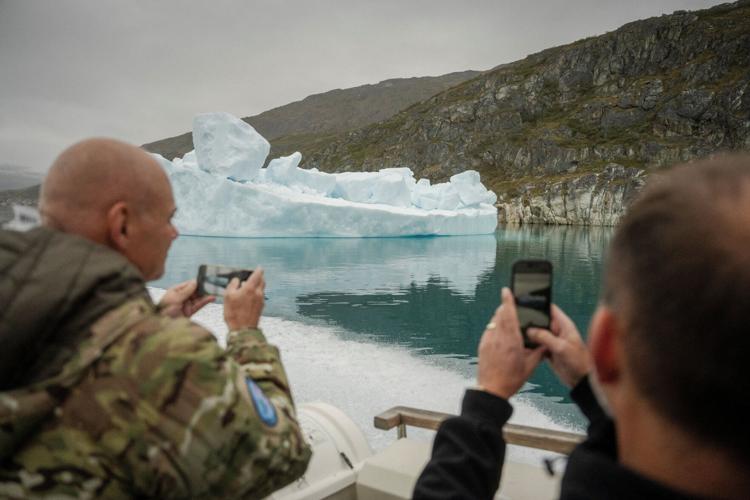
Denmark's Minister of Defense Jeppe Bruus, along with Greenland's Minister for Foreign Affairs Mute B. Egede, visits the NATO military exercise Arctic Shield 2026 on Sept. 9 in Narsarsuaq, Greenland.
Earlier in the day, Reuters exclusively reported that the U.S. and Greenland were closing in on a deal that would result in an increased U.S. military presence, but would stop well short of Trump's long-held dream of acquiring the island for the United States.
People are also reading…
Trump's announcement suggests he was nonetheless pleased with the outcome of the negotiations, and he may not revive his territorial claims, at least in the near future. Without elaborating, he said the U.S. would soon roll out a large military presence on the island, which already hosts one Space Force base in its remote northwest.
"This is a dream come true for the United States of America," Trump wrote.
The Danish prime minister's office said Friday the agreement would strengthen North Atlantic and Arctic security.

Denmark's Minister of Defense Jeppe Bruus visits the NATO military exercise Arctic Shield 2026 on Sept. 9 in Narsarsuaq, Greenland.
Rubio says deal addresses security concerns
Much was unclear as of Friday night, including whether new U.S. bases would be constructed as a result of the agreement. Trump's posts about negotiations or agreements often lack context or specifics.
The U.S. already has almost total overflight and basing rights in Greenland under a 1951 treaty.
Imran Bayoumi, a former Pentagon official now with the Atlantic Council think tank, said it would be new if the U.S. can build bases without the approval of Greenland or Denmark, but largely "it seems that Washington could have achieved a lot of these objectives through diplomacy and dialog without straining the broader US-NATO relationship.”
It was also unclear how the agreement would be received in Greenland, an autonomous territory of Denmark. The island's residents aspire to independence and bristled at U.S. attempts to assert control.
Greenland's prime minister, Jens-Frederik Nielsen, said in a statement that the agreement recognized Greenland's interests and the Arctic island's place in international cooperation. "This benefits us all," he said.
In his own statement, U.S. Secretary of State Marco Rubio said the deal "permanently and completely" addressed Washington's national security concerns with respect to the island.
"Greenland will forever be part of the strategic defense area of North America and exclude any adversary from it and the surrounding area," he wrote.
A State Department official, speaking on condition of anonymity to discuss specific terms, said the deal prohibits non-NATO countries from building a base in Greenland, and will allow only the U.S. and its allies to make unspecified "sensitive investments." The official said the agreement grants the U.S. permanent access, basing and overflight rights, and would continue to apply even if Greenland becomes independent.