MECHANICSBURG, Pa. — Many days over the past two weeks, no one answered the phone at any of U.S. Rep. Scott Perry's four offices.
Perry's team did not share details about the Republican congressman's public appearances until they were over. Even supporters who live in Perry's central Pennsylvania district could not remember the last time he hosted an in-person town hall.
No one opened the locked door at his district office in Mechanicsburg last week when an Associated Press reporter rang the bell. A male voice said through the intercom, "I don't have any public appearance information that I can provide."
The U.S. House is ending a 17-day recess, typically known as a district work period, in which members of Congress return home to focus on their constituents. But some of the most vulnerable Republicans limited their potential exposure to the potential backlash from President Donald Trump's first months in office.
People are also reading…

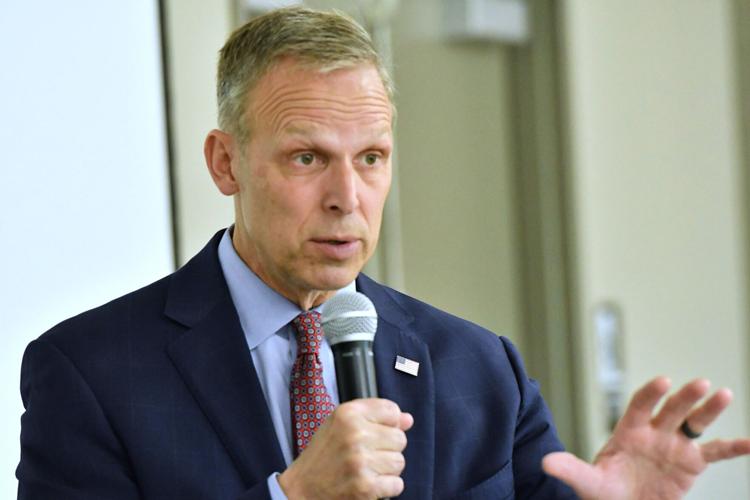
FILE - U.S. Rep. Scott Perry, R-Pa., speaks during a campaign event in front of employees at an insurance marketing firm, Oct. 17, 2024, in Harrisburg, Pa. (AP Photo/Marc Levy, file)
They are embracing the strategy outlined by GOP leaders in Washington who argue there is no benefit to creating more viral moments such as the crowd in Asheville, North Carolina, that booed U.S. Rep. Chuck Edwards and the pointed questions about tariffs and deportations that were directed at U.S. Sen. Chuck Grassley of Iowa.
Perry, who won reelection last fall by about 5,000 votes, is one of the 10 most vulnerable House Republicans, as measured by their margins of victory last fall. They were especially hard to find during the recess, though it was difficult to verify many of the public schedules due to the inconsistent responses from their offices.
None of them, a collection of swing-district conservatives from across Arizona, Colorado, California, Iowa, Nebraska, Pennsylvania and Wisconsin, hosted in-person events that were open to the public. Just one planned a telephone town hall. Others favored smaller invitation-only gatherings with local officials promoted only after they were over.
The Republicans' lack of access didn't sit well with some voters.
"They're publicly elected officials. They ought to be accessible to the public," Republican voter Robert Barton, a 57-year-old civil engineer, said as he waited for his lunch at Italian Delight Pizzeria across the street from Perry's office in Mechanicsburg.
Perry's team did not respond to requests for comment.

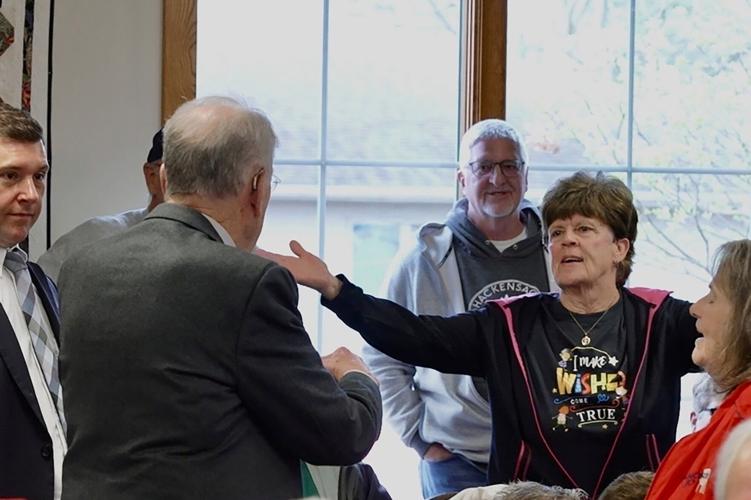
Sen. Chuck Grassley takes questions from constituents during a contentious town hall event in Northwood, Iowa on Wednesday, April 23, 2025. (AP photo/Mark Vancleave)
Republicans defend strategy
Veteran GOP strategist Doug Heye argued that interacting with constituents in "planned and controlled ways" is more productive than town halls for members of Congress. "And that's smart for any politician," he said.
The National Republican Congressional Committee, the House Republicans' campaign arm, is not encouraging targeted members to stay out of the public eye, a spokesperson said.
Instead, the NRCC encourages lawmakers to meet with their constituents in public, but to be wary of events that could divert attention from a House member's message and agenda, according to NRCC spokesman Mike Marinella.
"We tell everyone, go out and meet people. You have to be in front of your constituents," Marinella said. "Use every avenue you can."
House Speaker Mike Johnson, R-La., urged lawmakers to consider convening so-called tele-town hall meetings, dial-in conferences where thousands can listen and lawmakers take questions.
In 2010, under pressure over the health care overhaul that became known as Obamacare, a number of House Democrats skipped public events after facing angry town halls the previous summer. Some held tele-town hall meetings instead.
Then-House Speaker Nancy Pelosi, D-Calif., co-authored an opinion piece referring to some protests as "un-American" and denouncing an "ugly campaign (to) disrupt public meetings and prevent members of Congress and constituents from conducting a civil dialogue."
Just under a decade later, House Republicans trying to repeal that health law were accused of ducking town halls as well. Then-House Speaker Paul Ryan, R-Wis., said he would stop holding town halls to limit access for protesters from outside his district.
Both the Democrats in 2010 and the Republicans in 2018 would go on to lose their House majorities.

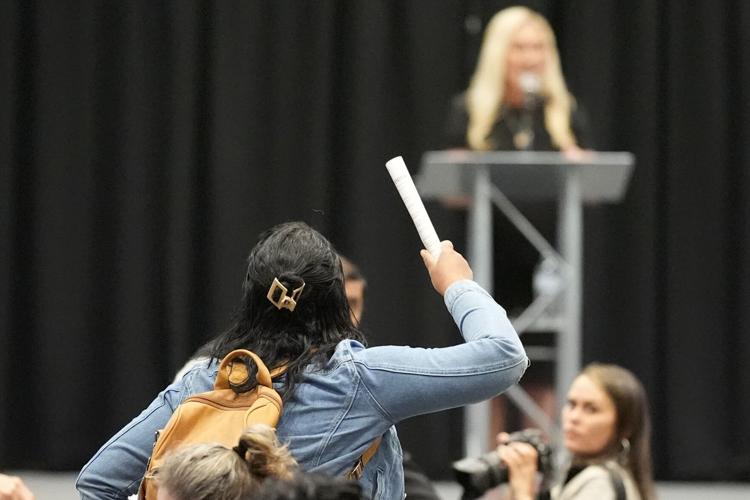
A protester is removed as Rep. Marjorie Taylor Greene, R-Ga., speaks during a town-hall style meeting, Tuesday, April 15, 2025, in Acworth, Ga. (AP Photo/Mike Stewart)
Where are the Republicans?
Mariannette Miller-Meeks is an Iowa Republican who won last fall by 799 votes, the closest U.S. House election won by a Republican in the country last year.
She spoke at the Faith and Freedom fundraiser, but she spent the Easter recess meeting with far smaller groups in more controlled environments: a wheel accessory plant, several business groups in the Des Moines and Davenport areas, a Rotary Club meeting, and a groundbreaking for an eastern Iowa medical center.
Most of her constituents would have learned of the stops by checking Miller-Meeks' social media accounts after the fact. Miller-Meeks, like her fellow most-targeted Republican House members, offered little if any public notice of her appearances.
Like the other House Republicans in the nation's most-competitive districts, she held no events open to all constituents, nor had any planned for the remainder of the break, which ended Sunday.
Aides to U.S. Rep. Don Bacon, who represents Nebraska's 2nd Congressional District, confirmed that the Republican held no open events nor had plans to before the end of the break.