

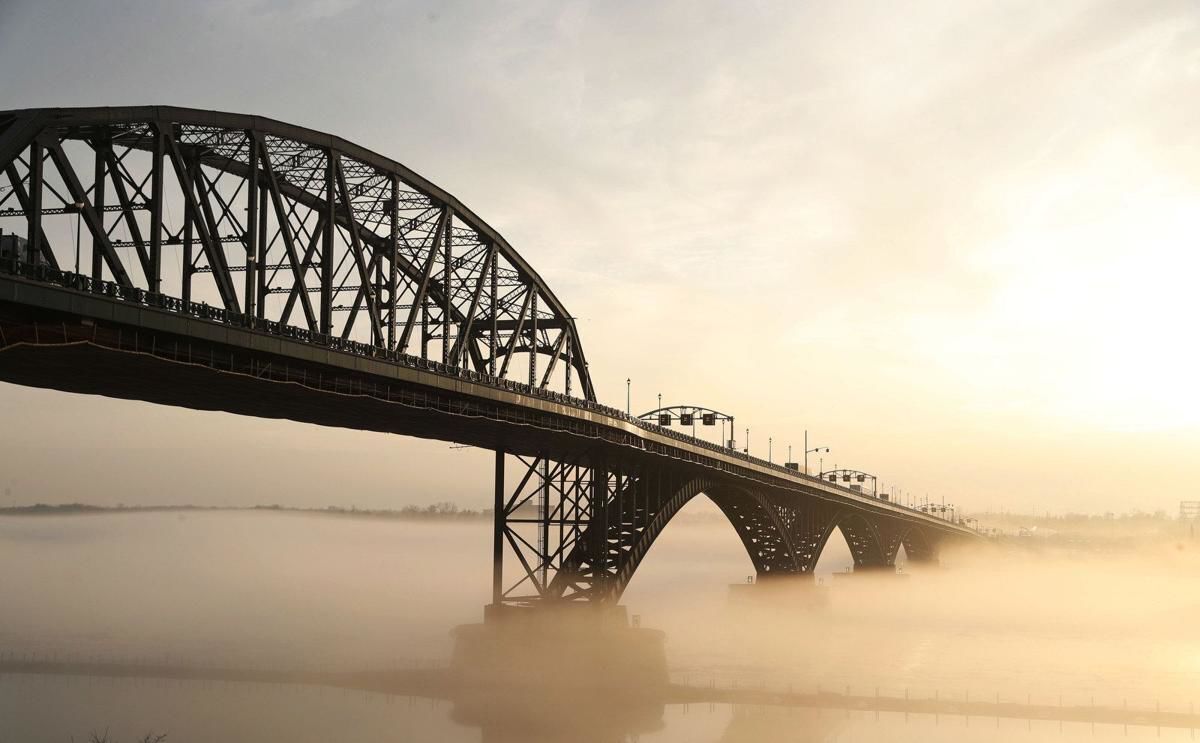
Medical appointments in Buffalo never used to be much of a problem for Diane and Terry Dick of Fort Erie and countless other Canadians.
But with the border closed to all but essential traffic amid the Covid-19 pandemic, what once was routine is now trouble – both coming and going.
The Dicks learned that the hard way on June 24. After they crossed the Peace Bridge into Buffalo, a U.S. Customs agent gave them a hard time because they didn't have written proof of appointments they had rescheduled over the phone.
"He said: 'I've worked here 13 years so I know who you are. And I'm going to let you go this time, but the next time you enter, you better have proof that you have an appointment,' " Mrs. Dick recalled.
But that was nothing compared to what the Dicks experienced later that same day when they arrived back in Canada, when a border agent made the 72-year-old couple recite an oath vowing that they would quarantine and not leave their property for 14 days.
People are also reading…
"I felt trapped," Mr. Dick said. "And the way they're handling it, it's not that you can do anything. You're not supposed to step off your property. When you do that, and if they catch you, you're liable for up to a $1 million fine."
The Dicks are by no means alone in worrying that care they long saw as routine and essential now comes with nerve-wracking hassles. Roswell Park Comprehensive Cancer Center, which treats more than 100 Canadians a year, reports that border agents have on occasion stopped caregivers – the family members and other loved ones accompanying a patient – from crossing the border.
And that's prompted Rep. Brian Higgins, a Buffalo Democrat, to write a letter to the acting commissioner of Customs and Border Protection, asking for clearer guidance for those who cross the border for health care and the loved ones who accompany them.
"Canadians spend about $10 million a year on health care in Western New York, and this is a severe medical hardship that's been imposed on these people at no fault of their own," Higgins said in an interview.
It certainly was a hardship, as well as a surprise, for the Dicks.
Diane Dick is an American citizen who grew up in Buffalo. She worked there for decades and got used to using her health insurance in America, rather than relying on the Canadian health care system. She said that was never a problem until late June, when that U.S. Customs agent gave her and her husband a hard time for the first time.
And it was the wrong time for a hard time. Mrs. Dick, who had a benign tumor removed from her pancreas earlier this year, needed follow-up blood work. Her husband, who had been treated for prostate cancer last year at Buffalo Medical Group, had a follow-up doctor's appointment.
But they didn't have any proof of any of that, which is why they got a grilling, and an admonition, from the customs officer. They said it all came unexpectedly, because only a week earlier, they had crossed the border for other medical appointments and swung by Wegmans for some groceries and had no problem at all.
But on June 24, the customs agent they dealt with took a different tone.
"This guy's very specific," Mr. Dick said. "He said: 'You go to the drugstore and a doctor, and then you go home, no wandering around at all.' So you get inconsistencies among the border agents, because they're not all telling you the same thing."
The policy on who should be admitted to America for medical reasons is actually quite clear, said Aaron Bowker, public affairs liaison at Customs and Border Protection's Buffalo field office. Anyone traveling across the border for medical reasons can do so, so long as they have written proof of their appointments.
"We would never turn away medical treatment," Bowker said.
As for caregivers traveling across the border, that's handled on a case-by-case basis. But again, a letter from the medical provider, spelling out why the caregivers need to cross the border, would be helpful, Bowker added.
Unfortunately, some families are unaware of that. Shirley Johnson, chief clinical operations officer and senior vice president at Roswell, noted that one woman from Canada recently tried to bring two family members with her for support during what was to be "a very long day" of cancer treatment. But after a two-hour drive, the family arrived at the Peace Bridge only to be told that one of the family members would have to stay behind in Canada.
"So they dropped off their family member at Walmart" in Fort Erie, Johnson recalled – noting that that created additional hardship.
"We have an expectation that a caregiver is really a member of our care team," Johnson said. "Having one or two family members or friends that can really help support our patients through these complex therapies is essential."
At Buffalo Medical Group, doctors have been able to replace in-person visits with telemedicine appointments for Canadians as well as American patients, said Dr. Robert Zielinski, associate medical director and an oncologist at the huge local medical practice. But some patients need to be seen in person, and Zielinski acknowledged that some of them face difficulties at the border.
"The main issue for Canadian citizens is not getting into the state so much as it is with what what they have to do when they go home," Zielinski said.
The Dicks can attest to that. With the border closed to all but essential travel, Canada has been insisting that everyone re-entering from the U.S. enter a 14-day quarantine, even if they went to America for medical care.
"As it relates to Canadian residents who go to the United States for medical care, there are no provisions ... that would exempt these persons from the requirement to quarantine," said Rebecca Purdy, senior spokesperson for the Canadian Border Services Agency.
So over 14 days in late June and early July, the Dicks received repeated phone calls from Canadian officials, asking questions like: "Did you go directly home? Did anybody come to visit you?" They got government robocalls checking up on them, too.
Now the Dicks are scheduled to return to Buffalo for more medical appointments in a couple weeks – and they know what will happen when they return home. They'll be trapped there.
"The 14 days will start all over again," Mrs. Dick said.


