

In one corner, wearing glasses and yellow construction hats, the reigning champs, Fegary's Whimsy: a husband and wife team plus a friend who loves words.
In another corner, wearing confident smiles and navy blue shirts, the 2002 winners, Stayin' Alive: three Frisco, Texas, elementary school teachers who can't stand a misspelled word.
The spellers huddled, hammering out last-minute strategies as observers holding popcorn and soda took their seats in the Frisco City Council chambers.
And the city's 11th annual Adult Spelling Bee was off and rolling.
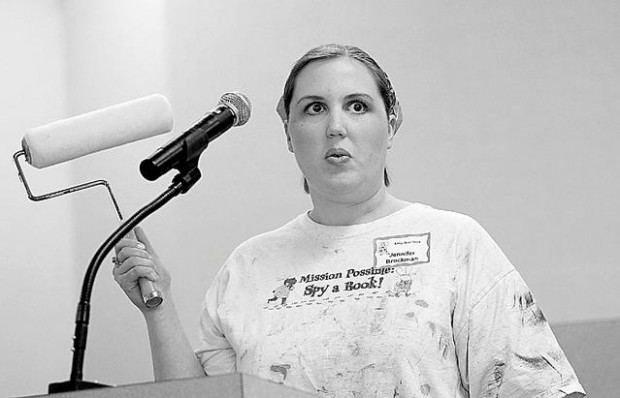
The silly attire masks the seriousness of the competition. Contestants spend weeks leading up to the event poring over spelling lists or practicing with teammates. They study competitors' strengths and weaknesses.
It's a scene being repeated around the country as more people are being bitten by the adult spelling bee bug.
People are also reading…
The contests attract participants who are enthusiastic — even obsessed — about spelling, words and language. It's a way for some contestants to avenge spelling mistakes made as children. For others, it's an opportunity to show off.
Participants admit that the bees can be kooky. But many are happy to take part because the events typically are fund-raisers, as is the case here, where the bee benefits the Frisco Public Library.
What's the draw?
Some adults are attracted to spelling out of love. For others, fear is the motivation.
Laura Belknap Calley, a member of Fegary's Whimsy, enjoys coming across words in old books that are no longer used in conversation. She's intrigued about whether a word has Greek or Latin roots.
"If you don't have the word, then you might not have the idea," said Calley, 38, a former teacher. "The more you can expand your language, you're also expanding your exposure to the world of ideas, you're expanding your heart."
Susan Blessing, Stayin' Alive's leader, cares about spelling because she doesn't want to look stupid. The fifth-grade teacher at Curtsinger Elementary in Frisco shudders at the idea of letters marred with spelling errors going home to parents. She says she wants to appear intelligent, accurate and thorough.
"If I sent a letter to a parent, they may have it for years," said Blessing, 30. "I don't want . . . to be the one who makes a mistake."
What's behind the growing interest in bees?
Some say that "Spellbound," a recent documentary about young participants in the Scripps National Spelling Bee, may have helped fuel an interest in adult spelling. Others point to "The 25th Annual Putnam County Spelling Bee," a Broadway musical about kid spellers. Another movie about a young speller, "Akeelah and the Bee," opened recently.
Bees also may be a chance to confront failures, said Paige Kimble, director of the Scripps contest.
"I think almost any adult who attended school in the United States can tell at least one story about having participated in a spelling bee," she said. And they also can remember the word that felled them."


