Greater Chaco Cultural Landscape was named one of America’s 11 Most Endangered Historic Places for 2026, even as Navajo Nation President Buu Nygren reaffirmed support for a zero-mile oil and gas drilling buffer zone and called for meaningful consultation with affected local communities.
The National Trust for Historic Preservation released its annual list of America’s 11 Most Endangered Historic Places on May 20. Chaco Canyon, in western New Mexico, was nominated by the Pueblo of Acoma and supported by the All Pueblo Council of Governors to protect the ancestral land of modern Pueblo tribes and the origins of several Navajo clans.
To protect these historic places and enable their stories of equality to be shared for generations, all 11 sites will receive a one-time grant of $25,000 from the National Trust.
Although the New Mexico Pueblos continue to seek protections for Chaco, Nygren has been outspoken against the current 20-year ban on oil and gas leasing around the canyon, arguing that it “fails to honor Navajo and tribal sovereignty.” He has also called for a balanced approach that protects both Chaco Canyon’s cultural heritage and the ability of Navajo allottees to benefit from their mineral interests.
People are also reading…
Nygren spoke during a May 13 meeting with the Bureau of Land Management for a government-to-government consultation regarding Public Land Order No. 7923 and the 10-mile buffer zone around the Chaco Culture National Historical Park. His concerns are with Navajo allottees who may be hurt financially by a buffer zone.

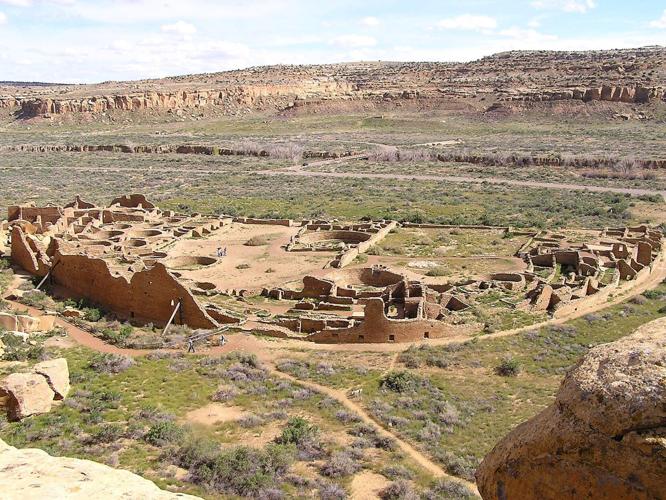
Some preservationists fear that more development and fracking could harm the environment and sites such as Pueblo Bonita, a complex in the Chaco Culture National Historical Park.
While supporting protections for Chaco, Nygren said the people who continue to live in the area should not be overlooked. He testified in 2023 before the House Natural Resources Subcommittee on Energy and Mineral Resources Legislative Hearing.
“The Navajo people have protected Chaco for generations,” he said. “My position is clear: leave it alone. Zero buffer zone is my stance. Everything was good before this started, and the local chapters and communities deserve to be respected.”
Tribes, BLM continue to talk about plan
In April, the Interior Department moved to revoke protections surrounding Chaco Culture National Historical Park with a proposal to rescind Public Land Order 7923, which put wide areas of land around the park off limits to mining and drilling.
A few days after President Donald Trump took office in 2025, Navajo tribal leaders filed a complaint in a New Mexico federal court, arguing the Interior Department's plan to withdraw land from new oil and gas leasing violated the law and could cost land allottees millions of dollars in royalties. The Navajo Nation's lawsuit was dismissed on March 31 without prejudice.
"Chaco is not a museum, and it is not an isolated archaeological park," said APCG Chairman Joey Sanchez of the Pueblo of Santa Ana. "It is a living cultural landscape that our Pueblo people have sustained for more than a thousand years. The National Trust's recognition affirms what our Pueblos have said for generations: this place matters. To us, to the nation, and to the world. The protections we have built over more than a decadecan be undone in a moment. We are calling on the Department of the Interior, on Congress, and on the public to stand with us."
Nygren, joined by Navajo Resource and Development Committee member Danny Simpson — who also supports eliminating the buffer zone — reaffirmed the Navajo Nation’s position backing a zero-mile buffer zone. Both are up for reelection. Nygren said any decisions affecting Navajo allottees, families, grazing users and local communities must involve meaningful consultation with residents.

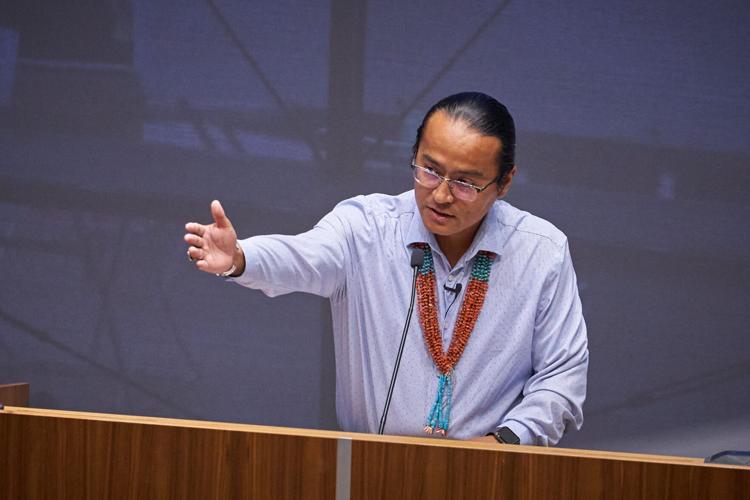
Navajo Nation President Buu Nygren, seen here speaking at a 2022 forum, has called for a zero-mile oil and gas drilling buffer zone at Chaco Canyon.
In 2023, former Interior Secretary Deb Haaland announced the decision to withdraw more than 336,400 acres of public land within a 10-mile radius around Chaco Culture National Historical Park from new oil and gas leasing and mining claims for 20 years. Haaland said the buffer zone was created following “significant consultation” with tribes and noted the withdrawal applies only to public lands and federally owned minerals, not to minerals owned by private, state or tribal entities.
It also does not affect valid existing leases. Production from existing wells could continue, additional wells could be drilled on existing leases and Navajo Nation allottees can continue to lease their minerals.
During the recent BLM consultation, Navajo Nation leaders said cultural resources are already protected through existing tribal and federal laws, including the Navajo Nation Cultural Resource Protection Act, the National Historic Preservation Act and other federal protections. They also said Navajo families in the area rely on these lands for their livelihood and should not be left out of decisions that directly impact them.
The BLM is currently reviewing three alternatives: no action, a five-mile buffer or removal of the 10-mile buffer. A draft environmental assessment is expected to be released for a 14-day public comment period before the decision package moves forward.
Tribes say Chaco is a vital cultural link
Even with Nygren's claim that Navajo Nation has protected Chaco, the All Pueblo Council of Governors said Pueblo and Hopi people have sustained it for more than a thousand years, and it "remains an ancestral homeland and place of ongoing cultural and ceremonial importance for many Pueblo and tribal nations today."
"For Acoma, Chaco is not a distant or abstract place. It is part of who we are," said Governor Charles Riley of the Pueblo of Acoma, the nominating Pueblo. "Our ancestors built, walked, and prayed in that landscape, and our descendants continue to do so today. When the federal government compressed the recent public scoping comment period to just seven days, our community responded — hosting forums, helping community members without internet access, and submitting nearly five hundred individual comments. Each one comes from a person who knows what is at stake."
Since launching in 1988, America’s 11 Most Endangered Historic Places has helped rally support for more than 350 historic sites nationwide. The program is one of the National Trust for Historic Preservation’s leading advocacy efforts and, according to National Trust President and CEO Carol Quillen, this year’s list highlights the nation’s upcoming 250th anniversary and the principle that all people are created equal.
“The Greater Chaco Cultural Landscape is an ancestral homeland of enduring importance to Pueblo and Hopi peoples. It reflects both extraordinary cultural achievement and the ongoing responsibility to protect places that remain central to living communities. Recognizing and safeguarding this landscape is an opportunity to ensure that our cultural and historic landscape reflects the full depth and continuity of its history,” said Quillen.
Pueblo tribes neighboring the Navajo Nation, including the Hopi and Zuni tribes, have joined the All Pueblo Council of Governors in calling for continued protections for Chaco. The Hopi Tribe said its cultural and ancestral ties to Yupköyvi, the Greater Chaco Cultural Landscape, span thousands of years, and emphasized that, like the Pueblo peoples, the Hopi have never severed their connection to the area. The tribe also voiced strong support for maintaining the withdrawal protections.
“The Hopi people’s connection to Chaco Canyon and the Greater Chaco Cultural Landscape did not begin with policy decisions to further harm the landscape. Our ancestors sustained, subsisted, built, traveled, performed ceremonies, and prayed across this landscape for generations. This is an especially important place to the Hopi people, and we will continue to protect it,” said Stewart B. Koyiyumptewa, Tribal Historic Preservation Officer for the Hopi Tribe.