The Taliban ordered girls' secondary schools in Afghanistan to shut on Wednesday just hours after they reopened, sparking heartbreak and confusion over the policy reversal by the hardline Islamist group.
KABUL, Afghanistan (AP) — Afghanistan's Taliban rulers unexpectedly decided against reopening schools Wednesday to girls above the sixth grade, reneging on a promise and opting to appease their hard-line base at the expense of further alienating the international community.
The surprising decision, confirmed by a Taliban official, is bound to disrupt efforts by the Taliban to win recognition from potential international donors at a time when the country is mired in a worsening humanitarian crisis. The international community has urged Taliban leaders to reopen schools and give women their right to public space.
The reversal was so sudden that the Education Ministry was caught off guard on Wednesday, the start of the school year, as were schools in parts of the Afghan capital of Kabul and elsewhere in the country. Some girls in higher grades returned to schools, only to be told to go home.
People are also reading…
Aid organizations said the move exacerbated the uncertainty surrounding Afghanistan's future as the Taliban leadership seems to struggle to get on the same page as it shifts from fighting to governing.

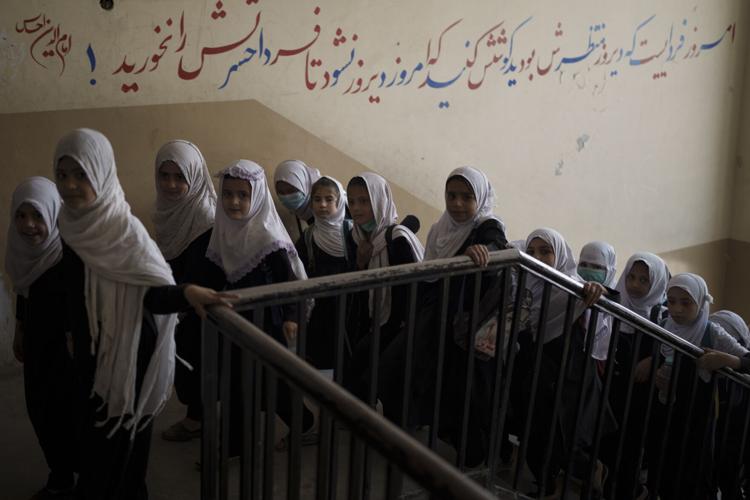
FILE - Girls walk upstairs as they enter a school before class in Kabul, Afghanistan on Sept. 12, 2021. In a surprise decision the hardline leadership of Afghanistan's new rulers has decided against opening educational institutions to girls beyond Grade six, a Taliban official said Wednesday, March 23, 2022 on the first day of Afghanistan's new school year. (AP Photo/Felipe Dana, File)
It also came as the leadership was convening in Kandahar amid reports of a possible Cabinet shuffle.
U.S. Special Representative Thomas West tweeted his "shock and deep disappointment" about the decision, calling it "a betrayal of public commitments to the Afghan people and the international community."
He said the Taliban had made it clear that all Afghans have a right to education, adding, "For the sake of the country's future and its relations with the international community, I would urge the Taliban to live up to their commitments to their people."
The Norwegian Relief Committee, which spends about $20 million annually to support primary education in Afghanistan, was still waiting for official word from the Taliban about canceling the classes for girls above the sixth grade.
Berenice Van Dan Driessche, advocacy manager for the committee, said their representatives had not gotten official word of the change as of Wednesday night, and that girls in the 11 provinces where they work had gone to school but were sent home.

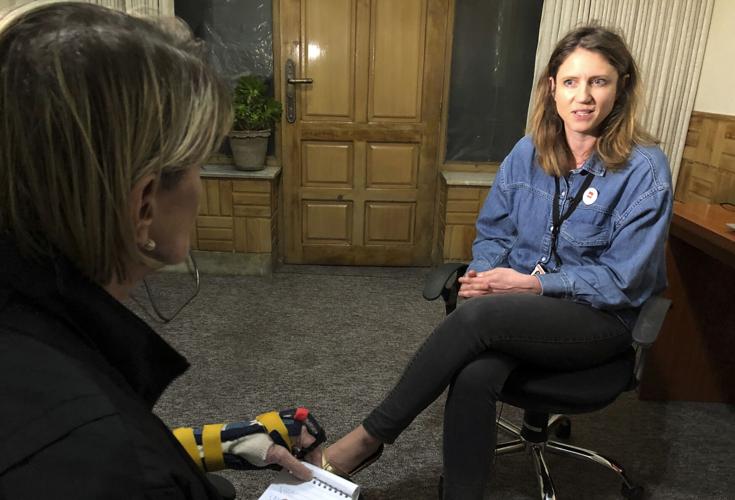
Berenice Van Dan Driessche, right, advocacy manager for the Norwegian Relief Committee, speaks during an interview with The Associated Press in Kabul, Afghanistan, Wednesday, March 23, 2022. The Norwegian Relief Committee, which spends about $20 million annually to support primary education in Afghanistan, was still waiting for official word from the Taliban about canceling the classes for girls above the sixth grade. (AP Photos/Mohammed Shoaib Amin)
The committee's staff in the provinces "reported a lot of disappointment and also a lot of uncertainty" about the future, she said. It said that in some areas, teachers said they would continue to hold classes for the girls until the Taliban issued an official order.
Waheedullah Hashmi, external relations and donor representative with the Taliban-led administration, told The Associated Press the decision was made late Tuesday night.
"We don't say they will be closed forever," Hashmi added.
U.N. special representative Deborah Lyons will try to meet Thursday with the Taliban to ask them to reverse their decision, U.N. spokesperson Stephane Dujarric said.
Earlier in the week, a statement by the Education Ministry had urged "all students" to return when classes resumed Wednesday.
On Tuesday, ministry spokesman Mawlvi Aziz Ahmad Rayan had told AP that all girls would be allowed back to school, although the Taliban administration would not insist on it in those areas where parents were opposed or where schools could not be segregated.

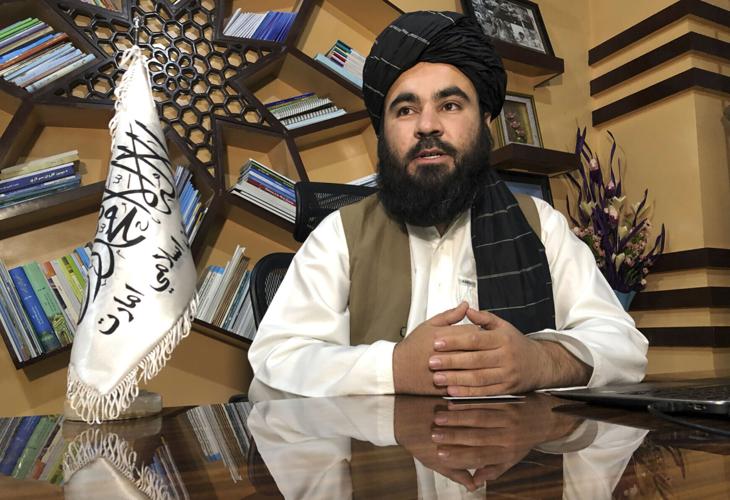
Education Ministry spokesman Mawlvi Aziz Ahmad Rayan speaks during an interview with The Associated Press in Kabul, Afghanistan, Wednesday, March 23, 2022. Afghanistan's Taliban rulers unexpectedly decided against reopening schools Wednesday to girls above the sixth grade, reneging on a promise and opting to appease their hard-line base at the expense of further alienating the international community. (AP Photo/Mohammed Shoaib Amin)
He was reluctant to give details but promised if schools can meet these conditions, "there would no issue for them" to begin classes for girls in the higher grades.
"In principle, there is no issue from the ministry side, but as I said, it is a sensitive and cultural issue," he added.
The decision to postpone the return of girls at the higher grade levels appeared to be a concession to the rural and deeply tribal backbone of the hard-line Taliban movement that in many parts of the countryside are reluctant to send their daughters to school.
The decision also came as the movement's leadership has been summoned to southern Kandahar by the reclusive Taliban leader, Haibatullah Akhunzada, amid reports of a Cabinet shakeup, according to an Afghan leader who is also a member of the leadership council. He spoke on condition of anonymity because he was not authorized to talk to the media.
The official said it was possible that some senior interim Cabinet positions could be changed.

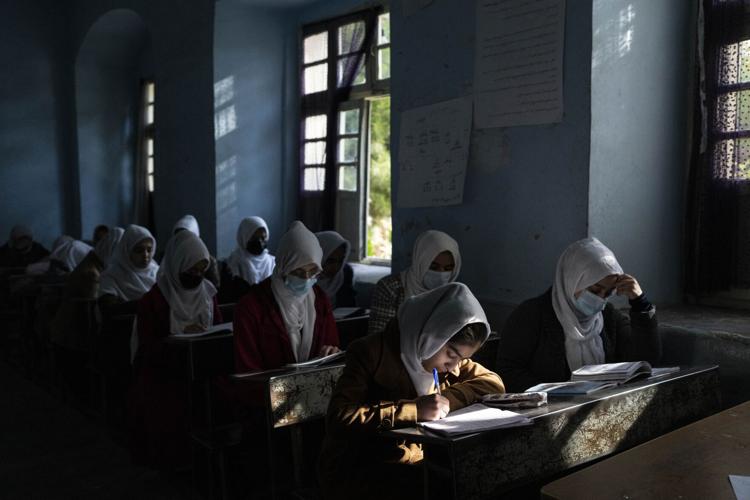
FILE - Afghan girls participate in a lesson at Tajrobawai Girls High School in Herat, Afghanistan on Nov. 25, 2021. In a surprise decision the hardline leadership of Afghanistan's new rulers has decided against opening educational institutions to girls beyond Grade six, a Taliban official said Wednesday, March 23, 2022 on the first day of Afghanistan's new school year. (AP Photo/Petros Giannakouris, File)
Since the Taliban swept to power in August 2021, there have been persistent reports of differences among the senior leadership. According to these reports, more hard-line members are at odds with pragmatists, who want to see a greater engagement with the world. While staying true to their Islamic beliefs, they want to be less harsh than when they last ruled Afghanistan, banning women from work and girls from schools, the reports say.
Television is permitted in Afghanistan today, unlike in the past, and women are not required to wear the all-encompassing burqa. but must wear the traditional hijab, covering their heads. Women have also returned to work in the Health and Education ministries and at Kabul International Airport at passport control and customs.
The Taliban were ousted in 2001 by a U.S.-led coalition for harboring al-Qaida leader Osama bin Laden and returned to power after America's chaotic departure last year.
Girls have been banned from school beyond the sixth grade in most of the country since the Taliban's return. Universities opened earlier this year in much of the country, but since taking power the Taliban edicts have been erratic. While a handful of provinces continued to provide education to all, most provinces closed educational institutions for girls and women.

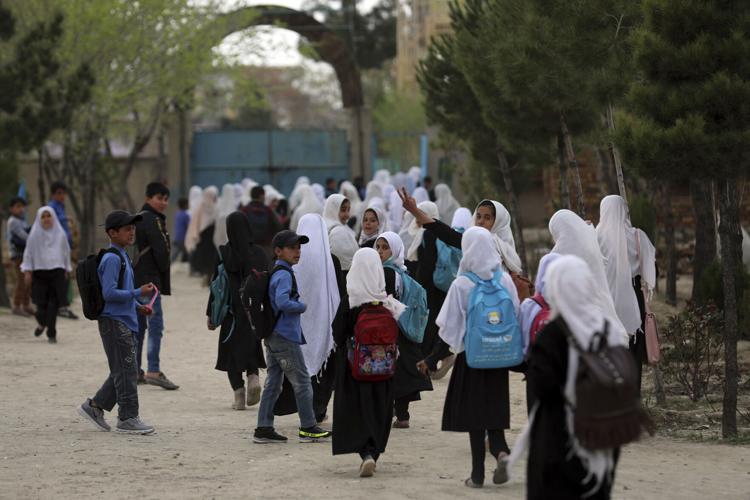
FILE - Afghan students leave school classes in a primary school in Kabul, Afghanistan on March 27, 2021. In a surprise decision the hardline leadership of Afghanistan's new rulers has decided against opening educational institutions to girls beyond Grade six, a Taliban official said Wednesday, March 23, 2022 on the first day of Afghanistan's new school year. (AP Photo/Rahmat Gul, File)
In the capital of Kabul private schools and universities have operated uninterrupted.
The religiously driven Taliban administration fears going forward with enrolling girls beyond the sixth grade could alienate their rural base, Hashmi said.
"The leadership hasn't decided when or how they will allow girls to return to school," he said. While he accepted that urban centers are mostly supportive of education for girls, much of rural Afghanistan is opposed, particularly in Pashtun tribal regions.
In some rural areas, a brother will disown a city-dwelling brother who allows a daughter to go to school, said Hashmi, adding that the Taliban leadership is trying to decide how to open education for girls beyond the sixth grade nationwide.
Most Taliban are ethnic Pashtuns. In their sweep through the country last year, other ethnic groups such as Uzbeks and Tajiks in northern Afghanistan either joined the fight with them or simply did not oppose them.
"We did everything the Taliban asked in terms of Islamic dress, and they promised that girls could go to school and now they have broken their promise," said Mariam Naheebi, a journalist who spoke to the AP in Kabul.
"They have not been honest with us," added Naheebi, who has protested for women's rights.
___
Photos: Scenes from a desperate Afghanistan as Taliban face economic ruin

Two brothers carrying canisters with a wheelbarrow react on their way to collect water from a stagnant pool, about 3 kilometers (2 miles) from their home in Kamar Kalagh village outside Herat, Afghanistan, Friday, Nov. 26, 2021. Drought in Afghanistan, the worst in decades, is now entering its second year, exacerbated by climate change. (AP Photo/Petros Giannakouris)

Saliha holds her 4-month-old baby Najeeb as he undergoes treatment at the malnutrition ward of the Indira Gandhi Children's Hospital in Kabul, Afghanistan, Wednesday, Dec. 8, 2021. Since the chaotic Taliban takeover of Kabul on Aug. 15, an already war-devastated economy once kept alive by international donations alone is now on the verge of collapse. There isn't enough money for hospitals. The World Health Organization is warning of millions of children suffering malnutrition, and the U.N. says 97% of Afghans will soon be living below the poverty line. (AP Photo/Petros Giannakouris)

A child looks out a window of his home in a neighborhood where many internally displaced people have been living for years, in Kabul, Afghanistan, Tuesday, Dec. 7, 2021. Since the chaotic Taliban takeover of Kabul on Aug. 15, an already war-devastated economy once kept alive by international donations alone is now on the verge of collapse. There isn't enough money for hospitals. The World Health Organization is warning of millions of children suffering malnutrition, and the U.N. says 97% of Afghans will soon be living below the poverty line. (AP Photo/Petros Giannakouris)

An Afghan green grocery store owner stands outside his shop as a girl buys bread from a bakery, in Kabul, Afghanistan, on Wednesday, Nov. 17, 2021. Since the chaotic Taliban takeover of Kabul on Aug. 15, an already war-devastated economy once kept alive by international donations alone is now on the verge of collapse. (AP Photo/ Petros Giannakouris)

Afghan girls participate in a lesson at Tajrobawai Girls High School, in Herat, Afghanistan, Thursday, Nov. 25, 2021. Since the chaotic Taliban takeover of Kabul on Aug. 15, an already war-devastated economy once kept alive by international donations alone is now on the verge of collapse. The World Health Organization is warning of millions of children suffering malnutrition, and the U.N. says 97% of Afghans will soon be living below the poverty line. (AP Photo/Petros Giannakouris)

A man disributes bread to Afghan women outside a bakery in Kabul, Afghanistan, on Thursday, Dec, 2, 2021. Since the chaotic Taliban takeover of Kabul on Aug. 15, an already war-devastated economy once kept alive by international donations alone is now on the verge of collapse. There isn't enough money for hospitals. The World Health Organization is warning of millions of children suffering malnutrition, and the U.N. says 97% of Afghans will soon be living below the poverty line. (AP Photo/Petros Giannakouris)

A Taliban fighter stands at a check point in Herat, Afghanistan, Sunday, Nov. 28, 2021. Since the chaotic Taliban takeover of Kabul on Aug. 15, an already war-devastated economy once kept alive by international donations alone is now on the verge of collapse. There isn't enough money for hospitals. The World Health Organization is warning of millions of children suffering malnutrition, and the U.N. says 97% of Afghans will soon be living below the poverty line. (AP Photo/Petros Giannakouris)

Afghan men sit in a bus at a bus station in Herat, Afghanistan, Monday, Nov. 22, 2021, for a 300-mile trip south to Nimrooz near the Iranian border. Afghans are streaming across the border into Iran, driven by desperation after the near collapse of their country's economy following the Taliban's takeover in mid-August. (AP Photo/Petros Giannakouris)

A family warms up next to a makeshift fire outside the Directorate of Disaster office where they are camped, in Herat, Afghanistan, Monday, Nov. 29, 2021. About 2,000 internally displaced people left Allahyar village in Ghor province because of a drought and are seeking help from the regional government in Herat. (AP Photo/Petros Giannakouris)

Women queue to receive cash at a money distribution site organized by the World Food Program in Kabul, Afghanistan, on Saturday, Nov. 20, 2021. Thousands of Afghan families are registering for WFP aid because they cannot afford food during the country's economic collapse. (AP Photo/Petros Giannakouris)

Taliban fighters and Afghan men pray in Kamar Kalagh village near Herat, Afghanistan, Saturday , Nov. 27, 2021. Since the chaotic Taliban takeover of Kabul on Aug. 15, an already war-devastated economy once kept alive by international donations alone is now on the verge of collapse. (AP Photo/Petros Giannakouris)

An Afghan woman exits a convenience shop in Kabul, Afghanistan, Sunday, Dec. 5, 2021. Since the chaotic Taliban takeover of Kabul on Aug. 15, an already war-devastated economy once kept alive by international donations alone is now on the verge of collapse. (AP Photo/ Petros Giannakouris)

An Afghan man collects scraps of aluminum and plastic, in Herat, Afghanistan, Monday, Nov. 22, 2021. Since the chaotic Taliban takeover of Kabul on Aug. 15, an already war-devastated economy once kept alive by international donations alone is now on the verge of collapse. The World Health Organization is warning of millions of children suffering malnutrition, and the U.N. says 97% of Afghans will soon be living below the poverty line.(AP Photo/Petros Giannakouris)

A boy carries bread in Herat, Afghanistan, Thursday , Nov. 25, 2021. Since the chaotic Taliban takeover of Kabul on Aug. 15, an already war-devastated economy once kept alive by international donations alone is now on the verge of collapse. The World Health Organization is warning of millions of children suffering malnutrition, and the U.N. says 97% of Afghans will soon be living below the poverty line. (AP Photo/Petros Giannakouris)

A young girl stands outside her home as two dogs lie on the ground in Kamar Kalagh village near Herat, Afghanistan, Saturday, Nov. 27, 2021. Since the chaotic Taliban takeover of Kabul on Aug. 15, an already war-devastated economy once kept alive by international donations alone is now on the verge of collapse. The World Health Organization is warning of millions of children suffering malnutrition, and the U.N. says 97% of Afghans will soon be living below the poverty line. (AP Photo/Petros Giannakouris)

Brothers fill canisters with water from a pool of stagnant water about 3 kilometers (2 miles) from their home in Kamar Kalagh village outside Herat, Afghanistan, Friday, Nov. 26, 2021. Since the chaotic Taliban takeover of Kabul on Aug. 15, an already war-devastated economy once kept alive by international donations alone is now on the verge of collapse. The World Health Organization is warning of millions of children suffering malnutrition, and the U.N. says 97% of Afghans will soon be living below the poverty line. (AP Photo/Petros Giannakouris)

A girl walks with the help of her father in Indira Gandhi Children's Hospital in Kabul, Afghanistan, on Wednesday, Dec. 8, 2021. Since the chaotic Taliban takeover of Kabul on Aug. 15, an already war-devastated economy once kept alive by international donations alone is now on the verge of collapse. There isn't enough money for hospitals. The World Health Organization is warning of millions of children suffering malnutrition, and the U.N. says 97% of Afghans will soon be living below the poverty line. (AP Photo/Petros Giannakouris)

A drug addict collects scraps of aluminum and plastic in Kabul, Afghanistan, Wednesday, Nov. 17, 2021. Since the chaotic Taliban takeover of Kabul on Aug. 15, an already war-devastated economy once kept alive by international donations alone is now on the verge of collapse. There isn't enough money for hospitals. The World Health Organization is warning of millions of children suffering malnutrition, and the U.N. says 97% of Afghans will soon be living below the poverty line. (AP Photo/ Petros Giannakouris)

Mohammad Ayoub, 65, the only male left after all the younger men tried their luck in leaving for Iran, stands in front of Jar-e Sawz, the village where he lives on the outskirts of Herat, Afghanistan, Saturday, Nov. 27, 2021. Since the chaotic Taliban takeover of Kabul on Aug. 15, an already war-devastated economy once kept alive by international donations alone is now on the verge of collapse. There isn't enough money for hospitals. The World Health Organization is warning of millions of children suffering malnutrition, and the U.N. says 97% of Afghans will soon be living below the poverty line. (AP Photo/Petros Giannakouris)

An Afghan woman is wrapped in a blanket as she and her family camp outside the Directorate of Disaster in Herat, Afghanistan, Monday, Nov. 29, 2021. About 2,000 internally displaced people left Allahyar village of Ghor province because of the drought that worsened their economic situation and are asking for help from the regional government in Herat. (AP Photo/Petros Giannakouris)
KABUL, Afghanistan (AP) — The bitter cold of Afghanistan's winter has small children huddled beneath blankets in makeshift camps. Sick babies in hospitals lie wrapped in their mothers' all-enveloping burqas. Long lines at food distribution centers have become overwhelming as Afghanistan sinks deeper into desperate times.
Since the chaotic Aug. 15 Taliban takeover of Kabul, an already war-devastated economy once kept alive by international donations alone is now on the verge of collapse. There isn't enough money for hospitals.
Saliha, who like many Afghans uses just one name, took her infant son to the Indira Gandhi Children's Hospital in the capital, Kabul. Weak and fragile, 4-month-old Najeeb was badly malnourished.
The World Health Organization is warning of millions of children suffering malnutrition, and the United Nations says 97% of Afghans will soon be living below the poverty line.
For millions living in camps for the displaced or sitting outside government ministries seeking help, the only source of warmth is to huddle around open wood-burning fires.
Nearly 80% of Afghanistan's previous government's budget came from the international community. That money, now cut off, financed hospitals, schools, factories and government ministries. In the Taliban's Afghanistan there is no money. Sanctions have crippled banks while the U.N., the United States and others struggle to figure out how to get hundreds of millions of dollars of humanitarian aid to Afghans while bypassing the Taliban, even as there are no immediate signs of the widespread corruption that characterized the previous administration.
For many of Afghanistan's poorest, bread is their only staple. Women line up outside bakeries in the city, young children arrive before dawn to get bread. The majority scramble to find food, and fuel. The statistics provided by the U.N. are grim: Almost 24 million people in Afghanistan, around 60% percent of the population, suffer from acute hunger. As many as 8.7 million Afghans are coping with famine.
School for girls under the Taliban is erratic, and in many provinces they are not allowed to attend school after grade 6, but in more than 10 provinces schools are open. The international community is working on ways to help the schools that are open while encouraging the Taliban to open the rest.
In some areas, such as the western Herat province, teachers and parents together cajole local Taliban leaders to open schools. In schools like Tajrobawai Girls High School in Herat, it is paying off.
Months ago, the United Nations High Commissioner for Refugees warned of a mass exodus of Afghans should Afghanistan be allowed to free fall into an economic abyss.
The exodus has already begun as thousands stream out of Afghanistan for Iran in desperation. By the hundreds they pack buses that take them from Herat to nearby Nimroz province from where they make the dangerous trek into Iran. Some hope to go further, to Turkey and eventually to Europe — despite Europe's increasing determination to keep migrants out.
___
Follow AP visual journalism:
Instagram: https://www.instagram.com/apnews
AP Images on Twitter: http://twitter.com/AP_Images
AP Images blog: http://apimagesblog.com/