

The NFL will consider two separate proposals to change the overtime format for the upcoming season at the annual league meetings next week in Palm Beach, Fla.
Indianapolis and Philadelphia have sponsored a proposal to allow both teams an opportunity to possess the ball in overtime. The Tennessee Titans, meanwhile, have proposed that both teams should get the chance to possess the ball unless the team with the first possession scores a touchdown and a successful two-point conversion.
The NFL’s Competition Committee opted not to take a stand on either proposal but acknowledges there is a need to seriously consider a change.
“I’ll hold off on what my vote is, but I do think there’s a lot of momentum to have a change,” said Rich McKay, Atlanta Falcons president and the NFL’s Competition Committee chairman.
People are also reading…
“The reason we didn’t as a committee put one forth,” McKay said on a media conference call Friday, “is because we felt like with these two proposals there’s going to be the potential for an amendment on the floor if somebody wants to change either one of these, and these encompass the major discussion, which is should both teams be guaranteed a possession? Should there be consideration of doing it only in the postseason? I think that will be discussed by some teams.”
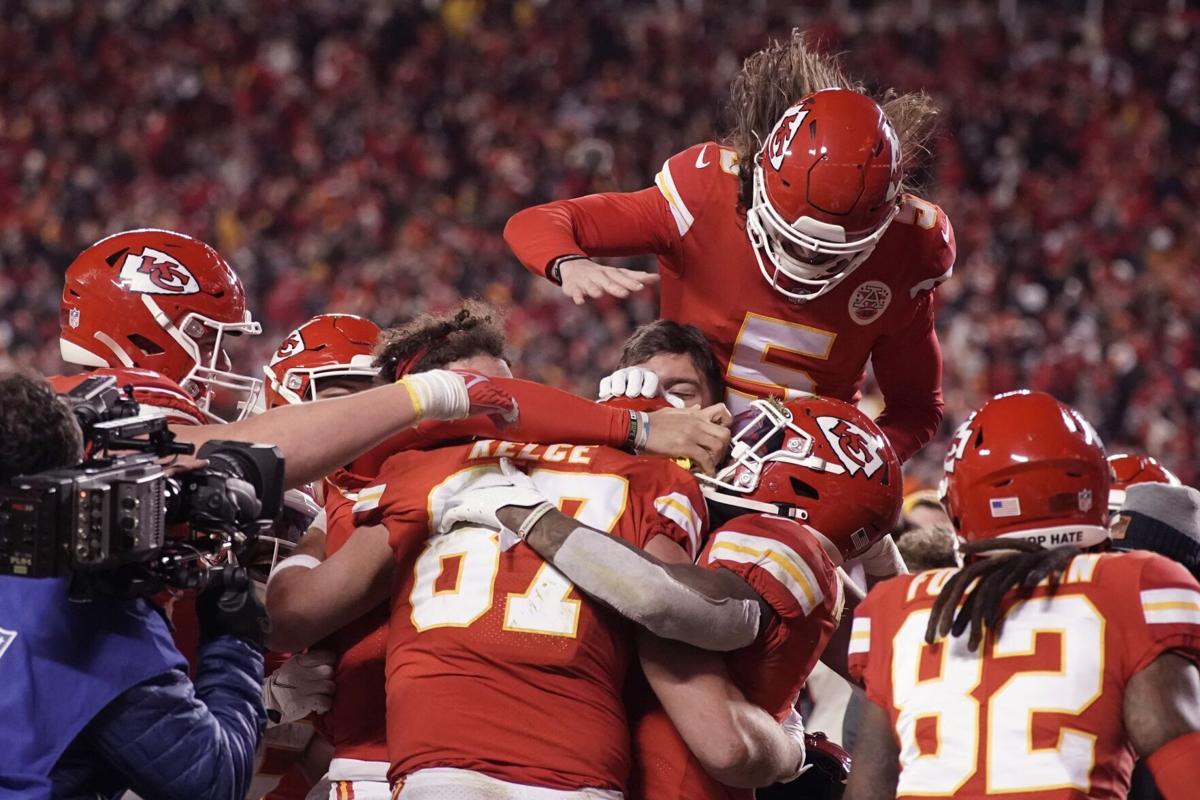
The momentum in the NFL for a change to overtime increased this year after the Buffalo Bills’ 42-36 playoff loss at Kansas City, in which the Bills never got the ball in the extra period.
“We’ve seen the progression of offense and how efficient offenses are, specifically in the postseason,” McKay said.
In fact, McKay said in the last 12 postseason overtime games, the team that won the coin toss also won the game 10 times and seven of those victories came on the first drive.
Under both proposals, the rule change would apply to the regular season and the postseason. However, that could be amended during the meetings.
Bills General Manager Brandon Beane said at the NFL scouting combine last month the Bills would be happy with a rule change that applied only to the postseason. The Bills discussed an initial overtime proposal that would have mandated a minimum time period for overtime, but McKay said no proposal from the Bills was presented to the Competition Committee.
McKay cautioned that rules changes – even those that seem to have widespread acceptance – tend to take years to get passed.
“My history on this rule tells me 24 votes is not easy to get,” McKay said. “But I do think the statistics absolutely warrant an examination of whether our overtime rules need to be further modified. ... In my opinion it is time to talk about it. I think the statistics say that. But 24 votes? That’s usually a pretty big hill to climb the first time, but let’s see what happens.”
Under the straightforward proposal by the Colts and Eagles, if one team has more points than the other after each team has had one overtime possession, then the game is over. If neither team scores on its first possession, then the next score wins. If the kicking team legally recovers the kick, via a fumble or an onside kick, the receiving team is considered to have had its opportunity to possess the ball.
There is a small exception to the proposal by the Titans. If the team that kicks off to open the overtime gets a safety while on defense on the first possession, then the game is over.
Another small exception states that in the regular season, the overtime period is limited to 10 minutes. If one team possesses the ball the entire 10 minutes, the second team does not get a chance to get the ball.
If both teams are guaranteed a possession, will teams go for the two-point conversion in overtime, regardless of how the rule is written? McKay thinks the answer likely is yes, especially if the second team with the ball matches the first team’s TD.
Meanwhile, one proposal the Bills joined in sponsoring will make it to the voting floor. Under an amendment by Baltimore, Buffalo, Philadelphia and Tampa Bay, the league’s Anti-Tampering Policy would be changed in regard to Secondary Football Executive positions – meaning, to allow the employer club the choice to retain its player personnel staff through the end of the draft. After the draft and through June 30, the employer club is required to grant permission for another club to interview and hire a non-high-level executive or non-secondary football executive for a secondary football executive position.
If a team wants to hire someone to be a general manager – as the Giants did in luring Bills assistant GM Joe Shoen this January – there is no restriction. But if a team wants to fill its assistant GM post or its college scouting director position with another team's employee, the other club wouldn’t be required to give permission until after the draft.


