
Get ready:
Live Theatre Workshop wants us to think.
Imagine that: The company trusts that triple digit figures haven’t fried our brains.
But it will compel us to think in the most thrilling way: with Brian Friel’s 1994 play “Molly Sweeney,” which opens in previews tonight.
Here’s the skinny on the weighty piece:
The playwright
Friel is considered one of today’s master storytellers. And there’s not much to argue with there: Among the works by the Irish playwright are “Dancing at Lughnasa” and “The Faith Healer,” two remarkable pieces.
His works often touch on isolation, change, loss and conflict, especially conflicts within ourselves. And they do it with flowing language and compelling stories.
People are also reading…
This story
Friel’s play is said to have been inspired by an Oliver Sacks’ case study, “To See and Not See,” about a blind man whose eyesight was recovered after surgery. Like all of Friel’s works, the action takes place in a small Irish town. Also like all his works: The story and characters and ideas could be in any town, any where.
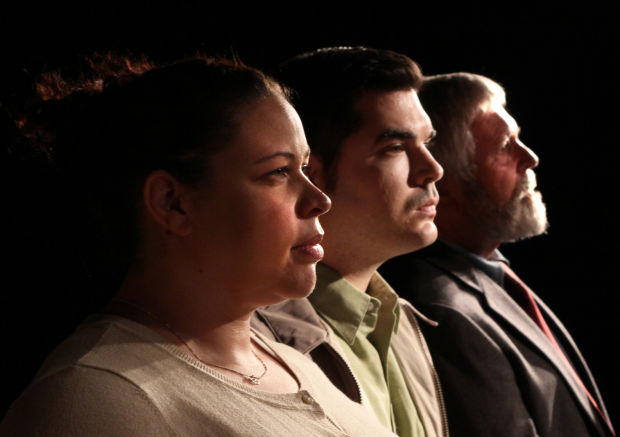
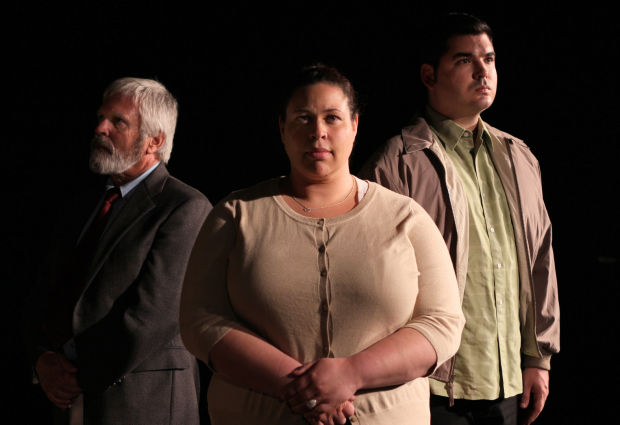
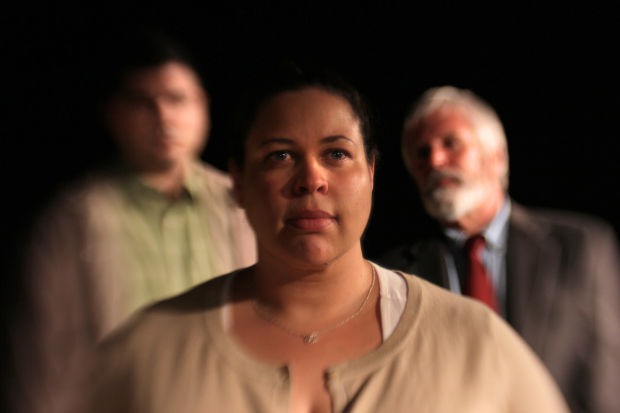
Molly, in her early 40s, has been blind since she was 10 months old. Her husband, Frank, a man who loves causes, is convinced that if Molly has surgery to restore her eyesight, her life would improve immensely. Molly’s life, in fact, is rich and full. But she is willing to try surgery if it will please her husband. Enter Mr. Rice, once a skilled eye surgeon but now a man damaged by a wife who left him for a co-worker and excessive sips of Irish whiskey.
Molly’s eyesight is restored, but seeing isn’t necessarily all it’s cracked up to be. With sight, she loses much: her confidence, the world she knew through her senses, and an inner-peace that had long defined her life.
About that blindness
Molly isn’t the only one. The other two characters lack insight — Mr. Rice to the marriage that fell apart and his role in it, Frank to what Molly really wants and who she is. Emotional and intellectual blindness runs rampant in the play.
The structure
The three characters never interact. We find out who they are and what they are thinking through a series of monologues. This approach further underscores the isolation that runs through the play.