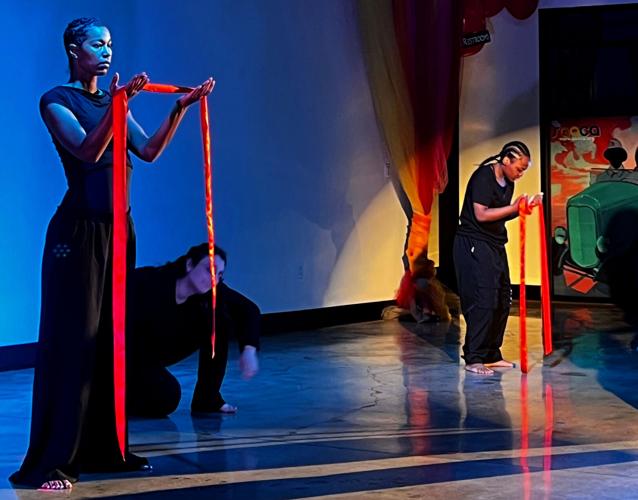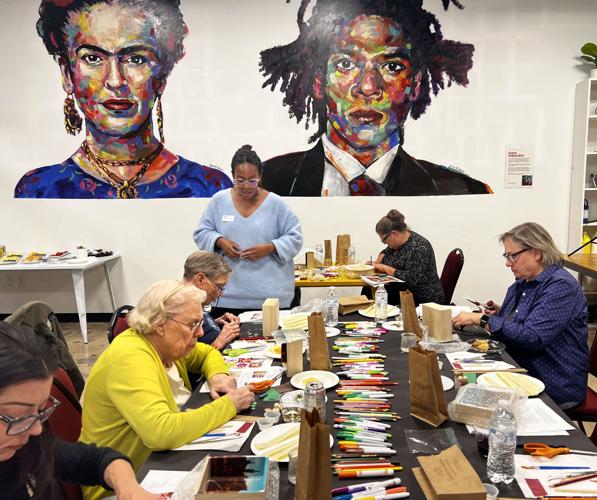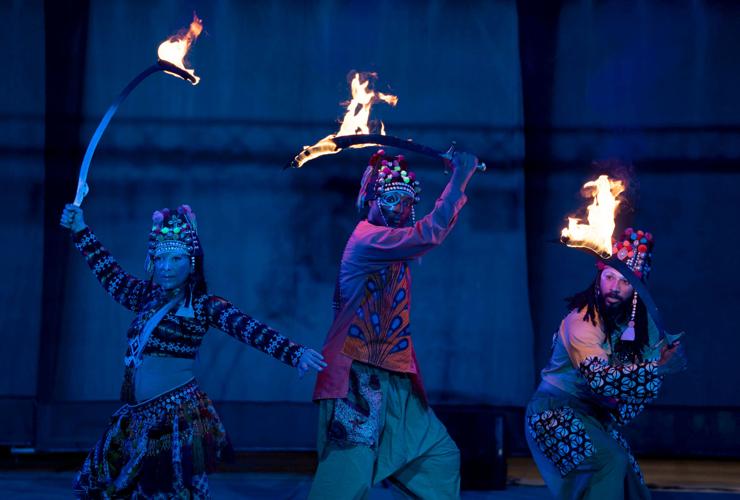

Art State Arizona partnered with the city of Glendale to produce the Glendale Arts & Culture Fest in Murphy Park, bringing artists, performers, makers, cultural organizations, and community members together in the heart of downtown Glendale.
On her first day as Fountain Hills' economic development director, Amanda Jacobs walked around downtown to get a feel for the community.
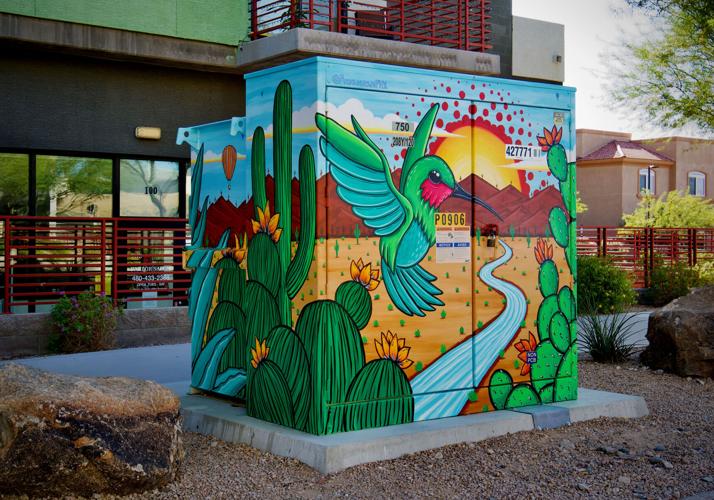
Most of the local business owners she met had the same question: What could the former Oro Valley economic development manager do about the white Salt River Project utility boxes in front of their buildings?
“They were just white and some almost looked tarnished and ugly,” Jacobs recalled.
The businesses wanted the town to do more than wrap the boxes; they wanted to hire muralists and turn the ugly boxes into beautiful art.
After getting the OK from SRP, which provides most of the Phoenix area’s electric service, Jacobs started researching arts organizations in the East Valley.
People are also reading…
“I looked at some of the larger cities (around Fountain Hills) such as the city of Tempe … and I couldn’t find anything comparable to Southern Arizona Arts and Cultural Alliance,” she said, referring to the nonprofit arts organization she had worked with during her time in Oro Valley. “And so I reached out to Kate Marquez and asked her if we could do a partnership.”

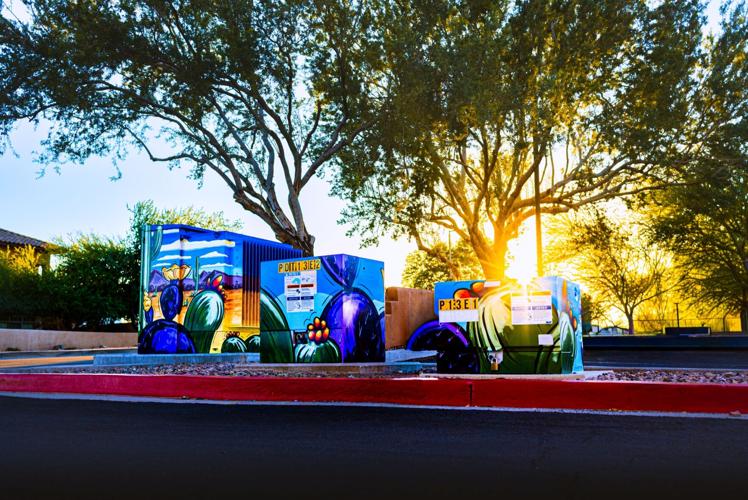
Art State Arizona helped the town of Fountain Hills find muralists to paint over the SRP electric boxes downtown. To date, the town has created art from at least 30 electric boxes around town.
It was not the first time someone outside of Southern Arizona had wanted to partner with Marquez and SAACA.
For more than 15 years, Marquez and her nonprofit arts organization have been collaborating with smaller municipalities, communities and arts organizations in the greater Phoenix area on public art projects, concert events and other arts-centric projects.
Earlier this year, the organization that Marquez has helmed for 21 years officially changed its name to Art State Arizona and refocused its mission from serving all of Southern Arizona to serving all of the state.
“Ultimately, our vision is to help build what we believe Arizona can become: the first true art state,” Marquez said. “We want to think of Arizona as a creative hub. … If we all band together and talk about the state as a whole and its unique geographical presence and art … we could tell the story of Arizona in a different way.”
Marquez, Art State Arizona’s founder and CEO, had wanted to change SAACA’s name back in 2020, but the nonprofit arts organization that she had run since 2005 had just launched Catalyst Creative Collective in the Tucson Mall and was navigating the COVID-19 pandemic that put everything on hold.
No one knew how the pandemic would impact the arts in the long term or “what artists will need on the back end of this,” Marquez said. So she and her staff, including Deputy Director Matt Roland, hit pause.

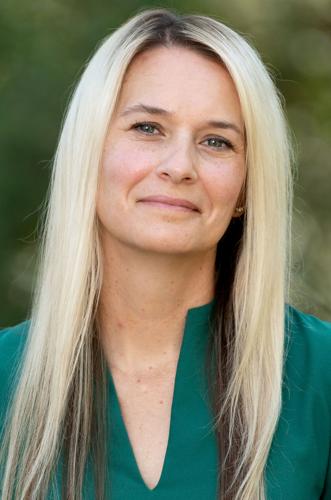
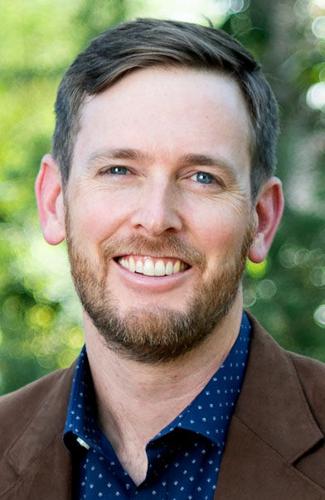
Kate Marquez, CEO and founder of Art State Arizona.
Marquez had experience when it came to finding a path forward from circumstances beyond her control. She had steered Art State Arizona’s predecessor through the financial rollercoaster of the 2007 recession, when the organization lost its primary funding from the town of Oro Valley.
“That was a pretty existential crisis for us,” said Marquez, who had no arts management or advocacy experience before going to work for the town. “And so that's when we really started having conversations before we decided, ‘Okay, we just kind of fold with other communities around us’.”
Marquez and her staff started looking at neighboring communities including Marana, SaddleBrooke, Dove Mountain and others that didn’t have established arts programs.
“In the state of Arizona, (of the) 91 counties, municipalities and cities, only 12 to 15 have actual institutions held within government that are funded, like an arts department or a cultural affairs department, that regrants and funds and produces programming,” she said. “That to us signaled a huge gap in need.”
SAACA attempted to fill that with a series of visual arts events, arts and crafts fairs and concert series at local parks like Marana’s Crossroads at Silverbell District and malls including La Encantada in the Catalina Foothills.
SAACA also launched a series of signature culinary arts events including teaming up with Tucson Original Restaurants in 2007 to host the World Margarita Championship held in June; Southern Arizona Salsa and Tequila Challenge, launched in 2011, which morphed into the hugely popular Southern Arizona Salsa, Tequila & Taco Challenge; SAVOR Southern Arizona Food & Wine Festival that came on board in 2013; and Best 23 Miles of Mexican Food, a 2016 collaboration with Visit Tucson that was rebranded as America’s Best Mexican Food in 2024.

Art State Arizona, formerly Southern Arizona Arts and Cultural Alliance, has refocused its mission from serving all of Southern Arizona to serving all of the state. “Ultimately, our vision is to help build what we believe Arizona can become: the first true art state,” said its founder and CEO, Kate Marquez. “We want to think of Arizona as a creative hub." In this photo, Esperanza Dance Project performed at Catalyst Creative Collective, run by Art State Arizona in Tucson Mall.
But the need was not just in Southern Arizona.
In 2013, SAACA teamed up with the Phoenix-based Local First Arizona to help organize and manage its hugely successful Devour Culinary Classic, which for years had been held at the Phoenix Art Museum before moving in 2018 to the Desert Botanical Garden.
“We needed a logistics partner,” said CEO Kimber Lanning, a longtime fixture in the Phoenix arts community. “They are a highly unique organization that has kind of a variety of things under one house: the logistics and operations, the ideas and the vision, as well as the creative network of people to contribute. So when you bring all of those things together with one organization, they've just been fantastic partners for us.”

Art State Arizona is based out of Catalyst Creative Collective in the Tucson Mall, an incubator of local arts and artists.
That partnership with Local First Arizona opened the door for SAACA to collaborate on other Local First Arizona programs in the Phoenix area.
One size does not fit all
Over the past decade or so, SAACA made its way into 32 municipalities around the state, many of them unincorporated, Marquez said.
“In some cases, it's consulting; we're just starting a conversation, or we're providing data to elected officials and working with artist groups,” she said. “And in other cases it's like deploying programs, like Fountain Hills exploring what electric box murals would look like.”
Communities turn to the group, based out of Catalyst Creative Collective in the Tucson Mall, because of its expertise when it comes to logistics.
They also see Marquez’s proven track record for creating events that tell a community’s story.
In 2022, the West Valley city of Glendale tapped SAACA to help implement a public art program. They also wanted some help to plan events around Super Bowl LVII, being held in 2023 at State Farm Stadium — five miles and a world away from downtown Glendale.
Marquez said the city of about 262,000 had a bit of an identity crisis: the old Glendale, home to generations whose roots go 50 to 75 years deep; and the new Glendale, people relatively new to the city who related more to the pace of Westgate, the entertainment district next to the football stadium, than to the antique stores, mom-and-pop shops and history of downtown Glendale.
SAACA came up with the Downtown Glendale Arts & Cultural Festival. The inaugural event in February 2023 featured more than 100 artists, musicians, and interactive arts experiences, including a performance by Tucson’s Flam Chen, the cirque and fire ensemble that is a regular in Tucson’s annual All Souls procession.
The festival has returned to downtown Glendale every year since. It’s back on Jan. 30, 2027, with the Route 60-themed “Arizona Route 60 Reimagined.”
SAACA played a similar organizing role in the arts community of Patagonia.
In 2015, the community reached out to SAACA to help with its annual Patagonia Fall Festival. The event had grown to a point, Marquez said, where the community was struggling to manage it.
“So we stepped in to help,” she said. “But there is an important distinction: The festival still belongs to the town of Patagonia. We are there to provide the organizational capacity, production experience and infrastructure that the community needed, while allowing Patagonia to retain its identity and ownership of its event.”
For the Phoenix-based Flinn Foundation, Art State Arizona stepped in last year to create a gallery in a renovated office at their downtown headquarters.
The Flinn Foundation, which has been supporting the arts since 1985, had initially imagined a gallery dedicated to rotating featured artists, but Art State Arizona pitched an idea that spotlighted something that reflected the foundation’s achievements.
“Instead of simply hanging artwork on the walls, we could develop exhibitions that connected directly to the work the foundation was doing throughout Arizona,” Marquez said, including the foundation’s Flinn Scholars program.
The foundation launched the merit-based scholarship program in 1986 as a way to keep Arizona students in state universities. The full-ride scholarships are good at the state’s three universities — University of Arizona in Tucson, Arizona State University in Tempe and Northern Arizona University in Flagstaff.
Art State Arizona’s exhibit connected scholars with artists to create original works that told the story of the scholars’ leadership journeys. The artwork and the scholar artists’ stories were displayed through 2025.
Marquez said they are now working with the foundation’s Flinn-Brown Scholars program — geared to civic leaders from tribal, rural and urban communities across Arizona — on a young people’s picture and storybook retracing the leadership paths of Flinn-Brown scholars from 15 Arizona counties.
“We brought together an illustrator and writer to help translate the scholars' leadership journeys into a story that can speak to a much younger audience,” Marquez said. “The idea is simple but powerful. We want children to understand that leadership is not something that begins when you are an adult.”
Last year, Marquez and her team returned to Fountain Hills to help the Phoenix-area town of just shy of 24,000 organize a community concert series.
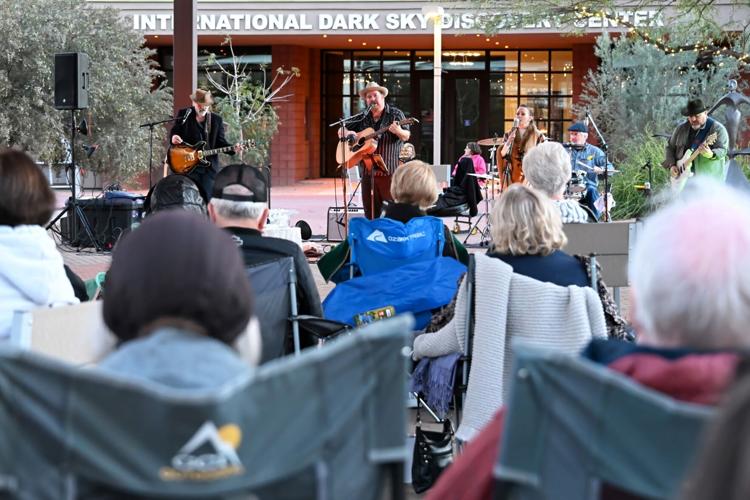
Jacobs and town officials envisioned their monthly 3rd Thursdays Concert Series to be a true community event that would bring residents out to Centennial Pavilion, located in the Town Center near the International Dark Sky Discovery Center set to open early next year.
“They have a massive reach when it comes to a call to artists,” Jacobs said. “We wanted different genres, so country, R&B, rock, and they were able to assist us with a list of bands for us to select.”

Matt Roland, deputy director of Art State Arizona.
That list came from Art State Arizona’s expansive AZ Creative Sector Directory, a statewide resource that brings anyone associated with arts, culture and creativity into one database, from performers and visual artists to entrepreneurs and businesses. Lanning said the directory is the state’s largest, most comprehensive database of working artists.
The audience for the inaugural 3rd Thursday concert last year numbered about 50, Jacobs said. The audience grew for every event after, with nearly 300 people turning out for the final events last spring.
“It became very popular, and so it's going to return again this year, from October through March,” Jacobs said.
No one path to making Arizona an art state
Ultimately, Art State Arizona’s vision “is to help build what we believe Arizona can become: the first true ‘art state’,” Marquez said.
That largely involves changing the narrative to focus on what a community can look like and achieve when the arts are given a central role.
“That does not simply mean increasing arts funding, although sustainable funding matters enormously,” Marquez said, noting that Arizona per capita state funding ranks at the bottom of the country — a fact backed up by a National Assembly of State Arts Agencies survey that ranked Arizona fifth from last when it comes to state arts funding.
“If we all band together and talk about the state as a whole and its unique geographical presence of art … we could tell the story of Arizona in a different way,” she said. “We can build a powerful argument that then the Arizona Commission on the Arts can say, ‘Look what the value is,’ and give a better argument to our legislators and the people locally that are making decisions.”
Marquez believes the arts can be part of every community conversation from public transportation to public safety, economic development, downtown development, tourism and business.
“We want artists to see themselves not as an isolated sector asking for support, but as essential contributors to the future of Arizona,” she said. “Our job is not to build one Arizona arts model. Our job is to help build the connections that allow Arizona's many creative communities to become one stronger creative sector.”
Contact reporter Cathalena E. Burch at cburch@tucson.com. On Bluesky @Starburch

Cathalena E. Burch
Reporter