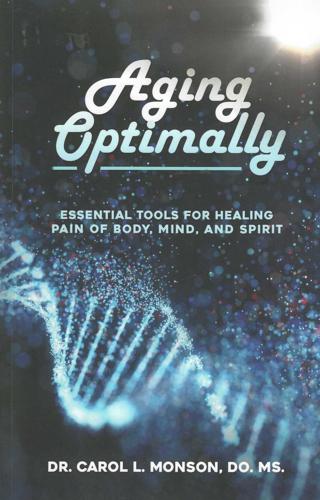
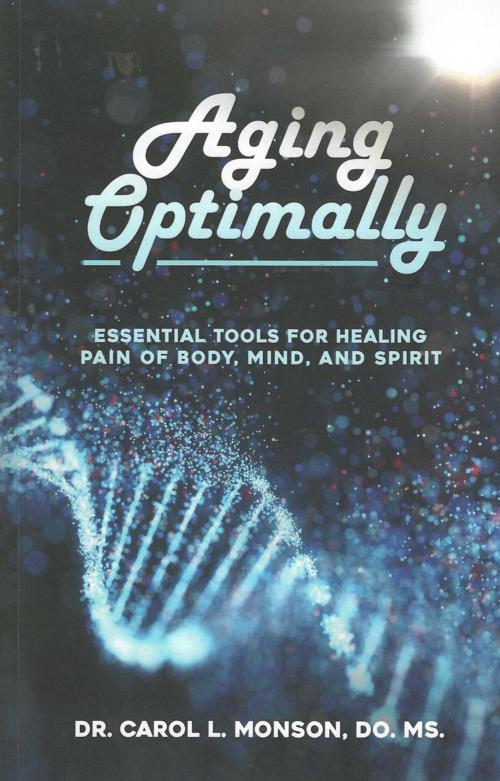
“Aging Optimally: Essential Tools for Healing Pain of Body, Mind, and Spirit” by Dr. Carol L. Monson. 362 pages. Self-published. $17.99; $0.99 Kindle
Aging is a highly unique and personal process, says physician and author Carol Monson, and there’s a way to do it right.
It begins with the understanding that there are two types of aging: the intrinsic, determined by genetics, and the extrinsic, which depends on external factors including lifestyle and stress level. Dr. Monson’s philosophy of aging optimally has its foundation in her practice of osteopathic medicine and psychotherapy which led to her evidence-based conviction that the body, mind and spirit are connected. With this volume she demonstrates the importance of balancing the three for a happier, healthier and longer life.
To simplify the process for lay-readers, she divides her book into two sections and begins with individual definitions of her wellness triad, showing how they interact — with emphasis on the effects of trauma and stress on physical health — and offers exercises for moving beyond psychological roadblocks to take control of one’s well-being. Section two expands into approaches to “the Art and Science of Medicine” and offers scientific assessments of a wide variety of medical treatments, past and present.
People are also reading…
Health and happiness are within one’s grasp, maintains Monson, and this informative volume offers a template for making individualized lifestyle choices that support successful aging.
In addition to being an osteopathic family physician and psychotherapist, Monson is also a university professor who divides her time between Green Valley and Michigan.
— Helene Woodhams
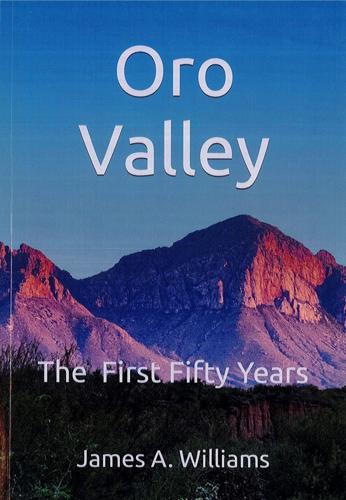
“Oro Valley: The First Fifty Years” by James A. Williams. 246 pages. Independently published. $19.99

Between 1950 and 1960, the city of Tucson grew from 9.5 miles to 70.9 miles by annexing large, unincorporated areas of Pima County. But in 1968, when the city had its eye on land to its north as far as the intersection of Oracle Road and Calle Concordia, residents fearing rampant development and landscape degradation, said “no.”
The solution was to incorporate. It was an audacious move on the part of the sparsely settled area, where paved roads were scarce and amenities non-existent. It would take several years, much bickering with Tucson and Pima County, and internal pushback from skeptical residents, but Oro Valley was incorporated on April 15, 1974, and the rest is history.
And it’s this history that James Williams ably relates in his newest book. The retired social studies educator and local historian marks Oro Valley’s 50th anniversary with this intensively-researched volume of the town’s past from incorporation up to the present day, with a focus on the municipality’s growth, its often-contentious politics, and the notable personalities that made it all happen. Arranged chronologically, Williams examines civic milestones like the hard-fought establishment of Catalina State Park and the annexation of Rancho Vistoso, as well as the challenges faced by the town including a surfeit of golf courses, water issues and the lack of reliable news coverage. This is a stellar example of even-handed reporting and clear-eyed analysis, and an important addition to collections of Southern Arizona history.
An Oro Valley resident since 2006, Williams is the author of three other books, including “Claiming the Desert: Settlers, Homesteaders, and Ranchers in Oro Valley, Arizona, 1865-1965.”
— Helene Woodhams
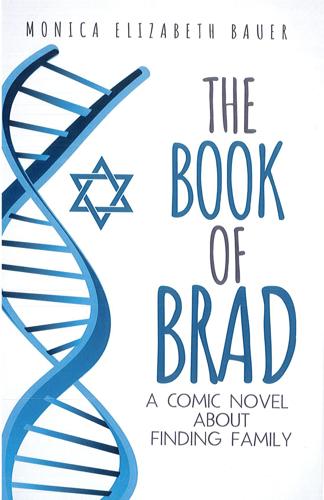
“The Book of Brad: A Comic Novel About Finding Family” by Monica Elizabeth Bauer. 252 pages. Independently published. $9.99; $2.99 Kindle

Finding one’s tribe — no matter how unlikely they appear — makes for hilarious reading in Monica Elizabeth Bauer’s new novel.
Searching for her roots, Rose Pettigrew, a Black, lesbian attorney and adoptee, opts to go the DNA route and is gob-smacked to learn that her biological father is none other than Brad Cohen, rabbi to the Hollywood stars and founder of Extremely Progressive Judaism. In a cruel twist of fate, the best-selling author of “God and Sex: What’s not to Like?” met his untimely demise while engaging in phone sex during rush hour on the 405 in L.A., just days before Rose discovered their kinship. Undaunted, Rose is determined to connect with her long-lost family with the support of her devoted partner, a Jewish cardiologist who serves as Rose’s Yiddish coach and cultural tour guide to all things Judaic.
His lapse of judgment on the 405 notwithstanding, Brad is gone but not forgotten: each chapter begins with a quote from the late rabbi illustrating his understanding of joyful families. And Rose’s family emerges in the messy web of relationships he left behind, including a lovable Zeyde (grandfather) and a half-brother who’s the worst stand-up comedian this side of the Borscht Belt. With dialog worthy of Mel Brooks (it isn’t for nothing that the author is an award-winning playwright) the one-liners keep the pages turning while the message about familial ties warms the heart.
Bauer, a Tucsonan since 2015, is herself no stranger to chromosomal surprises. Raised by Catholics in Nebraska, she discovered through DNA testing that she is 80% Ashkenazi and, like Rose, went on to find her Jewish family. A retired college professor, she was a Writing Fellow at Quinnipiac University in Connecticut.
— Helene Woodhams
“Dancing With Batman” by Marian Wilson. 24 pages. Marvin Press. $10

Billy Collins, Robert Frost, Flaubert, Shakespeare; a sonnet, a villanelle; Biblical references …. Add to those Batman, the Gingerbread Man, the hierarchy of items in a freezer (ice cubes reign), parody, and puns, puns, puns, and you’ll have a sense of the laugh-aloud quality of this chapbook by Tucson poet Marian Wilson.
From the poet’s intimidation by Collins (“The boom of his canon renders me /sleepless….”) to a parody argument for the use of the Oxford Comma (“Our comma, which art in front/ of the ‘and’ in a series,/ important be thy task….”) and celebration of the airbag (“Yea, though I drive through the boredom of the highways/of Texas, I will fear no crashes, for thou art with me….”), Wilson’s verses play with language, literary and cultural allusion, and everyday life.
If this reviewer were still training English teachers, she’d gift them Wilson’s “The Three Pigs by William Shakespeare” to teach the sonnet form (“The tale begins as ‘Hamlet’ does, ‘Who’s there?’/ This question pelts the wolf upon his knock,/from three scared little pigs with hineys bare/as they peek through their window, swine in shock….”). Iambic pigtameter, anyone?
— Christine Wald-Hopkins
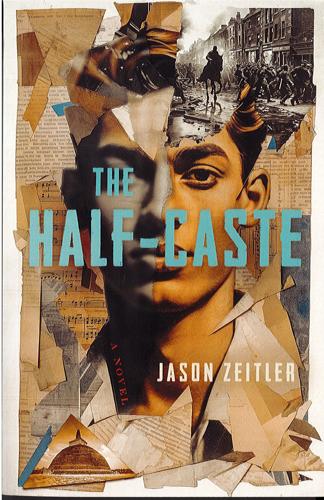
“The Half-Caste” by Jason Zeitler. 349 pages. Polyphony Press. $28.50 hardback, $18.95 paperback, $9.99 e-book

The 1930s Western European rise in fascism and Ceylonese agitation against colonization constitute the political setting for this intriguing, expansive, debut novel by Tucsonan Jason Zeitler.
“The Half-Caste” opens at a fascist rally in London, where Vernon Price, newly inducted into the Jackboots, is on his first assignment — as a goon protecting attendees against antifascist protesters. The leader — looking a little like Heimlich Himmler — arrives and begins speaking. When he denounces decadence and communism, but also a cabal of “Shylocks…orchestrating an alien invasion,” protestors cry out, and Vernon begins pummeling.
Tall and strong, in jodhpurs, jackboots and brass knuckles, Vernon is hardly your sympathetic central character. Except that he is. The “half-caste” of the title — father Dutch and mother Ceylonese — Vernon is undercover.
A counterpart character in the novel — Jewish Saul Maccabee — has his own “undercover.” Long-time friends given to intellectual and political conversation, Vernon and Saul find themselves fighting rising fascism differently — Vernon, through action; Saul, through words. When Vernon’s father falls ill, Saul accompanies Vernon to Ceylon, where they encounter anti-colonial political strife.
History, racism variously manifested, factions among political movements, romance, even music, blend richly in the work. His descriptions of Ceylon are visual and lush. This novel is a language feast. And a political cautionary tale.
— Christine Wald-Hopkins
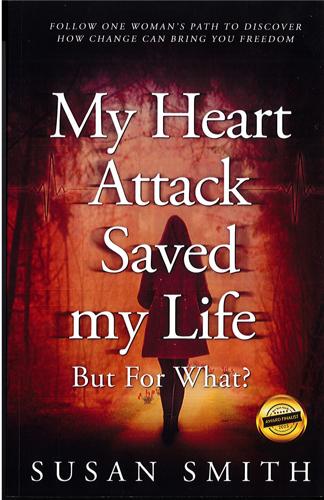
“My Heart Attack Saved my Life … But for What?” by Susan Smith. 168 pages. Heart Smart Press. $14.95

Tucson businesswoman and writing teacher Susan Smith was doing what she normally did in her relentlessly multitasked life — giving a presentation to sell her memoir-writing course to one of her many networking groups — when she dismissed what should have been serious red flags.
Her hands and feet had turned cold. Her mouth was dry. She was short of breath and dizzy. Her heart was pounding and she began sweating profusely. But she was “fine,” she said, and carried on until — urged by a doctor’s tech — she checked into an ER and discovered she was having a massive heart attack.
Two stents, a wearable defibrillator, and one stoke later, she made some radical changes in her life. As you’d expect from a memoir coach, she was able to draw from her life experience to write this how-to book.
Centering story-telling, Smith models each chapter on an episode in her own life and offers writing prompts to readers to explore similar experiences in theirs.
— Christine Wald-Hopkins
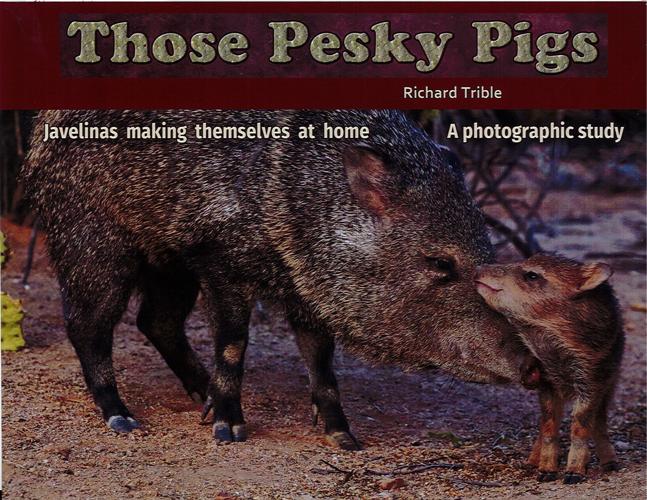
“Those Pesky Pigs: Javelinas Making Themselves at Home: A Photographic Study” by Richard Trible. 48 pages. Ajo Press. $26.68

When a squadron of javelinas begins procreating under your single-wide, you’re entitled to assert some proprietary rights. Photographer Richard Trible took his by photo. Trible, who lives on an acre in Picture Rocks, northwest of Tucson (with “2 non-working 60’s Ford Econoline vans cementing my trailer trash status.”), has produced a slim, funky, endearing, informative book of photographs documenting two years of one group’s periodic habitation of his property.
For years, occasional hoofprints were all the evidence Trible had that javelinas even crossed his land, but in December, 2020, he saw and photographed the first two of what would grow to be seven javelinas in this “squadron” (the official term).
In 160 photographs, Trible presents javelinas doing their thing on his land — resting, foraging in his bird seed trunk, noshing on prickly pear, facing off with the photographer, nursing their admittedly precious-looking babies, sneaking under Trible’s trailer to sleep. Trible’s amusing, self-deprecating accompanying text seals the deal — this book’s a keeper.
— Christine Wald-Hopkins
A unique book club at one of the nation's largest jails brings together college students and inmates. Their recent meeting at Cook County Jail was to discuss “Dead Man Walking,” a book writing by anti-death penalty activist Sister Helen Prejean. #bookclub
Subscribe: http://smarturl.it/AssociatedPress
Read more: https://apnews.com
This video may be available for archive licensing via https://newsroom.ap.org/home
Christine Wald-Hopkins, a former high school and college English teacher and occasional essayist, has long been a book critic for national, regional and local newspapers.
Helene Woodhams is retired from Pima County Public Library, where she was the literary arts librarian.
If you are a Southern Arizona author and would like your book to be considered for this column, send a copy to: Sara Brown, P.O. Box 26887, Tucson, AZ, 85726-6887. Give the price and contact name. Books must have been published within a year. Authors may submit no more than one book per calendar year.