

Our Covid-19 numbers are tumbling. Fast.
“Like a brick,” said Dr. John Sellick, a Buffalo-based epidemiologist.
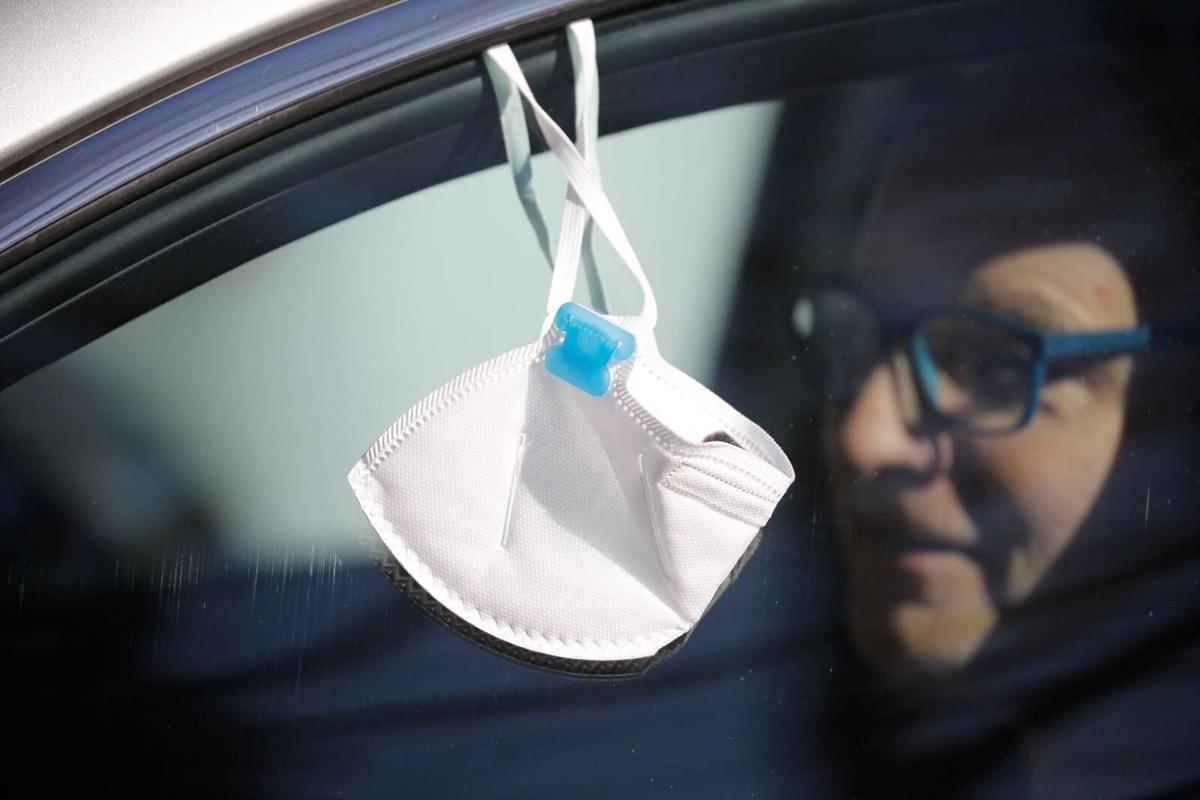
Our masks might just follow; we might be able to drop them, too.
Might.
Not certainly, and not permanently, but here’s cause for hope: Western New York’s Covid-19 case count, which shot above 3,500 in mid-January, has plunged below 800. Hospitalizations are falling, too.
The trend here is following what infectious disease experts expected: The Omicron variant hit, numbers shot high, then dropped hard. That means thousands of people in this region and beyond likely have some immunity to Omicron, and if they have been vaccinated and boosted, that protection should be even stronger.
Couple that with the warmer weather that within a few months will offer us a reprieve of fresh, outdoor air, and it’s conceivable that masks may no longer be part of our daily existence.
People are also reading…
Or at least they won’t be a required accessory whenever we go anywhere in public.
That’s not quite true yet, but medical professionals acknowledge that “we’re getting there,” said Sellick, who is an infectious disease specialist with Veterans Affairs, Kaleida Health and the University at Buffalo. “I think a lot of us are looking toward the next couple months – as the weather gets better and we get outside more – that we’ll get back to where we were last year and the year before in summer and fall.”
How we get to that point – and more vitally, how we stay there – is the subject of this week’s Pandemic Lessons.
First, do we actually need masks now?
Technically, yes.
Practically? Probably still yes, at least in many situations.
On the public policy side, a statewide mask-or-vaccination requirement for public places is still in effect. A Nassau County judge ruled last month that Gov. Kathy Hochul is not empowered to mandate masks, but the state quickly appealed and the ruling has been stayed. Hochul has also said she’ll evaluate the need for the mandate every two weeks, so it presumably could be softened or lifted soon.
Locally, Erie County Executive Mark Poloncarz also has a mandate in effect, but he said late last month that if Covid-19 case numbers continue dropping, “there’s a possibility we’ll be able to lift the (county) mask requirement in February.”
Those statements, combined with a decreasing caseload and a seeming increase in the number of people willing to defy mask mandates (and challenge them in court), suggest that we’re likely to see fewer face coverings by spring, when the milder weather has more people outside.
But in the meantime, remember that our Covid numbers are still fairly high. Our seven-day average for positive tests was 9.5% on Feb. 3. That’s better than halved from mid-January, but nearly 48 times higher than late June 2021. If the objective is to have a minimal spread of Covid-19, we’re doing a lot better than three weeks ago. But we’re not actually doing well – yet. If your goal is to avoid getting Covid-19, keep wearing those masks – at least for now.
Mandates aside, when do you know it’s responsible to wear masks less?
That depends on your situation:
• If you’re 70 or older, or have immunocompromising conditions or health problems (obesity, cardiac disease, hypertension, diabetes, and so on) that make you more susceptible to bad Covid-19 outcomes, you’re wise to be especially cautious, even if vaccinated.
• If you had a symptomatic case of Covid-19 since the Omicron rise, you likely have a reasonable level of immunity to the variant, though reinfections are possible and there’s hot debate among scientists and doctors over the reliability and durability of post-infection immunity. The short version: The prior infection probably helps, but it’s not a magic elixir that will prevent you from getting Covid-19 again.
• If you are vaccinated and boosted, on the younger side and healthy, “your risk is minuscule, and it’s game on,” said Dr. Thomas Russo, chief of infectious disease at the University at Buffalo’s Jacobs School of Medicine and Biomedical Sciences.
But, Russo warns, you could still be lightly or asymptomatically infected, and “if in your extended social bubble you interact with someone who is vulnerable – whether they’re unvaccinated, in the higher risk groups, or vaccinated but unboosted, or even boosted but in the higher risk groups – then that becomes problematic. It’s not an issue for you, but you could put someone else at risk.”
Otherwise, he added, “it’s endemic mode” – unless and until medical professionals “learn that protection wanes and requires another booster and/or a variant arises that evades (the) acquired protection.”
So there’s really no straightforward guidance on when to wear masks less, or not at all?
No. Mandates and requirements aside, it’s based on your own risk factors and comfort level, plus your sense of social etiquette. For example, if you’re grocery shopping around a group of older people who are wearing masks, they may appreciate it if you do, too. So may the cashier, who has to speak to dozens of customers in a shift.
If you want to be reasonably careful, what should you avoid? Large crowds? Long durations of time in one place? People you don’t know?
The answer depends on your risk tolerance – another concept we’ll be applying to our lives in an ongoing manner – and can be viewed multiple ways.
Acquiring an infection like Covid-19 requires a certain amount of viral load. A tiny exposure may result in minimal or no infection; a larger one is more likely to stick or become symptomatic. People infected with Omicron tend to have a higher viral load than what has been found in earlier Covid-19 variants, which is why it spreads so easily.
Being around fewer people makes you less likely to get exposed for the obvious reason: There’s a lesser chance that someone in the room is contagious. If you are around one or more people who are infectious, there are two ways you’re likely to catch the virus yourself:
• One is what Russo refers to as the “splash:” A cough or sneeze that puts a high amount of virus particles into the air in a short timeframe.
• The other is the “cloud:” A collection of Covid-19 particles lingering undetected in the air, like an invisible and odorless cigarette smoke, getting breathed in.
“There may be multiple people contributing either to the splash, if you’re in close quarters, or the Covid cloud for inhalation,” Russo said, noting that people can also acquire two simultaneous infections – like Covid-19 and influenza – the same way. Being outdoors or in a well-ventilated indoor space will lessen that risk.
Can you feel safe going places in public?
Largely, yes. Nearly two years into pandemic life, we know enough about the virus, how it transmits, and how to protect ourselves to make decisions that lower risk and maximize safety. Unless you have a distinct reason not to go somewhere – you’re immunocompromised, or it just feels too crowded for your comfort – then you can feel comfortable heading out. Here are some points to consider:
• You can still wear a mask. Treat them like tissues or breath mints: Keep one or two with you, and break it out when needed. “I suspect there will still be a lot of people who will wear masks, especially when they go to a crowded venue,” Sellick said, referring to events such as indoor sports games or concerts.
Remember, too, that KN94s, KN95s, N95s and the equivalent are best. Second to them are surgical masks. Cloth masks are far less helpful.
• Evaluate your environment. If you’re old enough, think back to how 9/11 changed travel: We had to get to the airport earlier, and needed more paperwork (and time) to cross the U.S.-Canada border. Likewise, living a normalized life with Covid will require us to change the way we view going places. We’ll need to have more awareness of where we’re headed, be willing to assess a situation when we arrive, and possibly switch our choices if we see fit.
Shopping, for example, is generally OK. If the store is busy, you’ll also want to consider the layout: Is it cramped and tight, or airy and spacious? “The density of the crowd is going to matter,” said Linsey Marr, a Virginia Tech engineering professor who is an expert in airborne virus transmission. Marr has taken a carbon dioxide sensor, which can measure the amount of exhaled air in a room, into grocery stores. As you would expect, she has found the high-ceiling stores have less carbon dioxide in the air than the more intimate stores with lower ceilings and dense crowds.
“If it’s really crowded,” she told The News in a December interview, “you're not going to be able to escape other people's exhaled breath.”


