For several years, I’ve been lucky to host occasional groups of visiting journalists from around the world in the Arizona Daily Star newsroom.
When we meet, these participants in the State Department’s Edward R. Murrow program mostly ask me questions, but it often has struck me that I can’t tell them anything new about journalism. It’s a much more challenging profession in most of their home countries than it is in ours.

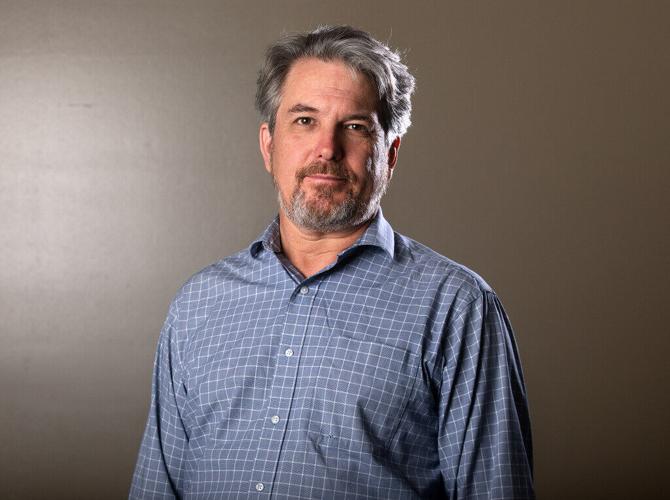
Arizona Daily Star columnist Tim Steller
Or it was.
Increasingly, it feels like the United States is drifting toward having a controlled, intimidated press like that of some of the countries these visitors came from.
Turkey, El Salvador, Bangladesh, Israel, Nicaragua. These are some of the countries where elected leaders have used their power and allies to dominate the news media and bend it to their wishes. And they’re some of the countries from which we’ve had visitors.
People are also reading…
Now, I wish we could have them come back so I could ask them about how to operate in a new American news environment that is shifting toward what they’ve experienced in their countries.
How so?
The ground has been crumbling under American journalism for a long time, but the November election loosed violent new tremors on the news industry.
One of the first recent shifts was Donald Trump’s lawsuit against CBS News, alleging it had engaged in “election interference” through its editing of a 60 Minutes interview with then-candidate Kamala Harris. It appears to be a ridiculous lawsuit, more so because Trump had the opportunity to be interviewed by 60 Minutes himself but refused.
Still, it is forcing a big American news organization to play defense, extending worrisome pattern that has only grown worse.
In December, ABC News settled a lawsuit filed by Trump in March over host George Stephanopolous saying that a jury found Trump liable for the “rape” of E. Jean Carroll. Within the narrow bounds of New York law, the jury actually found Trump guilty of sexual abuse, but the judge later clarified that the behavior Trump engaged in is what people commonly term “rape.”
ABC agreed to pay $15 million to a future Trump presidential library and $1 million to cover legal costs. This settlement was a full-on earthquake — news organizations rarely if ever settle these cases because of the precedent it sets, inviting others to sue.
Sure enough, Trump went on Dec. 17 to sue the Des Moines Register and a pollster who had run a poll for the newspaper shortly before the November election, showing Kamala Harris ahead of Trump in the state. It turned out to be wrong.
In the lawsuit, Trump alleged this too was “election interference.” It also appears to be a meritless lawsuit — a news organization has a right to run whatever poll it wants. And news organizations have a First Amendment right to “interfere” in elections by publishing news and opinion about them.
“It costs a lot of money to do it, but we have to straighten out the press,” Trump said in a news conference.
Winning the suit is often not the point of filing such cases. They are known as SLAPP suits — an abbreviation for Strategic Lawsuit Against Public Participation. As Cornell University’s Legal Information Institute puts it: “People bring SLAPP suits because they can either temporarily prevent their critics from making public statements against them or more commonly to make critics spend all of their time and resources defending the SLAPP suits.”
In some states, there are laws against SLAPP suits, but Iowa isn’t one of them.
‘You are the media now’
In the old days of American news media, these suits would have amounted to little more than a nuisance. In those days, you needed a printing press or a broadcast license to bring news to a mass audience, barriers that meant news outlets even as small as the Arizona Daily Star could make big profits.
These days, people get much of their news from social media, and most of those platforms are openly hostile to news organizations. Their algorithms — Bluesky being the main exception — suppress links to outside news sources, and owners like Elon Musk want people to view the platform itself as the news source, not outside news organizations.
“You are the media now,” Musk has told X users.
The fact that news outlets have often reported critically on Musk and his businesses undoubtedly has something to do with his hostility.
At the same time, people like him are outlandishly rich, while legacy news organizations are diminishing in size. Lee Enterprises, which owns the Arizona Daily Star — along with 71 other news outlets, including the St. Louis Post-Dispatch and Buffalo News — has a market valuation of just $87 million as of this writing.
That’s for the whole company! Consider that when Lee bought Pulitzer Inc., the smaller company that used to own the Arizona Daily Star, in 2005, Lee paid about $1.5 billion just for Pulitzer — about 17 times the value of the whole company now.
Musk, Peter Thiel or any of America’s tech billionaires could probably scoop us up without a second thought if they felt like it. That’s what happened at the Los Angeles Times: Biotech billionaire Patrick Soon-Shiong bought it in 2018 and is trying to make it friendlier to Trump by replacing the editorial page staff and asking for less coverage of the incoming president.
The owner of the Washington Post, Amazon founder Jeff Bezos, killed a planned endorsement of Harris and has tried to curry favor with Trump. His other businesses include federal contractors Amazon Web Services and Blue Origin.
The Post’s editorial cartoonist resigned last week after her bosses refused to publish a cartoon mocking the tech billionaires bending their knees to Trump before he takes office.
Suing media into submission
They can buy us, or they can sue us into submission, if they wish. Thiel notoriously funded a lawsuit by wrestler Hulk Hogan that ended up bankrupting Gawker, a news site that had reported critically about Thiel and reported he is gay.
These lawsuits can also be harmful at a smaller scale. In 2022, I was one of two Star journalists, along with the newspaper itself, sued by a former Pima County prosecutor, Caitlin Watters.
I never even named her in the column she sued me over, which was about her father, then-Justice of the Peace Adam Watters. But there was more going on in the lawsuit than a dispute over facts. The lawsuit said in our coverage we were “motivated by animus, bias and a political anti-gun, anti-Republican, and anti-Conservative agenda.”
We filed a motion to dismiss the case, arguing in part that our facts were correct. A state appeals court ordered the case dismissed, but even then the process dragged on, eventually lasting two years, eight months and 13 days. It was an unpleasant and costly experience. We won, but we got no award of attorneys’ fees.
If a deep-pocketed backer like Thiel had got interested in the case, maybe we would still be litigating.
Legal defense efforts
Efforts are already underway to assemble a legal-defense fund for news organizations sued by Trump and his allies. A broader effort aims to protect those who may find themselves the subject of criminal investigations or audits if Trump’s appointees direct those actions against his rivals, as he has promised.
That’s good: The lessons from other countries taken over by people who want to cow the independent press are to adapt and abide.
El Faro, an independent news outlet based in El Salvador that has reported critically on populist Pres. Nayib Bukele, took a drastic step. They re-established their company as an entity based in Costa Rica and moved their administrative and legal operations there to avert possible legal attacks from the government.
One journalist who visited our newsroom, Alam Badrul of Bangladesh, told me via email how 14 years of repression ended with the overthrowing last year of Prime Minister Sheikh Hasina. She had ruled the country increasingly repressively, controlling the press through intimidation, harassment, arrests, legal action and violence.
“During the last regime, due to long-term direct or indirect pressure, a kind of self-censorship atmosphere were there in journalism,” Badrul told me via e-mail. “Those times are now undergoing a kind of transformation.”
During the Hasina regime, “It was difficult to write detailed report on the influence of oligarchs on the economy,” Badrul elaborated, sounding a theme that will be familiar to Americans. But such reports, he said, “were written after the change of government.”
Nothing is to be gained in the long run by sucking up, I’ve learned from our international journalists. That just helps governments cow the press faster. Instead, outlets need to stand strong, adapt and abide as the ground shakes.

Contact columnist Tim Steller at tsteller@tucson.com or 520-807-7789. On Twitter: @timothysteller

Tim Steller
Columnist


 Tim Steller's column: Hard living qualifies workers at this Pima County center