
WASHINGTON — The Trump administration finalized a rule Tuesday barring two major federal health programs from funding puberty blockers, hormone therapy and surgeries to treat gender dysphoria in minors, reshaping access for low-income youth nationwide.
The rule, scheduled for publication Thursday and effective in October, cuts off funding under Medicaid and the Children's Health Insurance Program, or CHIP, which together cover 35.5 million U.S. children.
About a decade after U.S. specialty clinics began offering pediatric gender treatments, the government says it will no longer share the cost for children under 18 in Medicaid and under 19 in CHIP, citing what it called weak evidence of benefit and risks of irreversible harm.

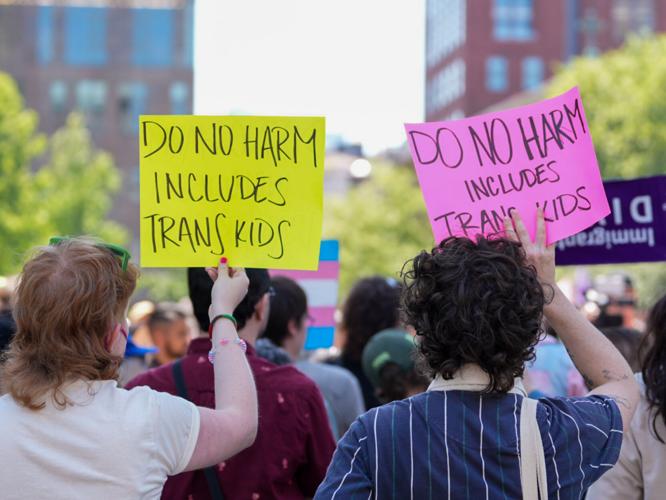
Demonstrators gather May 16 at Washington Square Park in New York, N.Y., to protest federal investigations into transgender healthcare and show support for trans youth and providers including NYU Langone Health.
The move marks one of the administration's most sweeping restrictions yet on transgender healthcare. It forms part of a wider crackdown on the rights of transgender people through the elimination of legal protections in the military, healthcare, education and the workplace.
People are also reading…
The rule does not ban the procedures but removes the federal support that makes them accessible to millions of low-income children, shifting the burden to states, families and private insurance.
"By cutting off federal funds for these sex-rejecting procedures, we're following the science, saving taxpayer dollars, and, most importantly, protecting children from potentially irreversible harm so they can truly flourish," Centers for Medicare and Medicaid Services Administrator Dr. Mehmet Oz said in a statement.
The measure reflects a broader reassessment of pediatric gender medicine, even as major U.S. medical organizations back such care and warn against restricting it. The American Academy of Pediatrics and the American Medical Association say such decisions should rest with children, parents and healthcare professionals.
Opponents challenge funding cut
CMS asserts that the 1965 Medicaid statute, which requires that care serve beneficiaries' "best interests,” authorizes it to cut the funding, a novel use of the provision that opponents say exceeds its power.
Democratic state attorneys general sued in Oregon federal court over an earlier version, calling it an unlawful attempt to dictate medical standards and strip states of authority to regulate medicine. More than 90% of about 11,000 public comments opposed the cut; the government finalized it anyway, largely as written.
The rule sets up a clash with the 14 states and the District of Columbia that enacted "shield laws" protecting gender-related care, leaving them to drop coverage or pay themselves.
CMS projects the rule will cut combined Medicaid and CHIP spending by about $235 million over a decade, $138 million in federal funds and $97 million in state funds, reflecting what governments would save by dropping coverage. States that do not would have to absorb the full cost themselves.
U.S. health data analyzed for Reuters by Komodo Health shows more than 121,000 children aged 6 to 17 were diagnosed with gender dysphoria between 2017 and 2021; and 17,683 started puberty blockers, hormone therapy or both.
Trump touts policy on social media
President Donald Trump claimed credit in a social media post, saying he directed Oz to end funding for what he called "barbaric surgeries and practices" on minors, and urging voters to "remember this" in November's midterm elections.
Though Trump and Oz touted savings, the $138 million in federal savings within Medicaid and CHIP that CMS projects amounts to about 0.002% of total federal spending in the programs over a decade, and the agency says the rule is not meant "as a means of achieving budgetary savings."
Transgender rights became a contentious U.S. political issue, with several Republicans campaigning in 2024 on rolling back protections. The administration moved to bar transgender people from the military, block them from listing their gender identity on passports, and restrict federal workers' bathroom use.
Children now on hormone therapy through Medicaid or CHIP will get six months of continued coverage to taper off, a concession CMS added after warnings that abruptly halting treatment could cause harm.
The relief is narrow: it covers only hormones, not surgeries or puberty blockers, and only children already in treatment on the effective date.