Iranian strikes damaged and destroyed hundreds of buildings and other structures at U.S. bases across eight countries in the Middle East, according to a new report on the Iran war from the Pentagon’s official watchdog.
The war also resulted in a shortfall of strategic munitions and revealed “bottlenecks” in the defense industry as the U.S. military sought to resupply the depleted stock of munitions.
The report, produced by the Defense Department’s inspector general for Congress, was released this week and covers the start of the war on Feb. 28 through June 30. It offers the most comprehensive official account of the war’s cost and effects on U.S. military bases and equipment.

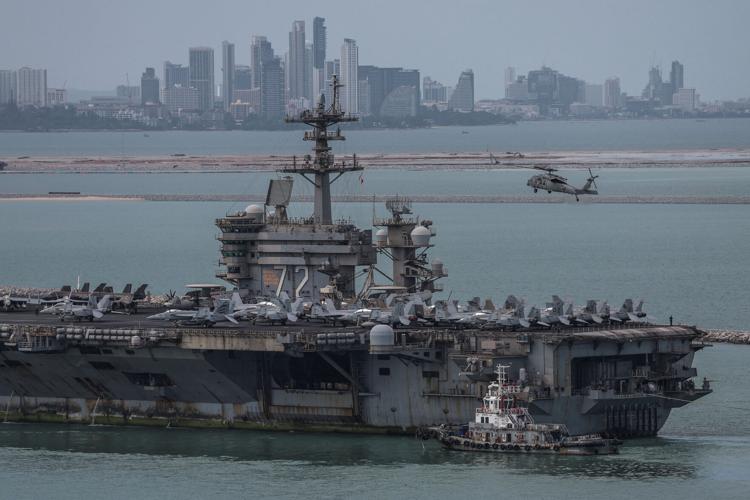
The U.S. Navy Nimitz-class aircraft carrier USS Abraham Lincoln sails toward Laem Chabang Port on Sept. 2 before docking for a rest stop following a long deployment in the Middle East, with the Pattaya skyline in backdrop, in Chonburi province, Thailand.
The war, which President Donald Trump initially estimated would last four to five weeks, is now in its seventh month and cost the U.S. at least $33.4 billion as of June 29, according to the report. The figure does not account for repairs to damaged facilities and many experts believe the total cost of the war is significantly higher.
People are also reading…
More than 50,000 U.S. service members were deployed in U.S. Central Command’s area of responsibility to support the Iran war. Since the start of the conflict, 18 were killed and more than 800 wounded.
Buildings and facilities at U.S. bases in Kuwait, Bahrain, Qatar, the United Arab Emirates, Saudi Arabia, Iraq, Oman and Jordan were damaged or destroyed by Iranian strikes. The report confirmed that Iran targeted the U.S. Navy’s main logistics hub in Bahrain with drones and ballistic missiles.
The Pentagon did not respond to a request for comment about the watchdog report.

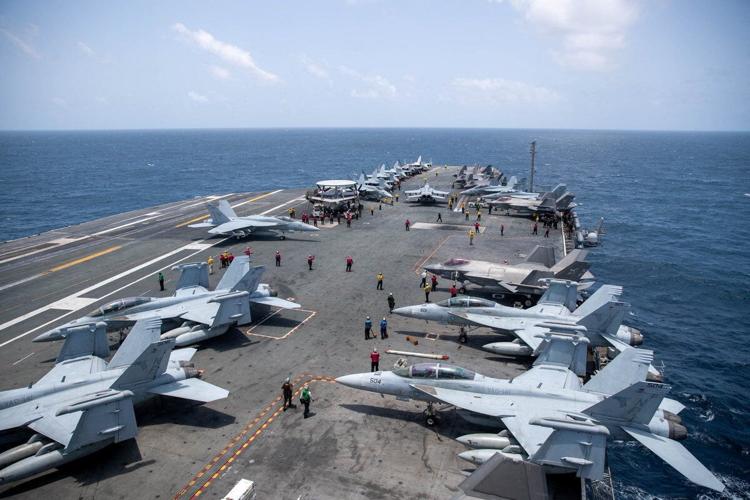
U.S. Navy sailors work Aug. 20 on the flight deck of the aircraft carrier USS George Washington as it transits the Arabian Sea to support U.S. military operations in the war with Iran.
Last week, acting Navy Secretary Hung Cao confirmed Iran “blew the hell out of Bahrain” in reference to the key U.S. base. Cao’s comments confirmed satellite imagery and news reports that the U.S. base in Bahrain suffered extensive damage at the start of the war.
The watchdog report also found the war caused “strategic inventory shortfalls” of critical munitions and revealed resupply bottlenecks.
“To mitigate these constraints,” the Pentagon is “working to streamline procurement processes and production lead times, and to stockpile critical materials, components, and selected munitions to respond rapidly to a contingency,” the report said.
Trump and Defense Secretary Pete Hegseth repeatedly denied that the U.S. is running low on key munitions.
“I’ve just received a Report that the United States is producing more Exquisite and Elite Weapons than at any time in our History,” Trump wrote in a social media post Monday. “A primary focus of this production has been Patriots, THAAD Systems, Tomahawks, and other Standard Missile Systems, of which we already have large numbers in stock.”

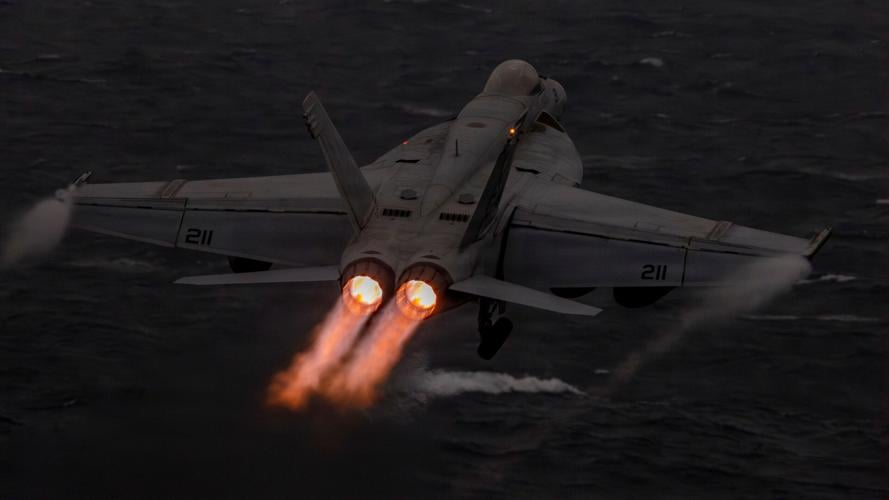
An F/A-18E Super Hornet launches Aug. 14 from the flight deck of the U.S. Navy Nimitz-class aircraft carrier USS Abraham Lincoln as it supported U.S. military operations in the war with Iran.
The munitions shortage raised concerns that the war in Iran undermined U.S. readiness for a potential conflict with China. In another example of how the U.S. was forced to divert resources to support the Iran war, the watchdog report revealed “at least six U.S. warships were re-tasked from the Pacific to the Middle East” as a result of the conflict.
The war also resulted in the loss of dozens of U.S. military aircraft. The report revealed that four F-15E jet fighters, an F-35A Joint Strike Fighter, an A-10 Warthog, seven KC-135 refuelers and nine other aircraft were damaged or destroyed in the war. At least 30 MQ-9 drones were destroyed in various circumstances.
Four U.S. diplomatic facilities in Iraq, Kuwait, Saudi Arabia, and the UAE were damaged by Iranian airstrikes with an estimated total cost of $208 million due to damage and delayed construction projects, per the report.