Editor's note: This report is part of 'Hunting Clean Energy in the West,' a series by Lee Enterprises' Public Service Team Reporter Ted McDermott that examines efforts across the West to meet looming deadlines to decarbonize the region's power grid. Subsequent articles will examine hydrogen, wind and solar initiatives.
When Peninsula Energy decided to idle its uranium mines in northeastern Wyoming in 2019, the cause was simple, says CEO Wayne Heili: “poor uranium markets.”
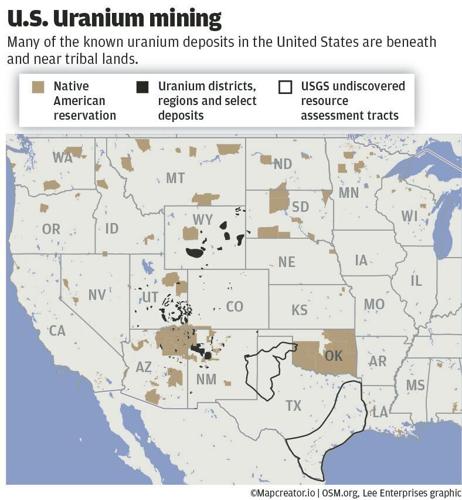
At the time, the U.S. nuclear industry was largely stagnant. No new reactors had come online in the U.S. in nearly three decades, and Russia was supplying much of the nuclear fuel that was needed. While some 4,000 uranium mines once operated in the Western United States, only three remained active as of 2021.
People are also reading…
That was bad for the uranium industry, but the long decline was a welcome reprieve for communities — many of them Indigenous — that have most acutely felt the long-lasting health and environmental effects of the nuclear fuel cycle.
But in the four short years since Peninsula stopped production, much has changed.
Russia’s invasion of Ukraine came as the federal government was pushing for the development of new reactors to meet a 2035 target to end carbon pollution from the electric grid. And some of the advanced reactor designs that the U.S. Department of Energy was supporting — including TerraPower’s Natrium and X-energy’s Xe-100 — require a more highly enriched form of low-enriched uranium known as HALEU that comes almost exclusively from Russia.
The disruption in the fuel supply led TerraPower to delay by at least two years its plans to bring the first Natrium reactor online in Kemmerer, Wyoming, in 2028. It also put pressure on the federal government to bolster domestic uranium mining and processing in order to further delays.
The federal government has responded with plans both to buy 1 million pounds of uranium for the development of a national uranium reserve and to create a domestic supply of HALEU. When it was signed in August, the Inflation Reduction Act included $700 million to help make that happen.
The renewed demand for domestic uranium has already been felt at the United States’ largely languishing uranium mines, and Peninsula Energy is among the mine operators looking to restart.
With a contract to supply 300,000 pounds of uranium to help fill the new national reserve, a growing understanding from reactor owners that “relying on the Russians for supply is a bad idea” and the expected “advent of small modular reactors in the market,” Heili said Peninsula is preparing to start mining again by the end of March.
“Today,” he said in January, “we’re in the process of resuming production.”
His company isn’t the only one planning to resume or increase operations as a result of increased demand.
Energy Fuels, which owns the White Mesa Mill in Utah as well as mines throughout the West, is also preparing to begin mining again at some of its properties, according to Curtis Moore, vice president of marketing and corporate development. In the meantime, Energy Fuels will be drawing from its inventory of already mined uranium to fulfill an $18.5 million contract to sell hundreds of thousands of pounds of uranium to the national reserve.
As the industry gears up, the government’s plans to create a domestic supply of uranium and to produce HALEU have already drawn pushback from Indigenous and environmental groups.
Some of that pushback has focused on White Mesa Mill, which turns uranium ore and low-level radioactive waste into a sand-like concentrate called “yellowcake” near Bears Ears National Monument, an important cultural site for the Ute Mountain Utes and other Indigenous people. No studies have linked the uranium facility to health effects in the area, but members of the Ute Mountain Ute tribe who live nearby suspect it is the cause of increased levels of cancer and other diseases in the area. And the Environmental Protection Agency has taken these concerns seriously enough to award a grant that will investigate whether any links exist.

Scott Clow, environmental programs director for the Ute Mountain Ute Tribe, says he’s concerned about plans to expand the nuclear fuel cycle when the ramifications of earlier mining, milling and waste production persist.
“Before we start having eyes on the prize for the next wave of nuclear energy, let’s figure out the damage that has already been done and how to not do it again and how to help the people that have been most impacted,” Clow said. “That is what is most profound when I hear people say, ‘Oh, nuclear energy is the solution to our climate crisis.’ And, yeah, you can generate electricity without a lot of emissions, but you’re ignoring the front end and the tail end of the industry, and those are the parts that pollute the most.”
(It’s not only the front end of the nuclear fuel cycle that has left a toxic legacy — and that is raising new concerns. It’s also the back end, where reactors produce waste from operating and, ultimately, from decommissioning. See accompanying story.)
Moore, of Energy Fuels, acknowledges that the uranium industry has left behind “lots of environmental issues and health issues, particularly for native people in the Four Corners region.” But he argues that those issues are a historical relic and that things are “totally different” now, due to regulations, technology and commitment from operators to protect the environment.
“We operate to the highest standards in the world at the White Mesa Mill,” Moore said.
Heili, of Peninsula Energy, made a similar case, noting the damaging effect of mid-20th-century mining while arguing that the industry has changed.
“Today, we operate a modern, environmentally sensitive mining operation,” Heili said. “We’re highly regulated and those regulations are in place to ensure we operate responsibly and do no harm to the environment. And that we contribute to the local communities.”
But some environmental groups have expressed concern about what more uranium production will mean.
In a July letter, the Grand Canyon Trust, EarthJustice and a number of other environmental organizations implored West Virginia’s Democratic Sen. Joe Manchin and his fellow members of the Senate Energy and Natural Resources Committee not to pass a bill that would direct the Department of Energy to “prioritize activities to establish a domestic” supply of HALEU.
The letter argued that “the US already has a devastating radioactive and toxic legacy of uranium contamination that disproportionately affects Indigenous communities” and that “the dangers of uranium operations are far from theoretical and the need to avoid exacerbating harm is clear.”
Though that bill did not pass, the Department of Energy announced in December that it was establishing a consortium that will “help inform DOE activities to secure a domestic supply” of HALEU. Energy Fuels and Peninsula Energy have joined that consortium.
Ultimately, the effect of advanced and small-modular reactors on the nuclear fuel cycle will depend on whether — and if so, how many — are built. But while experts, companies and regulators debate the costs and benefits of a new wave of advanced and small-modular reactors, some argue their voices are not being heard.
Talia Boyd, the Keep It in the Ground mining organizer for the Indigenous Environmental Network and a member of the Navajo Nation, says Native people have been left out of conversations about new nuclear technologies, despite the disproportionate effect the production and disposal of fissile material has had on their communities — and may have in the future.
“There are so many adverse impacts when it comes to the nuclear fuel chain within Native America,” Boyd said, citing the desecration of sacred lands, the potential health effects of unremediated mine sites and the ongoing uncertainty about where and how to deal with high-level radioactive waste. “They’re always saying that, ‘Oh, we have these new technologies. We can put the land and the water back together to pre-mining conditions.’ But that hasn’t been accomplished. We have not seen any of that. So our communities know the true cost of what the nuclear fuel chain is. These small-modular reactors are the same. They’re still part of that nuclear fuel chain.”
Editor’s note: This story has been changed to more accurately describe high assay low enriched uranium (HALEU), which is the highest enrichment level of low enriched uranium, not a highly enriched form of uranium.

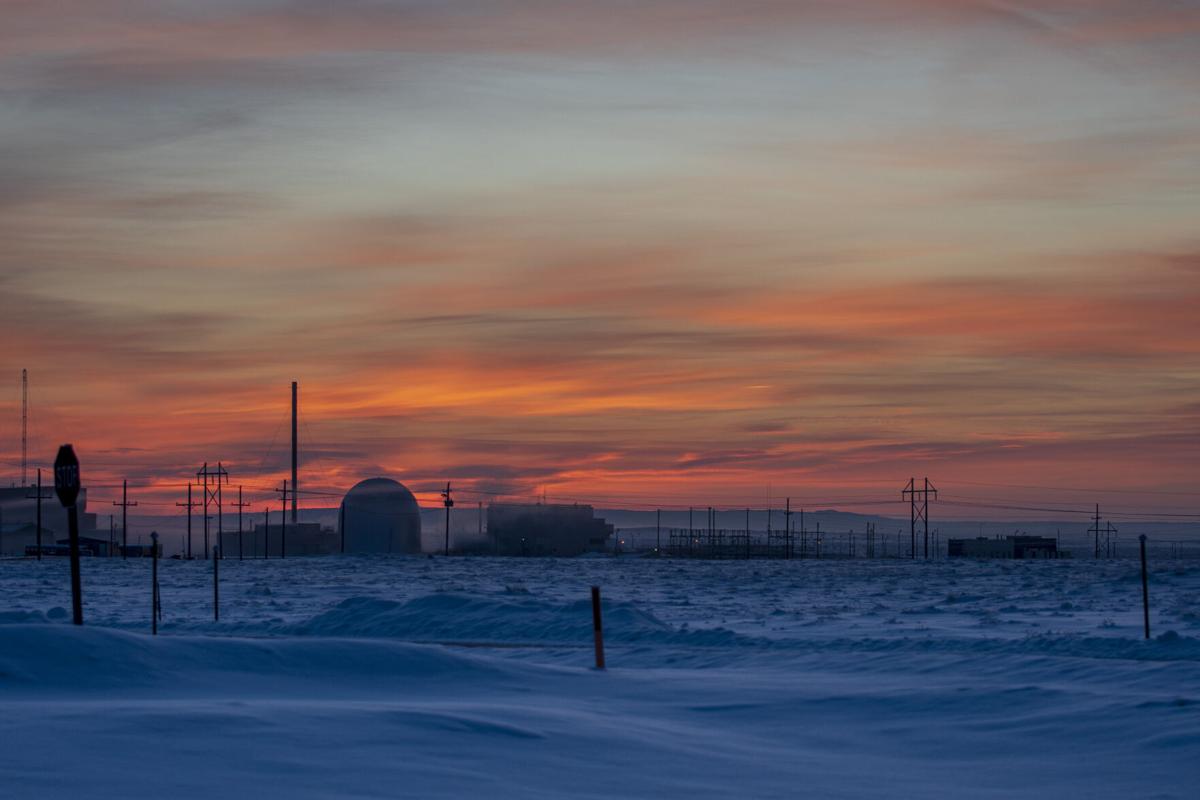
A section of the Idaho National Laboratory can be seen at sunrise Monday, Dec. 19, 2022, west of Idaho Falls.