PHOENIX — It's being promoted as preventing the teaching of antisemitism in public schools and universities and protecting students against a "hostile education environment.''
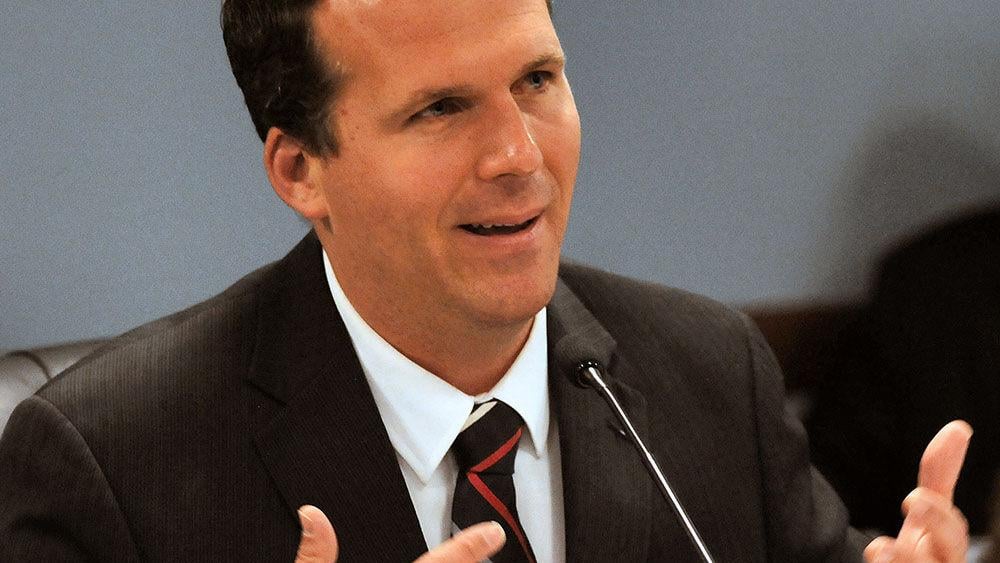
But the proposal by Rep. Michael Way contains what some believe is a controversial definition of "antisemitism.'' And it has divided Jewish organizations over whether it addresses the problem — and even whether it will cause more harm than good.
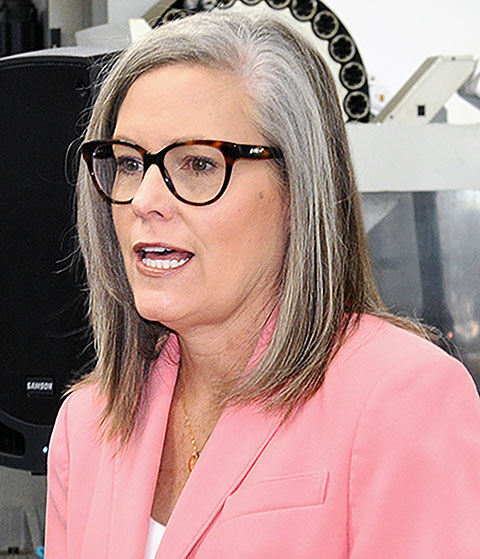
It could also be headed to a veto by Gov. Katie Hobbs. She vetoed similar legislation last year, at least in part because of that division.
The debate about the proposal by the Queen Creek Republican comes down to what is antisemitism, to what extent the problem exists, particularly in schools — and whether HB 2575 is a way of fighting it.
People are also reading…
What's in the bill is fairly comprehensive.
It starts with a ban on any teacher, administrator or volunteer at public schools and public colleges from teaching, instructing or training students in any antisemitism or antisemitic conduct, act, or process "that constitutes harassment or discrimination and that creates a hostile educational environment.'' And that last phrase is defined as "an environment in which harassment or discrimination is so severe, pervasive or persistent that it interferes with or limit a student's ability to participate in or benefit from the services, activities or opportunities that are offered.''
It also bans calling for genocide for any group or persons and requiring a student to promote antisemitic conduct to get credits toward graduation.
Separately, the legislation bars schools from taking action against employees because they refused to teach or promote antisemitism.
Hobbs
There are also processes that allow students, parents, teachers and members of the public to report violations, with penalties ranging from reprimands to termination.
At the higher education level, there are additional requirements to protect guest lecturers against demonstrators who engage in antisemitic conduct while revoking the recognition of any student organization that invites a guest speaker who incites antisemitic conduct and engages in any act calling for the genocide of any group to the extent that creates a hostile education environment.
And there is the ability of those dissatisfied with the action a school has or has not taken to go to court.
Carina Bien-Wilner, director of public affairs for the Center for Jewish Resilience at Jewish Federation of Southern Arizona, told members of the Senate Education Committee action is needed. She said that for the past 18 months, her organization is the only one on the ground documenting, vetting, and following up on incidents of antisemitism.
"Today, 42% of all reported incidents to us are connected to schools and education'' Bien-Wilner said. Of those, she said 60% include harassment and hostile learning environments, 27% involve anti-Jewish vandalism, and 12% include assaults, threats to life, or support for terrorism.
"These incidents target children due to their actual or perceived Jewish identity,'' Bien-Wilner said.
"In Southern Arizona, young Jewish students are called 'baby killers' or genocide supporters, excluded socially, and told statements like 'Hitler had the right idea, he should have finished the job.' ''
And she said another teacher responsible for teaching Holocaust education -- already required in schools -- publicly shared a photo of herself with the phrase "Death to Israel'' on social media.
Defining antisemitism
But the debate over HB 2575 comes down to that question of what Arizona law should say does — and does not — constitute antisemitism, a definition that could be used to suspend or fire teachers.
"I know what antisemitism is,'' said Civia Tamarkin, president of the Arizona chapter of the National Council of Jewish Women.
"I have lived it,'' she said. "I grew up not far from a beach where there was a sign, 'No Jews, no Negroes, no dogs.''
The problem, she said, is that HB 2575 seeks to incorporate a much broader definition of antisemitism crafted by the International Holocaust Remembrance Alliance into state law.
That definition also includes "contemporary examples of antisemitism.'' These range from things like killing of Jews in the same of radical ideology to making "stereotypical allegations,'' such as Jews controlling the media, economy, government or other societal institutions.''
And it includes any accusation that Jews as a people invented or exaggerated the Holocaust, as well as any accusation that Jews are more loyal to Israel than the interests of their own nations.
Also covered — and considered antisemitic — would be denying the Jewish people their right to self-determination, including by claiming that that the existence of Israel is a "racist endeavor.'' And then there's "drawing comparisons of contemporary Israeli policy to that of the Nazis,'' a provision that has raised concerns it would encompass criticism of how Israel is handling the war in Gaza.
Jeanne Woodbury of the Arizona chapter of the American Civil Liberties Union did not dispute that there are serious issues with antisemitism and other forms of hate, "especially with the war that's going on right now.''
But she told lawmakers the problem is that incorporating that definition of antisemitism the International Holocaust Remembrance Alliance and its examples into state law would allow that to be used to discipline educators.
"Those examples are then what causes the real problems for interpreting any policy based on this definition,'' said Woodbury. And, policy questions aside, she said that a federal court in Texas, acting on a complaint by Students for Justice in Palestine, voided a similar law incorporating the same definitions and examples as illegal viewpoint discrimination.
Tamarkin, for her part, said she wants to protect her children from antisemitism.
"But this is not how one solves antisemitism,'' she said.
"You solve it by building bridges,'' Tamarkin said. "You do not solve it with political footballs.''
And then there was the question of whether there would be negative fallout from what she sees as the overly broad definitions in the legislation.
"You do not solve it by weaponizing antisemitism so that it incurs even more wrath and makes Jews even more vulnerable.''
But long-time Capitol lobbyist Barry Aarons, testifying on his own behalf, had strong words for those who oppose HB 2575.
"They remind me a lot of the Jewish groups from the 30s and the pogroms and the late 19th century and so on,'' he said.
"They all were, 'Don't rock the boat, it'll all be over soon, everything will be OK,' '' said Aarons, with people in Russia, Germany and elsewhere convinced that, as citizens, they were protected. "The truth of the matter is, everything isn't OK and won't be OK. And it's not going to be OK because we're not doing anything to make sure it's OK.''
But what of the definition that will be incorporated into state law?
"I don't know there's a better definition out there from anybody who's done this much research as the Holocaust association has done,'' Aarons said. And he said that definition has to include not just actions against Jews in this country but also any claims that Israel has no right to exist.
"You can't separate them because those who want to destroy us don't separate them,'' he said.
'This is our very existence that we're talking about'
Sen. Hildy Angus, who chairs the Senate Education Committee, said she agreed with Aarons and that she believes the legislation is needed to protect the Jewish minority.
"There's no other minority who is treated like the Jews are,'' said the Bullhead City Republican.
"And it's not like we don't know how this ends,'' she said. "We've seen it over and over and over.''
Angus said all that has exploded since Oct. 7, 2023, when Hamas broke into Israel, killing those at a music festival and taking hostages. That resulted in Israel bombing and moving into Gaza.
All of this has been personal.
"I really have never really experienced the kind of antisemitism that I have since that date,'' Angus told colleagues.
"And I'm talking about my own friends, people I trusted,'' she said. "So if people are rolling their eyes and thinking 'Oh, they're complaining again,' this is our very existence that we're talking about.''
Angus said she is not concerned that some members of the Jewish community are uncomfortable with the IHRA definition.
"We are not all of one mind,'' she said.
"We don't march in lock step,'' Angus continued. "I wish we did. I think it would be better for us, so I really don't care what other Jewish groups think.''
And she said if the other organizations think they have a better idea, they can run their own bill.
Bill seems likely headed to Hobbs
The measure already has cleared the House and, just this past week, the Senate Education Committee.
That leaves just a vote of the full Senate to send it to Hobbs.
In her veto message last year, she called it unnecessary.
"Students and parents already have avenues through the State Board of Education to report allegations of unprofessional conduct, including antisemitism and all other forms of hate they may encounter in the classroom,'' she wrote. "I am confident that by using those tools, we can fulfill our moral and legal responsibility to eradicate hate and discrimination in our public school system.''
But Hobbs also cited the opposition by groups like the National Council of Jewish Women.
That veto left Sen. Tim Dunn asking Way why he was pursuing virtually the same bill this year and why he hasn't made changes to get the governor's signature.
Way said he met with aides to Hobbs in an effort to come up with some language she would find acceptable. And he said he even offered to remove provisions about the personal liability of teachers.
"Everything we offered, the team said 'no,' '' Way relayed to colleagues. "They said there is nothing you can do to get a 'yes' vote.''
But Way said there may be something else that might cause Hobbs, who won her first term in 2022 by just 17,117 votes, to have a change of heart.
"It is an election year,'' he said.
But gubernatorial press aide Liliana Soto threw cold water on any change of heart from her boss.
"Gov. Hobbs has always been open to collaboration,'' she said. "But she will not compromise on principles or accept divisive language that targets teachers.''
And Soto said that, like last year, Hobbs won't back any plan "that lacks support from key Jewish organizations.''
But the Education Committee approved the measure on a party-line vote after Aarons told them that they need to make a strong statement about antisemitism — even if it ends up getting vetoed again by the governor.
Howard Fischer is a veteran journalist who has been reporting since 1970 and covering state politics and the Legislature since 1982. Follow him on X, formerly known as Twitter, Bluesky, and Threads at @azcapmedia or email azcapmedia@gmail.com.