PHOENIX — It's being billed as a new tool to crack down on retailers who sell minors vaping devices and other products with nicotine.
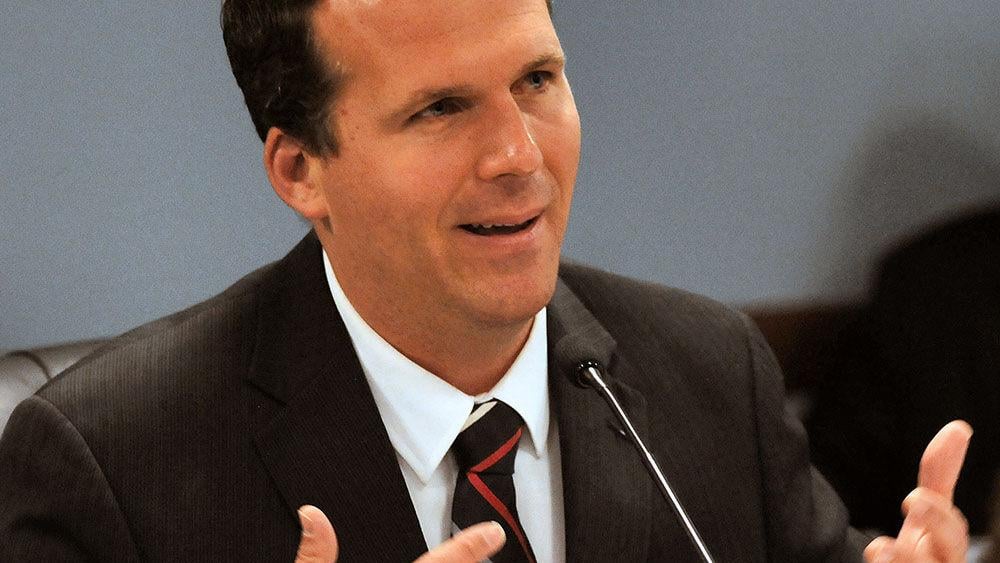
But the legislation by Rep. Jeff Weninger is raising concerns that what's in HB 4001 could undermine the ability of the Attorney General's Office to do the kind of policing they already do of retailers.
The Chandler Republican said his proposal is designed to fill a void in current laws, which prohibit the sale of cigarettes and other tobacco products to minors.
What HB 4001 would do is set up a licensing scheme for manufacturers and distributors of what the legislation calls "alternative nicotine products.'' These specifically include anything other than tobacco products.

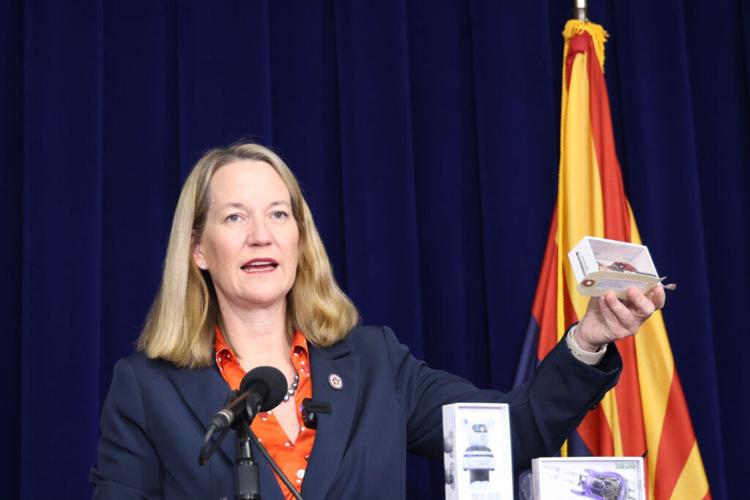
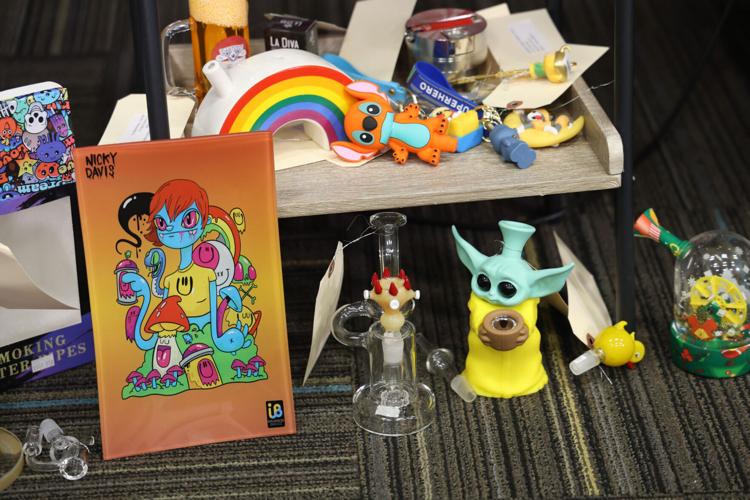
A sampling of vaping and smoking products that Arizona Attorney General Kris Mayes says are marketed to children are displayed during a July 2025 news conference.
There also would be fines for sales to anyone under the age of 21, fines that could go up to $10,000 for a fourth violation within a 24-month period.
People are also reading…
But that does not impress Rep. Cesar Aguilar.
He pointed out that Attorney General Kris Mayes, using existing consumer fraud laws, managed earlier this year to get a retailer to pay nearly $460,000 in restitution, civil penalties and legal fees to settle claims of selling both tobacco and nicotine products to underage consumers. That deal also requires Pro Source and its affiliates to implement reforms to prevent future sales to minors at its retail locations.
"To these massive companies, $10,000 isn't a penalty,'' said the Phoenix Democrat.
"It's just a cost of doing business,'' he said. "If you care about children, you don't give the people targeting them a discount on their fines.''
Weninger disagreed.
"Ten thousand dollars isn't chump change for anyone,'' he said. And he said nothing in the bill would stop the Attorney General's Office from continuing to pursue retailers using those consumer fraud laws.

Arizona Attorney General Kris Mayes, seen here at news conference in July to discuss how vape shops market to minors.
Richie Taylor, a spokesman for the office, said that's technically true.
But he said the legislation — backed by the manufacturers and retailers of these products — would impair the ability to conduct the necessary undercover investigations to find out in the first place who is marketing to minors. And that's because the measure would vest enforcement not in the Department of Health Services, with whom the AG's office now works to go after the illegal sale of both tobacco products as well as marijuana, but instead with the Department of Liquor Licenses and Control.
Weninger, for his part, said that pairing the regulation of nicotine products with alcohol makes sense.
"You have to card people,'' he said. And Weninger said many of these shops that stock vaping and similar products already have liquor licenses, eliminating the need for double licensing.
What's also driving the bill is the backing of the industry.
Jim Norton told lawmakers he represents AZ Innovates, which he described as being formed by manufacturers, wholesalers and retailers of these products who used to smoke but were looking for ways to get people to quit.
"Vaping and alternative nicotine products, as we now want them to be known, have gotten millions of people in this country off of cigarette products,'' he said.
"We know that that product, when used as directed, causes disease and, ultimately, premature death,'' Norton said. "But if people can gain access to their nicotine by using less harmful products, that is the direction and the policy that this state of Arizona should be pushing for right now.''
The measure also drew support from Tom Dorn, lobbyist for the Vapor Technology Association.
But Brian Hummel, lobbyist for the Arizona Cancer Society, questioned whether what is being proposed really is designed to prevent more comprehensive — and he believes more effective — regulation.
It starts with the fact that before the House approved the final version of HB 4001, lawmakers removed a provision that would have licensed retailers. Now, the measure imposes such requirements only on manufacturers and distributors.
Weninger questioned whether such a regulatory scheme is needed if the law allows for penalties. And as to those penalties, he said he will work to increase them when the bill is now considered by the Senate.
But the problem with this bill for Hummel goes beyond what he considers gaps in cracking down on teen use of vaping and similar products. He said what Arizona really needs is a comprehensive system where the state regulates everyone who sells any product at all with nicotine, whether in tobacco or any other form.
"We know how to regulate tobacco,'' Hummel said.
"It's done in 40 states that have a tobacco retail license,'' he said. "And this is very far from that.''
What that also goes to is the issue raised by Aguilar: putting these non-tobacco nicotine products under the purview of the liquor department.
The Attorney General's Office still could use laws banning tobacco sales to minors to work with the health department to do those undercover "sting'' operations of stores that sell cigarettes as well as similar products. But the way the AG's office reads the legislation, a shop that sells only these alternate nicotine products would be off limits.
Any distinction and any barrier to enforcement, Hummel said, would disappear with a single, comprehensive law governing all products with nicotine, regardless of the form.
Only thing is, such proposals have failed repeatedly.
There have been instances in the past where the tobacco industry has said it would accede to state regulation and licensing. But in exchange, they demanded that the state override virtually every local regulation in existence, ranging from how far tobacco schools to enhanced penalties for retailers who sell to anyone who is underage.
That proved unacceptable to cities like Tucson, which adopted its own comprehensive code in 1997 after concluding that state law has proven "ineffective'' in preventing tobacco sales to minors. So its law has teeth, including not just fines but suspension for up to a full year of the city license of any shop that violates laws on selling to minors at least five times in a three-year period.
Weninger, for his part, said his bill advances regulation.
"We've come a long way,'' he said. And Weninger said that foes like Hummel should take the partial victories they get rather than trying to kill the entire scheme.
Hummel, however, said the status quo — killing Wenginer's legislation — actually is better because it preserves the ability of the Attorney General's Office to use the legal tools it has to search out those shops that sell certain alternative nicotine products produced from tobacco plants to minors and prosecute them.
Howard Fischer is a veteran journalist who has been reporting since 1970 and covering state politics and the Legislature since 1982. Follow him on X, formerly known as Twitter, Bluesky, and Threads at @azcapmedia or email azcapmedia@gmail.com.