Young people are unlikely to respond as enthusiastically to a call to serve their country as members of the World War II generation did 80 years ago. Young people do not exhibit the high levels of patriotism and commitment to democracy found among earlier generations.

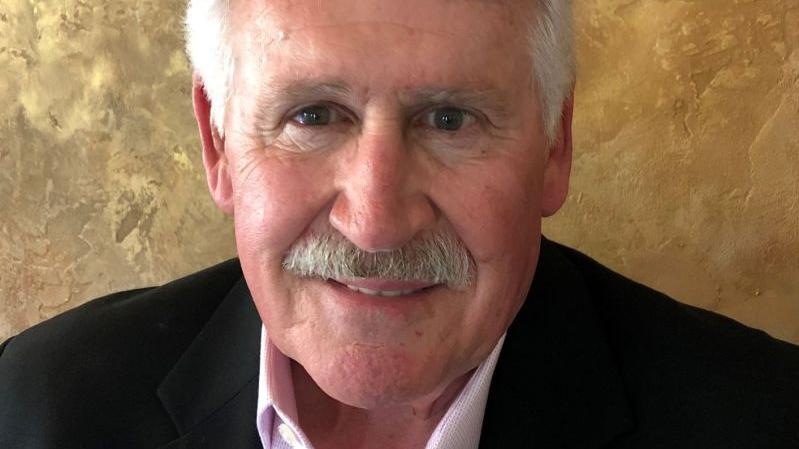
Richard D. Kahlenberg
But I don’t blame young people. Each generation must be taught, by word and deed, the genius of American democracy. Those of us who are older have failed to do so.
During World War II, Americans rallied around President Franklin D. Roosevelt’s call to make America the “arsenal of democracy,” providing war materials to confront Adolf Hitler. Young men and women ultimately came forward to serve in U.S. military forces that would change history by defeating Nazi Germany and Imperial Japan.
Today, pride in America and belief in democracy are much lower among young people than among older Americans. In a 2023 Gallup poll, only 18% of 18- to 34-year-olds said they were “extremely proud to be American,” compared with 50% of adults over 55.
People are also reading…
Young people also are much less likely to support American democracy. A shocking 31% of people 18 to 29 agreed in a 2023 YouGov poll that “democracy is no longer a viable system, and Americans should explore alternative forms of government” (compared with 5% of those over 65).
In another survey by the McCourtney Institute for Democracy, 78% of Americans said democracy is “the best political system under all circumstances,” but only 49% of young people agreed. Among those age 18 to 25, 28% said it “makes no difference” whether they live in a democracy or a dictatorship, and 19% said “dictatorship could be good under certain circumstances.”
Older adults from across the political spectrum have failed to teach a love of country and democracy.

Would today's young people answer a call to duty as eagerly as their parents and grandparents did during times of crisis?
Young people are supposed to look to a president as a model of patriotism and democratic values, yet President Donald Trump defies liberal democratic norms. He helped foster a violent attack on the U.S. Capitol to interfere with the peaceful transfer of power and then pardoned Jan. 6 participants who beat up police officers. He has referred to the press as the “enemy of the people,” suggested immigrants are “poisoning the blood of the country” and referred admiringly to authoritarian leaders in other countries as “strong.”
In his second term, Trump has dismantled the Voice of America, which since World War II has provided news to parts of the world darkened by a lack of press freedom. Trump has decimated AmeriCorps, which for three decades provided a patriotic outlet for young people and others to help fellow Americans with disaster recovery, tutoring and more.
Some on the political left have contributed to declining patriotism and faith in democracy. Widely debunked by mainstream historians, the 1619 Project falsely suggested the importation of enslaved people, rather than the Declaration of Independence, is what distinguishes America from other countries.
Too often, left-wing academics instill in young people the fashionable belief that America is an oppressor. This claim must leave students wondering why people from across the world flock to America’s shores. The American Enterprise Institute’s Robert Pondiscio reviewed the mission statements of the nation’s 100 largest school districts and found the words “patriotic,” “patriotism,” “America” and “American” didn’t appear in any of them.
To restore the spirit of the World War II generation, we need to teach students what it means to be an American. That requires devoting more time and resources to teaching civics and what it is like to live in nondemocratic societies. It requires providing students an honest and hopeful account of American history. We also must overhaul the diversity, equity and inclusion (DEI) programs that suggest what divides us is more important than what unites us.
Schools should teach what is distinctive and exceptional about America. Policymakers should promote racial and economic integration in public schools. National service should be elevated, not denigrated. Schools should do a better job of teaching civil discourse.
These policies will help promote a reflective, rather than knee-jerk, patriotism that served America so well in earlier generations.
Kahlenberg is director of the American Identity Project at the Progressive Policy Institute. He wrote this for InsideSources.com.