The following is the opinion and analysis of the writer:

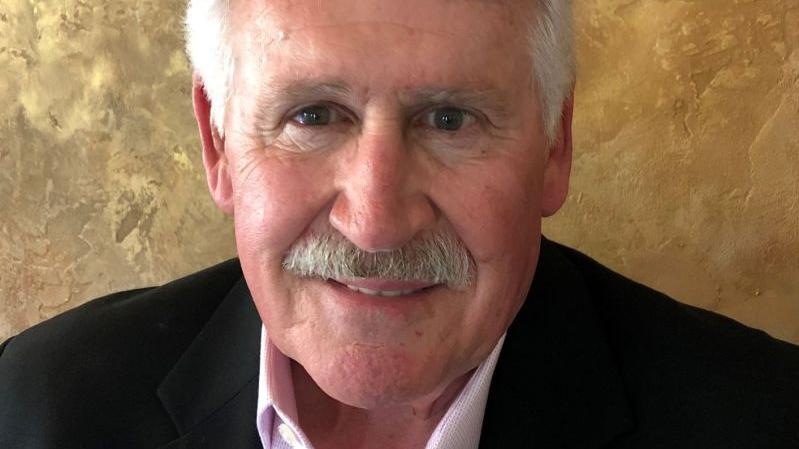
Mort Rosenblum
BAYEUX, France — Here, near the beaches where allied forces beat back fascism the hard way, today’s challenge is clear across the world — especially in America. Protecting democracy in a decent world comes down to classrooms and press briefing rooms.
From grade school through university, young people need a common grasp of reality to think critically about what they face. And voters need honest reporters close to ground truth who expose faithless authoritarians bent on fleecing and flocking them like sheep.
Donald Trump is targeting youthful minds, any despot’s classic priority. And now Pete Hegseth, his toy-soldier minister of war, is attempting to savage the First Amendment by restricting news organizations to spoon-fed propaganda handouts.
People are also reading…
I delayed this column a week to wait for the Bayeux Calvados-Normandy awards for war correspondents. Each year, our international jury squabbles among ourselves to choose exemplary reportage: written pieces, photos and broadcast coverage.
But more, Bayeux brings together hundreds of journalists worthy of the name — road-worn reporters and smart young comers — who arrive fresh from warfronts or remote parts of the planet where forgotten people suffer, starve and die.
They mingle with 15,000 teenagers and many more elders in a medieval jewel of a city that miraculously escaped allied bombs. Its exquisite 230-foot tapestry depicting the Norman conquest of England in 1066 amounts to the world’s first newsreel.
Photo exhibits, evening presentations under a huge tent and intimate panels fire up hope that the human spirit is strong enough to overcome daunting crises.
This year was different. If anyone had a good word for Trump and his rogue elephants, I didn’t hear it. For the first time since I began coming in 2011, grim reflection dimmed all-night partying among correspondents who wonder if they still make a difference.
Trump’s relentless efforts to coopt, cow and corrupt truthful journalism, combined with his almost hourly barrage of domestic outrages, diverts Americans’ attention from “foreign” stories that directly affect their lives.
“Factchecking” is impossible when the problem is an entire framework of alternative truth wholly divergent from reality. A deluge of misinformation confirms personal bias.
The Bayeux jury considered a wide gamut: those non-wars a delusional U.S. president claims to have settled; real ones he pretends to have ended; vicious conflicts in places he likely could not find on a map.
The New York Times and Germany’s Die Zeit won the top print awards for coverage of Sudan, the world’s worst humanitarian calamity in a brutal civil war with no end in sight. Trump never mentions it, and America ignores it.
As always, we began at the leafy Memorial. Its 34 marble steles now total 3,046 names of men and women put to death or killed while bearing witness since World War II. Another 73 were added this year, with a special tribute to Palestinians.
Like last year, Gazans swept the image awards. Israeli authorities barred outsiders from the besieged enclave. They worked under fire — at times directly targeted — to picture their own families’ suffering as 83 percent of homes and buildings crumbled.
Back in America, news reports and commentary relayed Trump’s self-adulation at having ended the Gaza war and bringing home the last hostages. They quoted hardline Israelis’ effusive gratitude, truffled with references to a much-deserved Nobel.
Reporters who cover the story firsthand know that his peace plan was close to what Joe Biden proposed a year earlier. Benjamin Netanyahu rejected it to continue his onslaught, gambling that his old cohort would return to the White House.
Trump could have forced a ceasefire in January, sparing Palestine thousands of needless deaths, months of blocked aid and wanton destruction. His 20-point peace plan made only a vague reference to a possible separate Palestinian state.
The little-noticed crucial part left open what is his likely intention. As head of a Gaza “Board of Peace,” he may yet achieve his dream of a Mediterranean Trump resort built on the ruins, with Palestinians as golf caddies, beach boys and cocktail servers.
A close look at Bayeux makes plain why those classrooms and press briefing rooms are so essential to getting America back on track. Tucson is a telling case in point.
I first came to the awards as jury president 14 years ago. I lectured at high schools and was interviewed by kids with smart questions about global complexities. At the time, I taught brief international reporting courses each spring at the University of Arizona.
The UA journalism faculty, rich in seasoned pros, emphasized reporting skills and ethics. Unlike Arizona State University, it did not include “communications” — public relations and such. Selling a message is not the same as trying to get the story straight.
Gannett had folded the Tucson Citizen. Lee Enterprises had acquired the Star and made cuts. And a lot else. In sum, Tucsonans, like people in much of America, have grown increasingly short on comprehensive coverage of “foreign” news.
My “textbook” was a daily hard copy of The New York Times. For a while, students quickly developed interest in the outside world. But each year that interest waned as so much else flooded the zone. And the UA journalism school lost its way.
Ex-UA President Robert Robbins, a doctor, pushed for a popular new concept, a journalism “teaching hospital.” But that would have been like having interns taught by practical nurses.
Suresh Garimella, the new president, has seemed so far to be headed down Trump’s path on university policy. But he has a chance to rebuild the School of Journalism with its new director, Jan Lauren Boyles, who is qualified, eager and energetic.
In the meantime, young people in Bayeux have grown more news-literate by the year, keenly aware of what future they can expect if their generation gets things wrong.
Tucson still has solid local coverage from a range of new ventures. The Star is excellent on the border, mining, higher education and investigations. Yet we need more news purveyors to cast wide nets with firsthand reporting and connect the dots with thoughtful analysis.
Unless there is a sharp change in journalism education and support from citizens for reporters under fire, it seems as if the best way for Americans to keep tabs on an imperiled world is to ask a kid in Normandy.
Follow these steps to easily submit a letter to the editor or guest opinion to the Arizona Daily Star.
Renowned journalist Mort Rosenblum, a Tucson native, writes regularly for The Arizona Daily Star.