

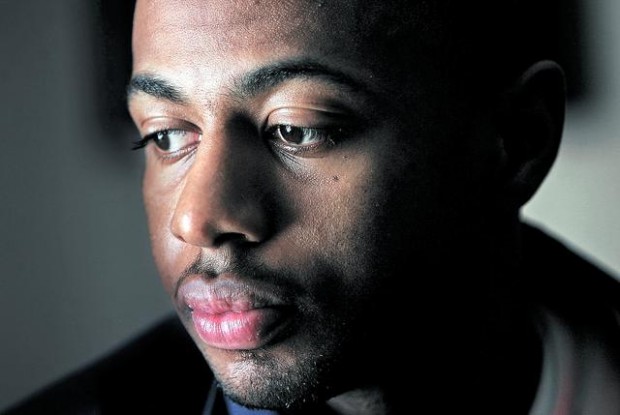

After Mustafa Shakur plays in his final two McKale Center games this week, he will receive a framed jersey, hugs, applause and all the things Senior Days are known for.
He will be the center of a ceremony, frankly, he was not expected to attend.
"I honestly think Mustafa came in with the idea that he'd be here two years and then he'd be gone," UA coach Lute Olson said.
Shakur says he had no such preconceived notion, but why not? Aren't Arizona point guards supposed to swoop in as freshmen, appear in a Final Four, then blow out of town early for the NBA draft lottery? That is what Mike Bibby did. Although Jason Terry and Damon Stoudamire did not leave early, they, too, both became lottery picks.
The point guard legacy they created is both a blessing for the UA, allowing it to attract other top-shelf point guards, and a curse for the successors who play under constant pressure — from outside and within.
People are also reading…
"The reason we got him was the reputation and development of our point guards," Olson said of Shakur. "The only thing is, guys get impatient for that to take place right away, and it's not an easy thing to live up to all the time. But I think he now sees why the whole four years has been really important to him."
It started out well enough. Shakur arrived in 2003 not only as a high school All-American from Philadelphia but also a clean-living, hard-working kid who listened to coaches and wanted nothing more than to improve.
Except for a travel snafu that was not his fault, costing him a start during his freshman year, Shakur suffered none of the disciplinary fate that Olson often uses to mold freshmen. Olson liked Shakur so much, in fact, that teammates even jokingly called him the "Golden Child."
Shakur's play that first season also left little room to complain. He averaged 9.4 points and 4.5 assists, while posting a respectable freshman-year 1.6-to-1 assist-to-turnover ratio for a team that ultimately lost in the first round of the NCAA tournament to Seton Hall.
Shakur went home and kept working. Oregon assistant coach Kenny Payne, a former 76ers player who worked out Shakur and many other young players in Philadelphia during off-seasons, said Shakur would call in the middle of the night asking to practice again — after doing so twice that day.
"He just soaked up the knowledge of wanting to be great and to correct his game," Payne said. "A lot of kids say they want it, but not a lot do the necessary steps like that. If there's anybody that's affiliated with Arizona that even questions how hard he plays and his impact on the team, then I would say they don't understand the game."
But Shakur's outward perception took a hit during his sophomore and junior years. His stats dipped nearly across the board and, although the Wildcats managed to win the Pac-10 race, Shakur took his share of the heat over the UA's 2005 Elite Eight meltdown to Illinois, when the Wildcats lost a 15-point lead in the final four minutes.
"It was tough because we all made mistakes in that game," Shakur said. "Of course they're going to blame the point guard. But they were pointing fingers at everybody."
As a junior, Shakur brought his numbers up, but the Wildcats flirted with NCAA tournament bubble territory, and Shakur did not reach expectations until he put together two impressive games in the tournament at home in Philadelphia.
Shakur has long maintained that he does not read or see reports about himself, and he always answers media inquiries politely no matter how negative their tone. But roommate Jawann McClellan said Shakur knew he was at the heart of the attacks.
"I really give him credit for hanging in there," McClellan said. "He's been one of the most criticized players to probably ever put on a uniform here, and to stick it out the way he's done just shows true leadership. He might not read or see it, but you can hear what people say without really reading."
Family support helps, Shakur said, especially from his parents and older brother, Mujahid.
They offer perspective.
"That's kind of what we preach," Mujahid Shakur said. "Of course we love the fans, but one thing we understand is that fans are on an emotional roller coaster most of the time. As a player, you don't want to get on that."
But it is a constant battle, not just around UA circles but also at home. Mujahid has heard the chatter repeatedly in the Philadelphia barber shop he owns.
"One said, 'Mustafa's averaging 14 points, but I'd rather him take a few of his assists to score a few more points,'" Mujahid said.
That was only one example. Mustafa Shakur can think of many, many more. It is ingrained in the culture, he said.
"When I played in the public league (in Philadelphia), they didn't even keep stats for assists, so the only way I'd get recognition is by scoring a lot of points," Shakur said. "It's the city mentality. It's crazy back there. If I have 18 or 19 points, but only one assist, people think I'm killing it. But if I get 15 points, eight rebounds and seven assists — a great game — they don't."
As much as Shakur's instincts and natural abilities suggested a pass-first approach was best, all that talk tended to muddy his mind-set. It is an issue Olson has dealt with often.
"It's always more of a problem for a kid coming from the big city — Seattle, Portland, L.A., Chicago, Philadelphia, New York. It just sort of goes with the territory," Olson said.
"They've got a lot of hangers-on, people who've been around that know what should be done," he added, then noted sarcastically, "and what should be done is you should shoot the ball a lot and score a lot of points.
"The interesting thing is the NBA is looking for the same thing that we're looking for — a point guard that will distribute and run his team, and that's where Staf is at now."
It was only after Shakur entered the NBA draft pool last season that all those conflicting messages were drowned out.
Shakur worked out privately with Cleveland, Detroit and Memphis, while also participating in the NBA's pre-draft camp at Orlando, Fla. He heard from well-regarded NBA executives such as Jerry West and Joe Dumars and listened, more than ever, when they told him to focus on running a team.
"Hearing them say that really helped," Shakur said. "It's a different game (in the NBA). You look at the NBA, and there were more scoring point guards. They were looking for a lot of score-first guys, but now it's kind of shifting back, with Steve Nash and a lot of pass-first guys. A lot of scoring point guards flourish at this level, but (in the NBA) they can't get guys involved."
Shakur's play this season is evidence that the message must have sunk in. Shakur has already surpassed all his previous season assist totals — and he now is on pace to easily become the all-time UA assists leader in the Olson era — and he also has pushed his assist-to-turnover ratio over 2-to-1.
"His willingness and desire to run a team are much more apparent now, and his decision-making has improved as a result," said David Griffin, the Phoenix Suns' vice president of basketball operations. "I think he's helped himself as much as any senior in the country, with the strides he's made in terms of leadership and poise and thinking of others first. Those things are really, really germane at the point guard area."
Other advice Shakur received in talking with those NBA officials was to improve his shot, not to make it a primary weapon but as a tool to keep defenses honest. On that front, Shakur has improved only slightly, hitting 46.8 percent from the field and 35.0 percent from three-point territory.
"It's a factor," Griffin said. "Having a stroke that's not broken is significant but you need to take the right shots, and you need to be more transcendent in your ability to make people better. We're going to judge point guards in terms of wins as much as anything else."
Shakur has won 70 percent of his games at Arizona, less than his well-decorated predecessors. But until this season, the teams he has played on have had well-documented chemistry issues and strong personalities that, Mujahid Shakur said, affected Mustafa's game and leadership.
"When he came in … he didn't want to step on (upperclassmen's) toes," Mujahid Shakur said. "That got him in a situation where he started to overthink the game, and basketball is not a game where you want to overthink."
None of Shakur's previous teams made it to a Final Four, either, coming closest two seasons ago in that Arizona loss to Illinois. A win would have pushed Shakur to that lofty postseason standard, given him an opportunity to win a championship, but he did not get there.
"That's what I came in to do, knowing all the talent we had," Shakur said. "But sometimes, it doesn't matter how much talent you have. Sometimes the teams with the best players don't win the championships. I'm pretty sure that everybody knows that."
The latest at Point Guard U
• Years: 4 (2003-04 to present)
• Years started: 4 (2003-04 to present)
• Record as primary starter: 87-37 (70.1)
• NCAA tournament record as primary starter: 4-3
• Current UA career standing: No. 3 assists (631), No. 4 games started (122), No. 6 minutes played (3,826), No. 8 average minutes per game (30.8).
• As a pro: No. 60 overall 2007 NBA draft prospect (ESPN.com), projected second-round pick (nbadraft.net)
Damon Stoudamire
• Years: 4 (1991-92 to 1994-95)
• Years started: 3 (1992-93 to 1994-95)
• Record as primary starter: 77-17 (81.9)
• NCAA tournament record as primary starter: 4-3 (Final Four in 1994)
• UA career standing: No. 2 assists (663), No. 3 three-pointers (272), No. 6 scoring (1,849), No. 7 three-point percentage (40.2), No. 7 minutes played (3,666), No. 8 free-throw percentage (80.4), No. 8 steals (174).
• As a pro: Drafted No. 7 overall by Toronto Raptors in 1995. Has played 11-plus seasons with Toronto, Portland Trail Blazers and Memphis Grizzlies
Mike Bibby
• Years: 2 (1996-97, 1997-98)
• Years started: 2 (1996-97, 1997-98)
• Record as primary starter: 55-14 (79.7)
• NCAA tournament record as primary starter: 9-1 (NCAA title 1997)
• UA career standing: No. 4 average minutes per game (32.4), No. 9 three-point percentage (39.0), No. 9 steals (164), No. 10 three-pointers (144).
• As a pro: Selected No. 2 overall by Vancouver Grizzlies in 1998; has played eight-plus seasons for Vancouver and Sacramento Kings.
Jason Terry
• Years: 4 (1995-96 to 1998-99)
• Years started: 1 (1998-99)
• Record as primary starter: 22-7 (75.8)
• NCAA tournament record as primary starter: 0-1
• UA career standing: No. 1 steals (245), No. 4 three-pointers (193), No. 7 assists (493), No. 9 tied, games played (129).
• As a pro: Taken No. 10 overall by Atlanta Hawks in 1999; has played seven-plus seasons for Atlanta and Dallas Mavericks
Jason Gardner
• Years: 4 (1999-2000 to 2002-03)
• Years started: 4 (1999-2000 to 2002-03)
• Record as primary starter: 107-29 (78.6)
• NCAA tournament record as primary starter: 11-4 (Final Four 2001)
• UA career standing: No. 1 games played (136), No. 1 minutes played (4,825), No. 1 average minutes played (35.5), No. 3 points (1,984), No. 2 three-pointers (318), No. 2 free throws (516), No. 3 steals (225), No. 4 assists (622).
• As a pro: Not selected in 2003 NBA draft. Has played in Europe; is with Telekom Bonn in Germany this season.


