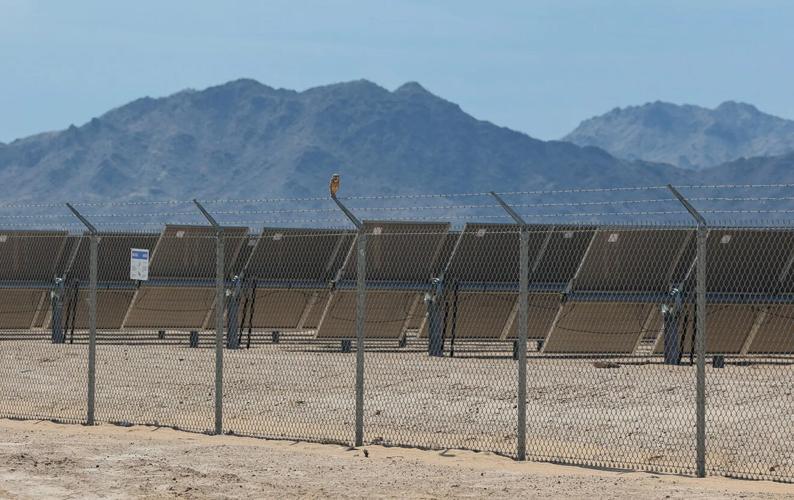
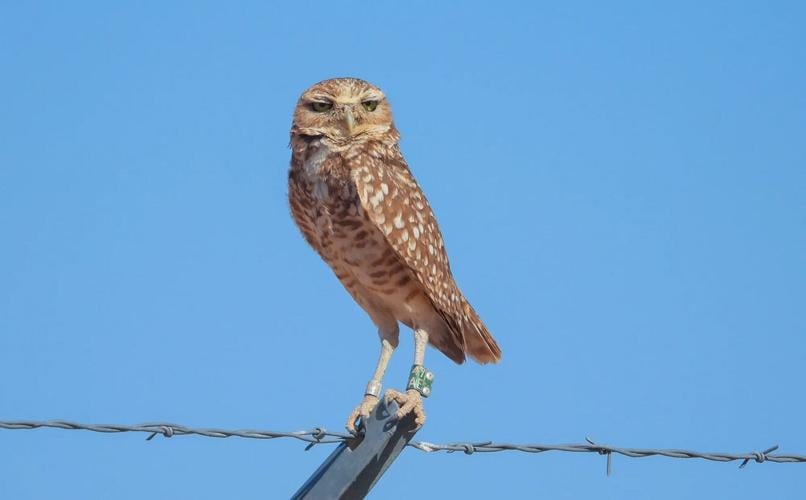
TONOPAH — A burrowing owl sits on top of a weather sensor array as it watches the desert below. A few feet away, its burrow disappears into the sandy soil.

A burrowing owl sits on a barbed-wire perimeter fence, which separates the relocation site and solar farm, in Tonopah.
Beyond the nearby fence line, thousands of solar panels stretch across the landscape, turning Arizona sunshine into electricity.
The Sun Streams solar farm, located 17 miles west of Buckeye, is first and foremost built to harvest energy.
But it has also become home to what some people say is one of Arizona’s most recognizable birds.
Last year, Longroad Energy partnered with the nonprofit Wild at Heart to build a habitat for burrowing owls displaced by development. The project also gave researchers a rare look at how the birds adapt to living next to a large-scale solar facility.
“We’re still figuring it out,” said Deron Lawrence, Longroad’s vice president of environment. “Part of the research we’re undertaking is figuring out what that effect is and how the owls are affected.”
People are also reading…
10 owls moved to solar field
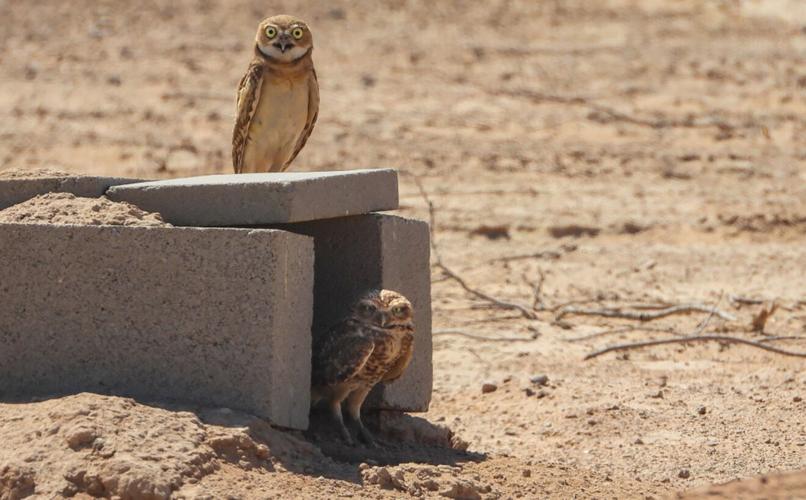
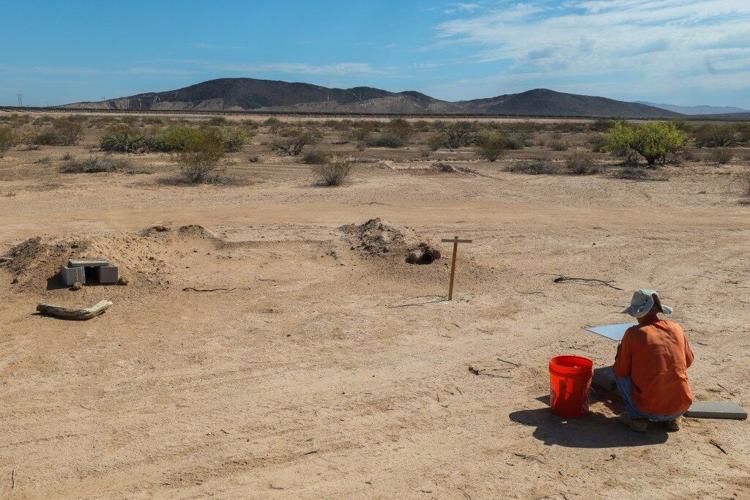
In March 2025, Wild at Heart relocated nine owl pairs and one single male from a housing development about 50 miles away from the solar site. Motion-activated cameras now track the colony’s 30 open artificial burrow sites around the clock, while biologists monitor nesting success and survival.
For Greg Clark, Wild at Heart’s burrowing owl habitat coordinator, the project is the product of nearly 27 years of work.

A pair of burrowing owls step outside an artificial burrow made with concrete blocks next to a solar farm in Tonopah.
“When we started investigating burrowing owls in 1999 and 2000, it was clear they were in trouble,” Clark said. “We decided in 2000 that we were going to do something about it.”
Clark thinks the solar site might actually work in the owls’ favor.
Unlike trees or thick vegetation, which can hide predators, the open landscape lets the birds spot danger from far away.
“Solar panels don’t block the owl’s visibility,” Clark said. “The panels may even attract insects the owls can feed on. Though we’re still learning.”
'Like tiny little people'
It’s the owls’ human-like behavior that keeps Clark coming back to the desert.
“They chase each other around. They’ll stand up to dogs and coyotes,” Clark said.

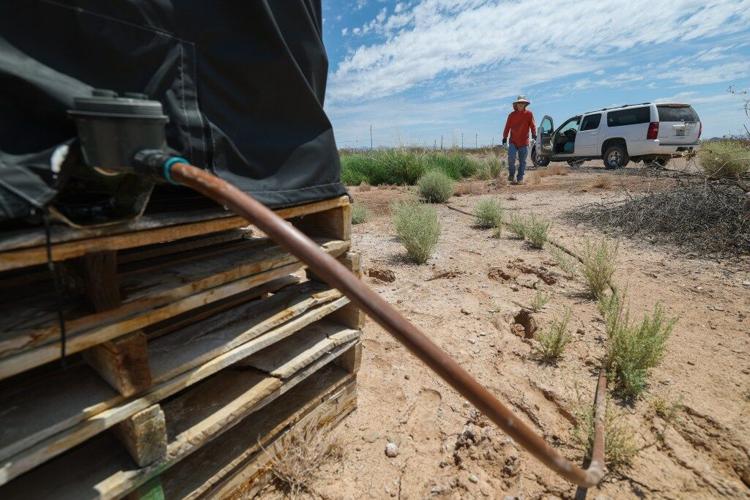
Greg Clark walks toward a water tote used for a gravity-fed drip irrigation system in Tonopah. Wild at Heart’s burrowing owl habitat coordinator says they are testing habitat enhancements by growing vegetation to provide food and shelter for insects and other arthropods that burrowing owls feed on.
“The juveniles pick fights with each other. The males interact with female owls. The owls almost act like tiny little people.”
About 10 miles away, Clark checks on another part of the project at the Mesquite Wildlife Oasis, where irrigation lines run from water totes through the desert, watering grasses and flowering plants. The goal is simple: draw in the butterflies, moths and grasshoppers that burrowing owls feed on.
Every few weeks, Clark inspects the drip system, checks the artificial burrows and reviews trail camera footage to make sure the habitat is still supporting the 40 owls now living at the solar farm.

Clark calls burrowing owls smart hunters who use the ground under the panels to hunt for insects, and “loaf” during the heat of the day. The term describes owls that are resting on the ground with their feet hidden, feathers fluffed and in compact pose that makes them resemble a tiny loaf of bread.
The oasis also doubles as an outdoor classroom where, Clark says, horticulture students learn how restoring native plants can support an entire desert ecosystem.
Clark knows this work takes patience. Seeds take time to grow. Habitats take years to mature. And every relocated owl faces new challenges.

A burrowing owl sits on a barbed-wire perimeter fence, which separates the relocation site and solar farm, in Tonopah.
Still, he believes it’s worth it.
“Development and wildlife conservation can coexist,” Clark said. “If you build conservation into a project from the beginning, you can create places where wildlife still has a chance.”