LAS VEGAS — A BPE-free water bottle and other swag at this year’s Pac-12 basketball media days were stuffed into a reusable shopping bag said to be made of “100 percent ocean plastic,” part of the conference’s self-described efforts toward sustainability.
“PAC-12 TEAM GREEN,” read the bag’s logo.
Washington State coach Kyle Smith can see a little irony in that sort of thing. He and Oregon State’s Wayne Tinkle are the only two men’s basketball coaches left in the conference as of now for 2024-25, while their Pac-12 rivals will be flying back and forth across the country to play new sets of conference foes starting next season.
“Especially this league … the (talk about) carbon footprint and green energy? It’s like ‘You guys are full of it,’” Smith said. “You can’t put it any more blatant than that.”
People are also reading…
It’s not that Smith or Tinkle are blaming the league itself or its other current basketball coaches for the Pac-12’s impending breakup. It’s been well-documented that football-driven television money ultimately prompted the departing schools’ decisions to leave.

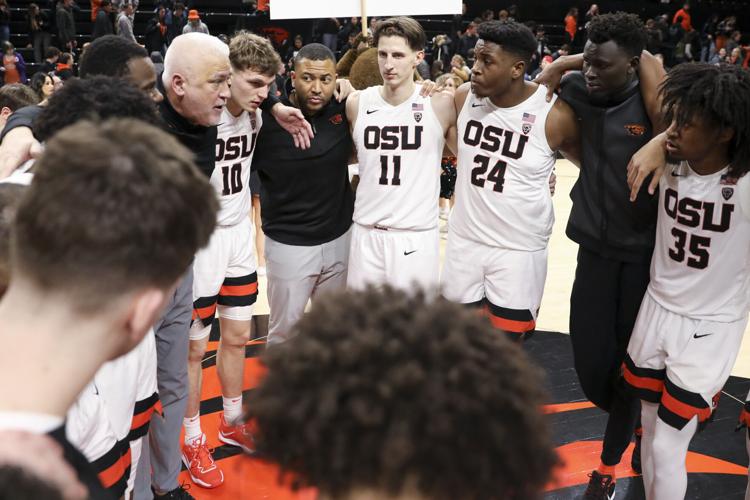
Oregon State head coach Wayne Tinkle huddles with players and coaching staff following the team’s win over California last season, on March 4 in Corvallis, Oregon.
While Arizona, ASU and Colorado will actually face somewhat comparable distances for Big 12 competition next season as they do now in the Pac-12, that’s not the case for the other defectors. Except when they are playing among themselves, USC, UCLA, Washington and Oregon will be heading to the Midwest or East for Big Ten competition. Located relatively central within the Pac-12 now, Utah will instead have to head further to the south or east for Big 12 games.
And the Bay area schools will be leaving the Pacific Coast to play games in the Atlantic Coast Conference. Maybe with a trip every other week.
It’s absurd, Smith said.
“The Stanford-Cal thing … is the silliest thing I’ve ever heard for basketball,” he said.
Smith said he hopes to someday welcome schools back to the Pac, while Tinkle, like many of the league’s coaches at the conference’s men’s basketball media day Wednesday, expressed sadness.
“You’ve got the people out there who say ‘Screw them, they’re leaving’ but to me, it’s just a shame,” Tinkle says. “We’re losing some of the longest contested rivalries out there, but everybody’s proven they’re doing what’s best for them. We just learned that lesson.”

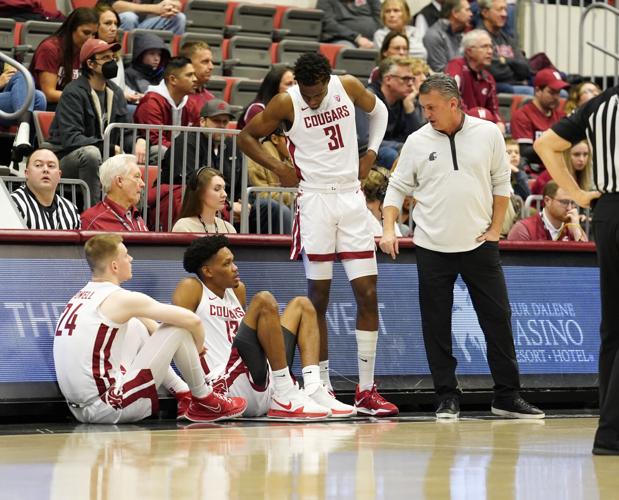
Washington State head coach Kyle Smith, right, talks to guard Justin Powell, left, forward Carlos Rosario, center, and guard Kymany Houinsou (31) before they check into the game against Stanford during the first half a matchup last season between the Cougars and Cardinal in Pullman, Washington on Jan. 14.
The avalanche broke out on June 30, 2022, when UCLA coach Mick Cronin was playing a round of golf at the exclusive Los Angeles Country Club, where cellphones are not allowed. He learned right then that the Bruins and Trojans would be headed to the Big Ten in 2024.
“They literally drove a guy out to tell me. I’d never seen a golf cart on that course,” Cronin said. “It didn’t surprise me. I’m like the Grim Reaper. I was in the Big East (at Cincinnati) when it broke up. Got the job at UCLA and … I’m bad luck.”
After a full year of having UCLA and USC’s decision hover over the league, Colorado announced it was heading to the Big 12 late last July. A week later, the Big Ten pulled in Oregon and Washington, prompting Utah, Arizona and ASU to head the Big 12 the next day.
The Pac-12 was done, at least as it is currently known.
“When UCLA and USC left, it was like, `Well, now what?’ So it’s kind of been a long year in that regard.“ Oregon coach Dana Altman said. “Then Colorado left, which created more problems. There was always the threat of Arizona, Utah and everybody going to the Big 12. It was just an uneasy time for everybody.

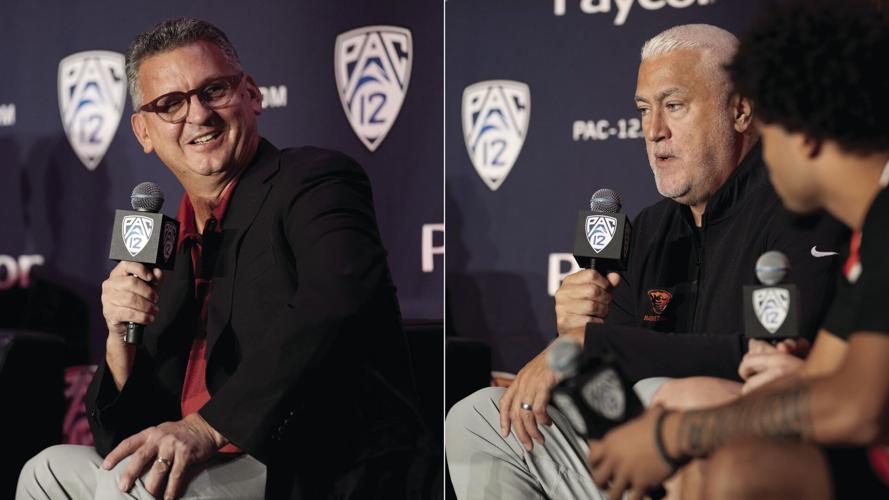
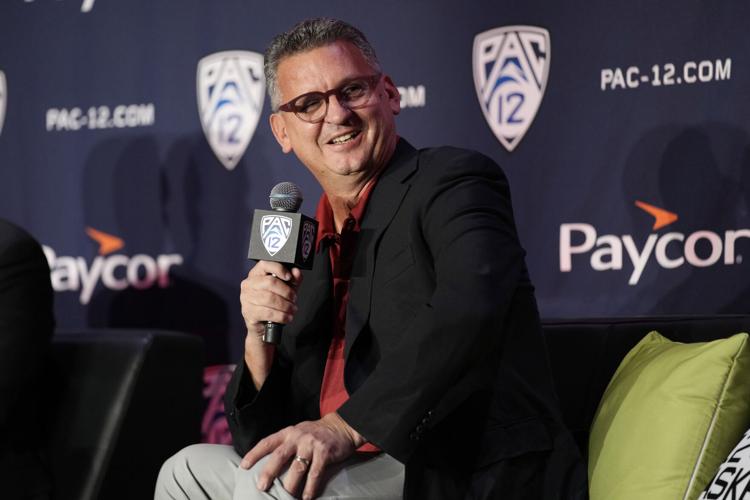
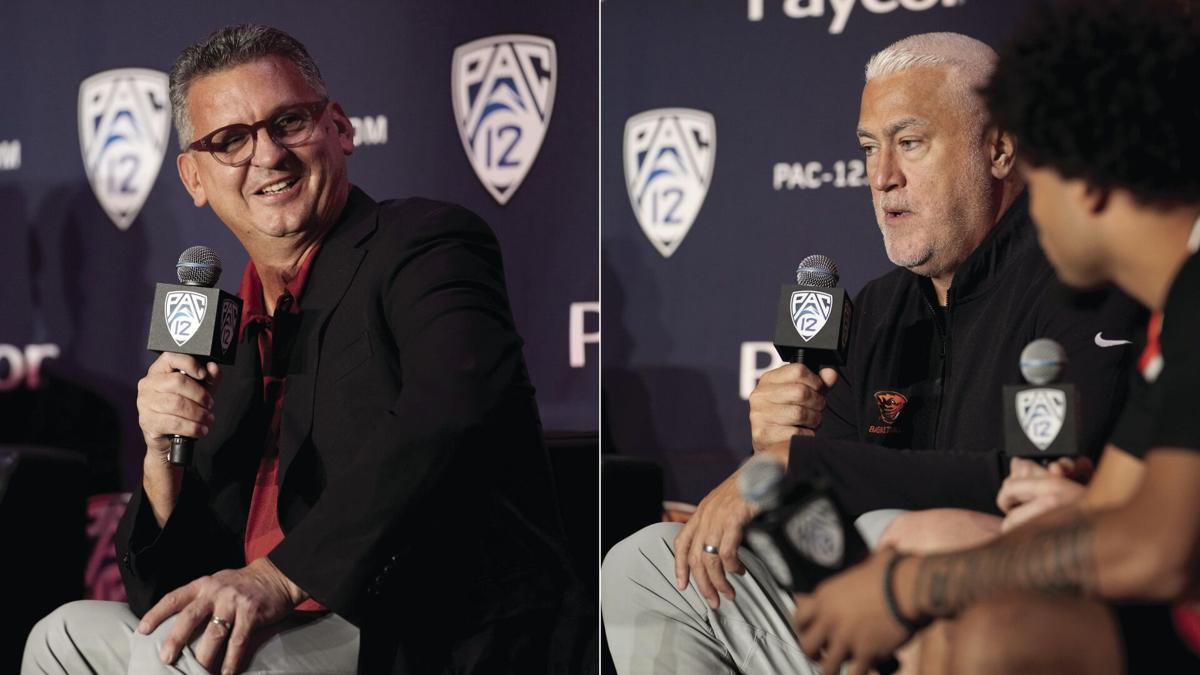
Washington State head coach Kyle Smith speaks during a news conference at the Pac-12 Conference’s 2023-24 Men’s Basketball Media Day event Wednesday in Las Vegas.
“Part of me is really disappointed, because I like the league. I like the rivalries. It’s been good for us.”
Cronin said he correctly predicted that football would lead the drive apart, though maybe not as quickly as it happened. But Cronin, Smith and Tinkle alike also expressed hope from football — if it winds up going the route advocated in August by UCLA football coach Chip Kelly, who suggested top college football teams should go independent and leave the other sports to stay in more logical geographic rivalries.
Cronin said it would happen, especially if the ACC falls apart to leave football with just three major power conferences, and “people come to their senses” regarding other sports.
“Look, they play six road games max” in football, Cronin said. “We play twice a week. We’re traveling for MTEs (multi-team events), we’re traveling all over the country as it is. And when you start putting all these Olympic sports under those cross-country constraints, and we talk about student-athlete all the time…

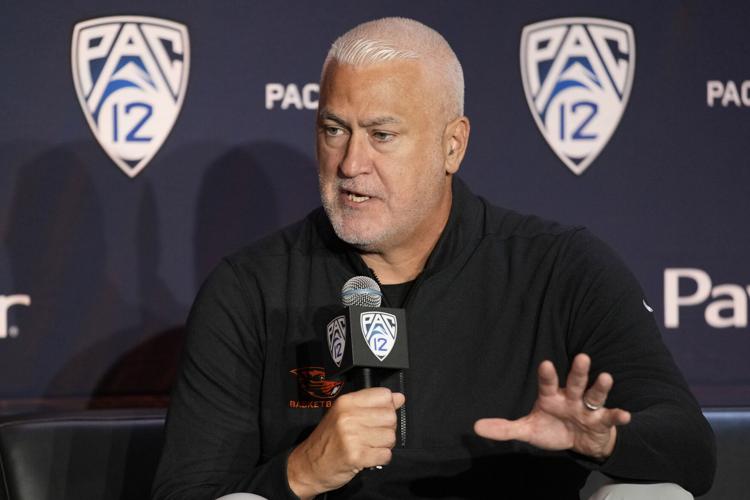
Oregon State head coach Wayne Tinkle speaks during a news conference at the Pac-12 Conference's 2023-24 Men's Basketball Media Day event Wednesday in Las Vegas.
“At some point there’s common sense. But right now, money is prevailing and it’s survival.”
Cronin said he didn’t know when football might break off, but that it would once the lucrative NCAA basketball tournament was no longer run by the NCAA.
“If that day happens, then you can make decisions that are best for basketball,” Cronin said.
But can the Beavers and Cougars wait for that day? How long can they keep the Pac-12 banner alive, if at all?
Some of that may be clearer after a legal fight plays out in Washington state, where WSU and OSU are seeking control of the Pac-12’s remaining assets because of what they say is an existential threat to the conference. A preliminary injunction is set for Nov. 14, while the San Jose Mercury News reported that the two sides — OSU/WSU and the 10 departees — have also agreed to mediation to settle the dispute.
If WSU and OSU can gain control of the Pac-12, they’ll have time to figure something out and without the departing members having a say. NCAA rules mandate that “multi-sport” conferences have at least seven teams playing men’s basketball, though they allow a two-year grace period to build back to that number starting on the date that the withdrawal of schools puts them under the minimum.
That means the Cougars and Beavers could hang on to the Pac name until 2026-27, giving them time to recruit Mountain West or other teams, possibly playing as an independent or as an affiliate of another conference until then.
“We’re trying to find a way to just stay together and survive until some other (media) rights are up,” Tinkle said. “We want to make sure that we keep this brand going, the Pac-12. And it’s not just for the financial — it’s for the AQ (automatic NCAA Tournament bid), it’s for the football playoff.
“We’re fighting for the Pac-12, and we’re pissed off, quite frankly, that this thing is dissolved. But we can’t worry about how it happened. We’ve got to work together to find solutions. If we handle things the right way the next couple of years, things are going to settle back to maybe a little bit closer to the normalcy that we’re used to.”
But for now, the tension still boils.
The hosts of the Pac-12 media day main stage interviews mostly avoided the subject of the conference’s future, some questions about the new conferences were discouraged or dismissed during breakout sessions, and commissioner George Kliavkoff didn’t even show up — even though it has long been a tradition for the commissioner to address the media and field questions at preseason media days.
But, no matter how ugly it gets, Smith says he won’t be holding a grudge if some Pac-12 teams eventually return.
Whenever, and however, they do.
“I’d love to save the league and also be a home for when they want to come back,” Smith said. “When it settles out, when football goes on their own, hopefully we still have a Pac-12-whatever-name.
“I’m not gonna be mad when they want to come back. I’ll embrace them.”
VIDEO: Arizona head coach Tommy Lloyd speaks at Pac-12 Media Day on Wednesday, Oct. 11, on the “long offseason” and his excitement about his team going into the 2023-24 Wildcats basketball season. (Video courtesy Pac-12 Networks).
Contact sports reporter Bruce Pascoe at bpascoe@tucson.com. On X(Twitter): @brucepascoe

Bruce Pascoe
Reporter