




Preservice.
It’s a nightly ritual at Aaron Lopez’s just-opened downtown restaurant Ursa.
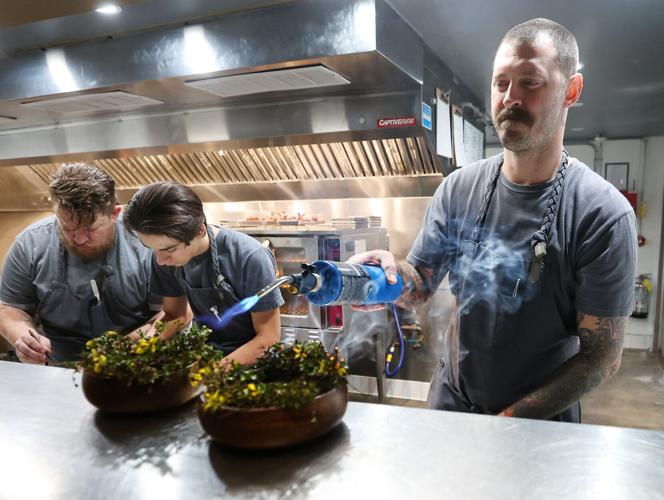
Right after family meal, 30 to 40 minutes before doors open, they meet in the small space off the dining room to talk about the night before and the night ahead.
On this quiet late October Thursday, it was a small group led by GM Emma Thomason, a veteran of Tucson’s downtown dining scene, including at the recently shuttered Maynard’s Kitchen, and Lopez, chef-owner of what just may be one of Tucson’s most intriguing new restaurants.
You’ve heard of farm to table, the concept of locally sourcing from regional growers or producers.
Lopez and his wife/partner, June, practice desert to table, creating dishes from foraged or heritage Sonoran Desert ingredients.
Seeds harvested from ironwood pods become the basis for hummus; and squash, tepary beans, corn and amaranth are usual suspects in an array of dishes on the restaurant’s 10-course chef’s tasting menu ($175) and five-course prix fix ($75).
Cholla fruit and palo verde buds and “many, many things that are bitter and astringent and fibrous” are core ingredients, said Lopez, who moved to Tucson’s stretch of Sonoran Desert from the Sonoran Desert of his native El Centro, California, in July.
“We’re looking at these ingredients and seeing how far we could push them,” said Lopez, who trained in French technique at La Cordon Bleu in Pasadena before spending 20 years cooking in fine dining restaurants, mostly in California and Hawaii.
“We’re using heritage crops and monsoon crops from the Southwest desert so you’ll see a lot of hala squash. You’ll see a lot of corn, various forms of tepary beans. In fact, we even use tepary leaves, which is sort of new to us. We use a lot of amaranth, many varieties of amaranth, mesquite. We use more than just like the pods, which is commonly used; we use the bark, we use the catkin, we use the sap to make sodas.”
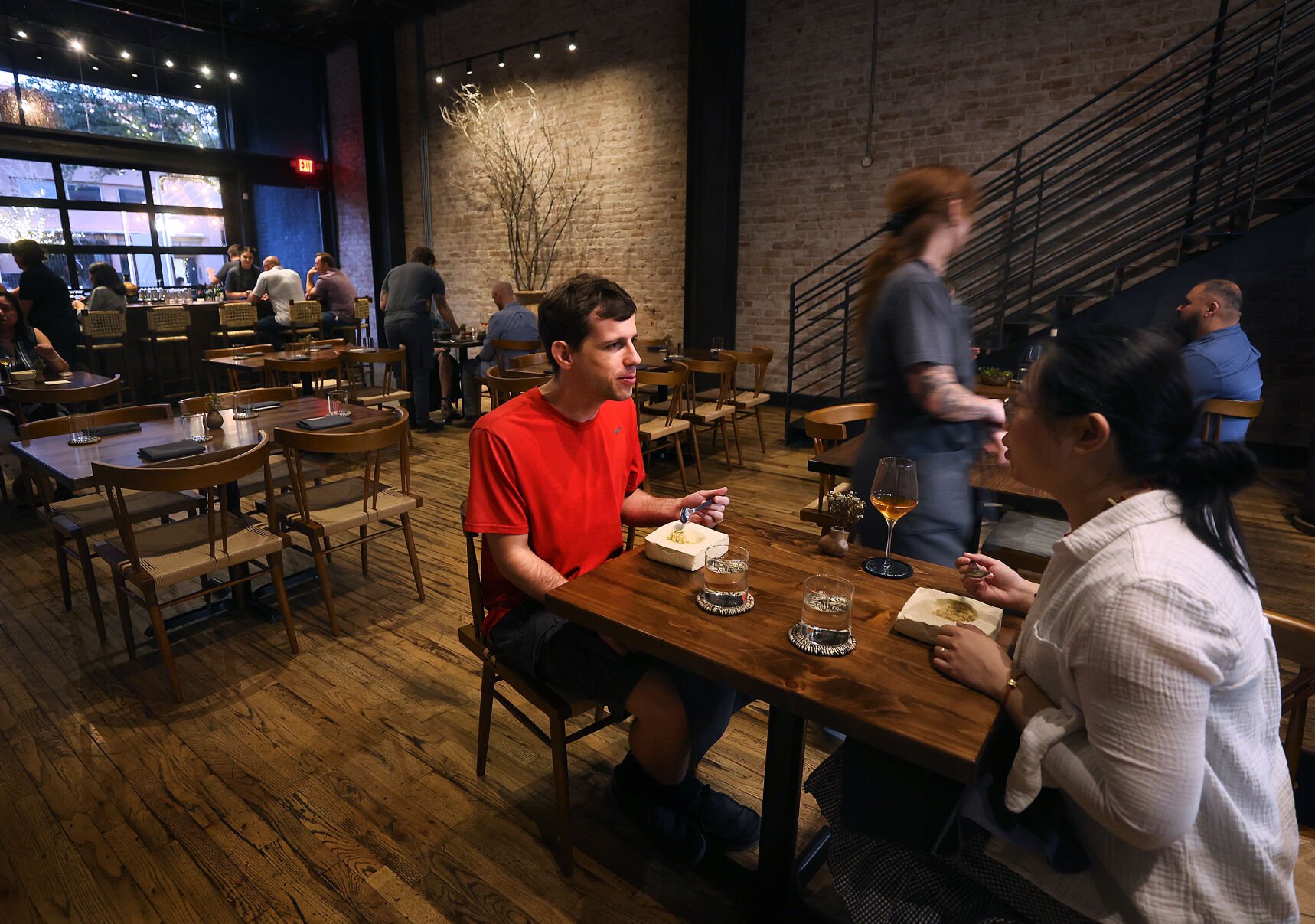
Dillon and Jiajing Aberasturi enjoy their meal at Ursa, 110 E. Congress St. Jiajing says she follows the restaurant on Instagram and wanted to try the Sonoran Desert cuisine.
Ursa Tucson is the second iteration of the restaurant. The Lopezes opened the original in June 2024 in his hometown of El Centro, about an hour’s drive from his wife’s native Yuma.
“It’s 127 where I grew up, eight months out of the year, and there’s nothing to do,” he said, sitting in Ursa’s sparse upstairs office. “A lot of creative people come out of that space because you’re sort of left with that. I grew up in a harsh, harsh environment, and it provided tenacity.”
Lopez left that desert in his early 20s; it took him 20 years to come home.
“I got to a point where I felt more confident to say I was from the Sonoran Desert,” he said.
The original Ursa was an homage to the desert and the area’s agricultural history, going back to pre-colonial times.
“No one’s really told the story of pre-colonial ingredients and foraged ingredients and these native crops, which are our home,” Lopez said. “We wanted to open a restaurant that highlighted these native crops to the Southwest desert.”
Ursa showcased those ingredients in a chef’s tasting menu that could be dramatically different day to day, garnering buzz and social media praise.
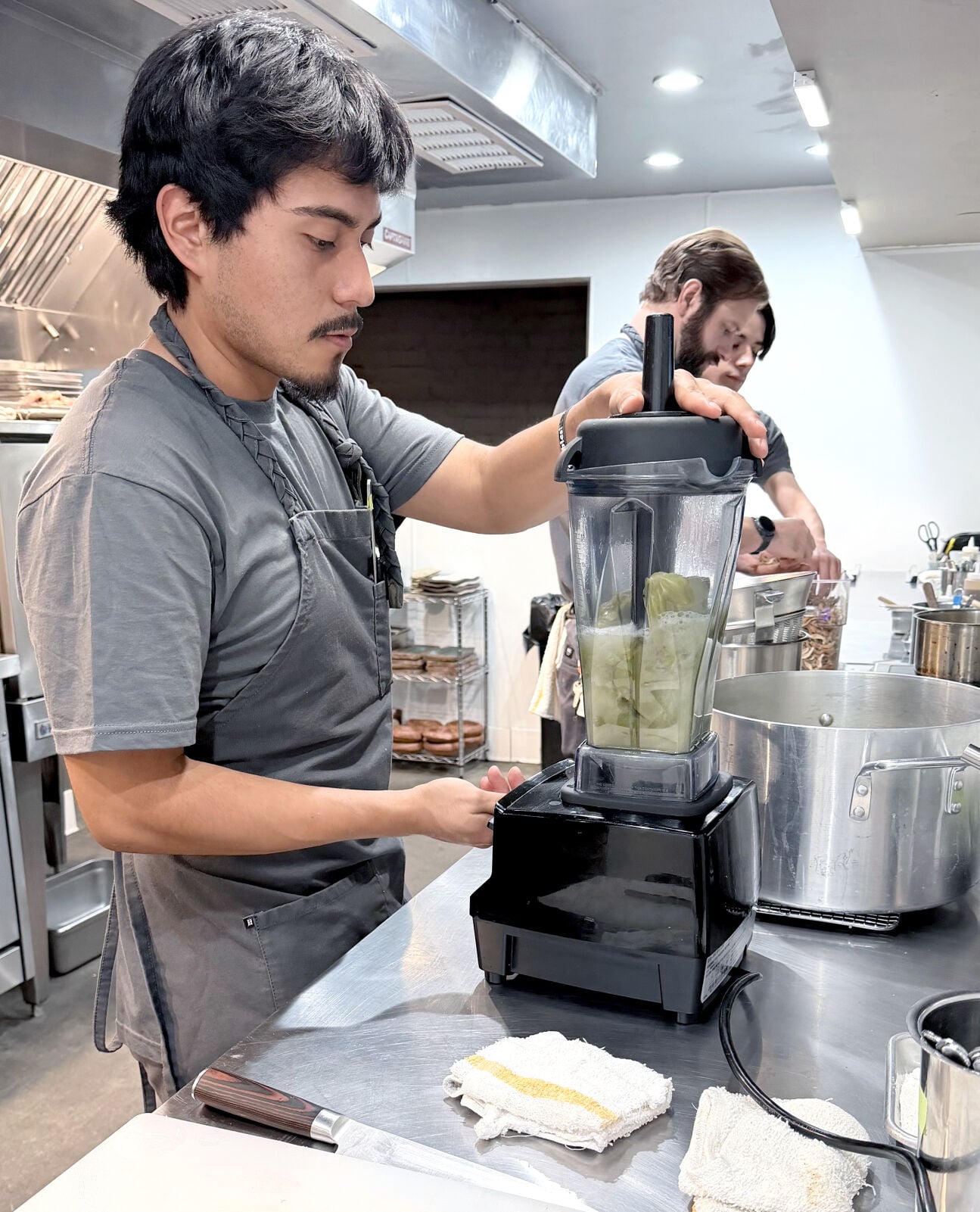
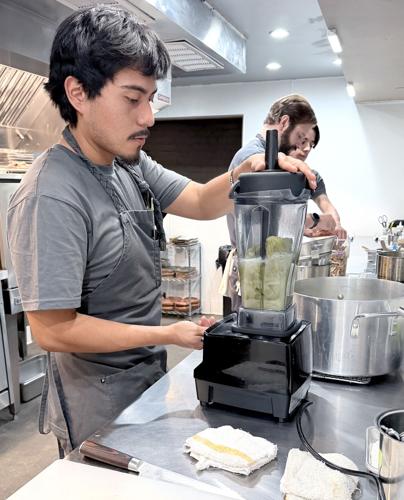
Sauté chef Edgar Chavez busily purées boiled nopale that will be used as a basis for sorbet or ice cream.
But at the end of the day, it wasn’t sustainable given the town’s size — just over 44,000. The couple closed it in June with their sights set on Tucson, a city that shared many of their food values and kept them tethered to the desert.
“The decision to move to Tucson was mostly because we truly believed in the vision,” Lopez said.
Ursa Tucson’s menu mirrors a lot of what Lopez did in El Centro, from the Asian-inspired sauces created from wilted succulents and the outer shells of ironwood beans to a hummus-like dip created from the beans themselves after they have soaked for hours in salt.
You won’t find a steak or roasted chicken on Ursa’s menu; they only serve game — quail, deer and wild boar sourced from Texas-based Broken Arrow Ranch.
On that recent Thursday, Sous Chef Chris Westcott pan-seared a piece of boar’s belly that had been cooked sous vide for 24 hours with a squash and Japanese shio koji purée. He flipped the meat every few minutes for an even char before letting it rest on a cutting board. He sliced the meat and placed it on a wood slab, adding a dollop of housemade hummus to each piece before covering the dish in a blanket of thin-sliced sour squash.

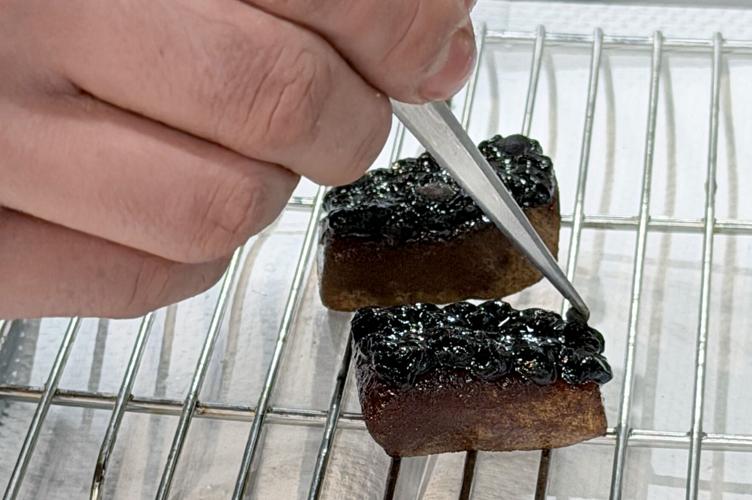
Line cook Elreyk Tarazon adds chiltipin paste to the candied squash at Ursa, the weeks-old desert-to-table restaurant on East Congress Street.
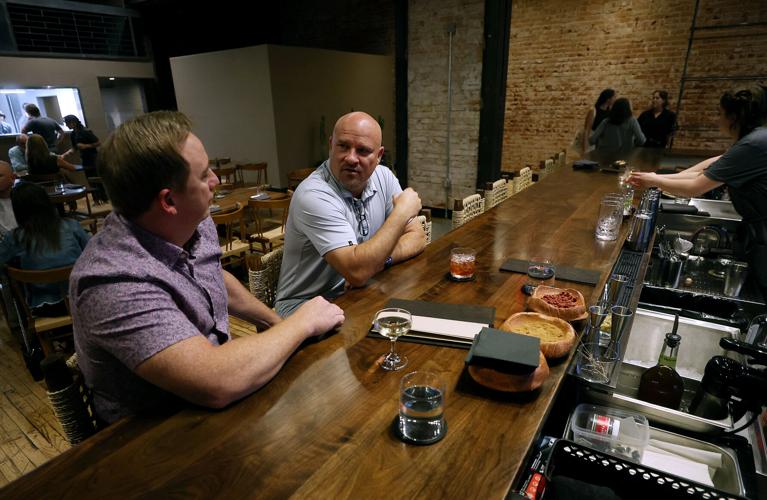
Lopez operates an open kitchen at Ursa, 110 E. Congress St., home most recently to the short-lived Blue Apron American classics restaurant. Whether you’re seated at the bar at the far end of the room or near the kitchen, you can see heads bobbing from the open kitchen, where sauté chef Edgar Chavez busily puréed boiled nopale pads moments before the first guests were seated that Thursday. After it cooled, he added healthy amounts of sugar to the liquid, which will be the basis for a sorbet or ice cream.
Line cook Elreyk Tarazon, at 18 the youngest in the kitchen, has arguably the most critical and painstaking job of the night: preparing the first bite.
It’s a dish inspired by Lopez’s grandfather, who grew up in Superior, Arizona, and told Lopez stories of harvesting barrel cactus and breaking the plant down from its thorns to its root. His grandfather’s mother would use some of the cactus fruit to make candy as a reward for his grandfather’s labor.

Patrons sit at the bar at Ursa, the new desert-to-table restaurant that creates dishes from foraged or heritage Sonoran Desert ingredients.
Lopez recreates that sweet sensation with squash that goes through a laborious hours-long process similar to preparing raw corn for corn tortillas.
“We nixtamalize it ... and it creates this membrane on the outside, and then we cook that in syrup for many, many hours,” he explained. “So it candies on the outside, but stays sort of puree in the center, and then we fry it so that candy coat becomes like a creme brulée shell, but it’s still almost raw in the center. And that’s the opening bite.”
It was Tarazon’s job to finish the dish, using kitchen tweezers to delicately top the squash pieces with small droplets of chiltepin paste.
“I think that opening bite is to recalibrate you,” Lopez said. “That’s our task, to take what’s ubiquitous to the desert and sort of normalize it.”
In the three weeks since opening, the early reception to Ursa has been a mixed bag, Lopez said, sitting in the office on the second floor where he plans to create a private dining room.
“We’ve got some comparison to restaurants that I’ve idolized in the past, and that’s just such an incredible honor to be compared to the dogma of what we believe in,” he said. “And people are just kind of floored that we’re here. And then we also get people that it’s not their jam. ... It’s very, very subjective, and that’s the point. If everything was delicious 24-7, I don’t think we’d be getting our point across.”
James Beard Award-winning chef Janos Wilder, one of the first chefs in Tucson to introduce heritage and foraged desert ingredients to a fine dining experience, said Lopez is taking the movement to the next level.
“I don’t think anybody at all is taking it to the degree that he is,” said Wilder, who still follows that desert-to-table ethos at his two-year-old Studio Janos. “(Lopez) is blazing new trails and his technique is really, really polished.”

