

There's currency in them thar Arizona hills. Euros, mostly; some dollars and yen, too.
Old-West-loving tourists from Germany, the United Kingdom, France, Japan and the United States have been signing up with Arizona Gold Adventures to learn about and try their hands at prospecting in Arizona, said Terry Solomon, the New York-based corporation's CEO.
Solomon, a former Phoenician, has been taking the gold-seeking tourists to the Bradshaw and Weaver mountains near Wickenburg for the last couple of years, visiting the once aptly named Rich Hill and the ghost towns of Congress and Humbug. So far, Solomon has guided about 50 clients in Arizona, just one person or a few at a time.
Solomon just expanded the operation with a Southern Arizona division based in Tucson. Gold-prospecting tourists now can visit and work claims that the company has permission to use near Arivaca, about 50 miles southwest of Tucson.
People are also reading…
He hopes to expand the business with the Southern Arizona offering. But even as is, he said it's been a windfall in Central Arizona for tiny Congress, home to Arizona's smallest motel, the four-room Sierra Vista Motel.
Some tour packages include travel by helicopter. Clients can fly into Phoenix's Sky Harbor airport and take a charter helicopter to the Bradshaws, or south to Ryan Airfield west of Tucson to be driven on to Arivaca. Since many of the mining claims and mining ghost towns are remote, the helicopter service saves time that can be used on-site, Solomon said.
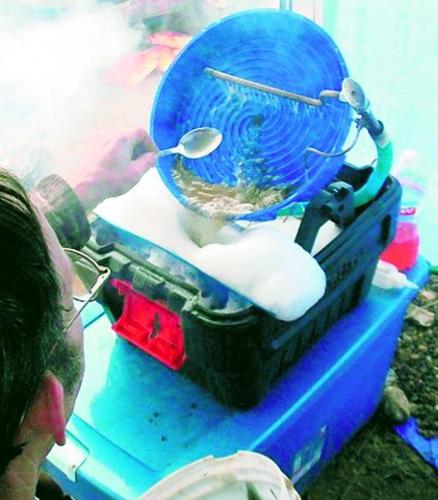
The tours offer almost any type of gold-finding technique the tourists want, he said, including panning, sluicing and the use of top-notch metal detectors.
The tours range in price from about $1,900 for five days of prospecting, use of mining equipment including detectors, as well as training and lodging; to nearly $20,000 for one of the highly personalized and helicopter-supported trips.
Solomon, 52, said he got hooked on gold prospecting while a Boy Scout working on a wildlife merit badge on a trip near Lake Pleasant in 1970. "We were gold-panning while we were goofing off," he said, and he's had the gold bug ever since.
His right-hand man in Southern Arizona has much the same story.
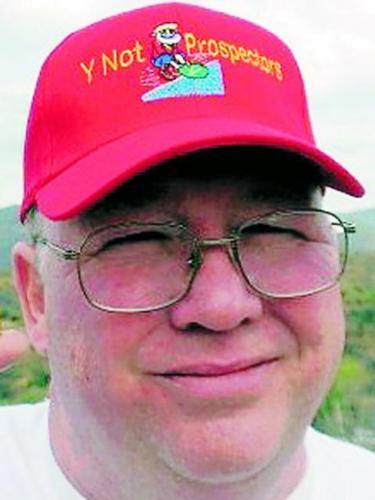
Mark Paris, 52, a retired Tucson firefighter and an amateur prospector for seven years, has been hired to coordinate the Southern Arizona part of Arizona Gold Adventure's trips. Paris checks out and hires the guides being used to show gold-seeking clients the ropes on some of the Arivaca-area claims.
"When I was a kid we had a cabin in Idaho. It was on a trout stream," Paris said. "There were these two old loggers that lived together in an old log cabin up the road. We used to visit. They'd be sitting drinkin' their daily whiskey and say, 'I got to show you something.' A classic leather sack. It was a pile of karat gold nuggets. I've got to say something snapped in my head. I got into gem collecting, minerals."
Many years later he started gold prospecting and joined a local amateur prospecting club, the Desert Gold Diggers. Because of health problems, Paris said, he can no longer get out to prospect. But he has a lot of experience and contacts to find guides for the Southern Arizona operation, and this is a way to stay involved in a hobby he loves.
"It's like any other hobby. You can get into it minimally, or go crazy. There are detectors from $100 up to $5,000," said Paris.
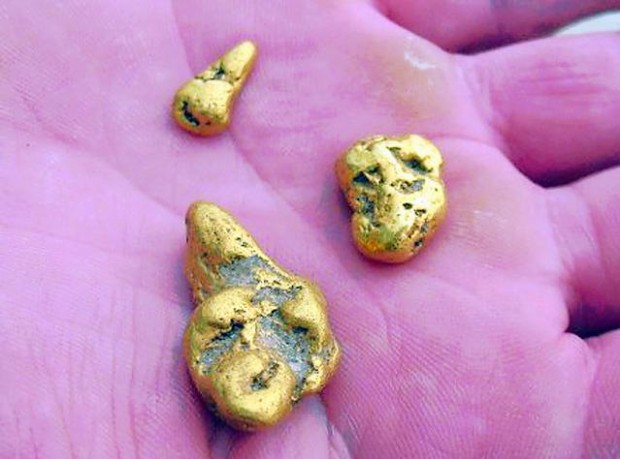
Paris said he made his best find ever in the Santa Rita Mountains. It was what's called "chispa — a chunk of quartz with gold veins through it. My favorite pieces are the chunks of quartz with gold in them."
But it's the history and historic atmosphere surrounding prospecting that fascinates him, not the value of the mineral.
"I read voraciously. Every article I can read on it. It's just fascinating to me. How it came to be, where it came to be. You could be wearing pieces of Cleopatra's gold in your wedding band. It's the ultimate recyclable. Once it's been melted down you can't tell where it's been," Paris said.
"It's such a freak where it decided to pop up. For every million atoms of iron, there's one atom of gold. And where it decided to spit that small amount up is remarkable," he continues.
"When you go out and get involved in it — see what the miners did who settled this country. The fortitude. They were a completely different people than we were to put up with what they did, to get the little bit of gold they did."
But Paris said the Desert Gold Diggers members' strain of gold fever isn't about the monetary value of the gold.
"It's definitely not a money-making hobby. There are people in the club who haven't found their first nugget. But you couldn't pry most of the gold out of them for any amount of money," Paris said.
"It's like any other hobby.
You can get into it minimally, or go crazy."
Mark Paris,
Retired Tucson firefighter