

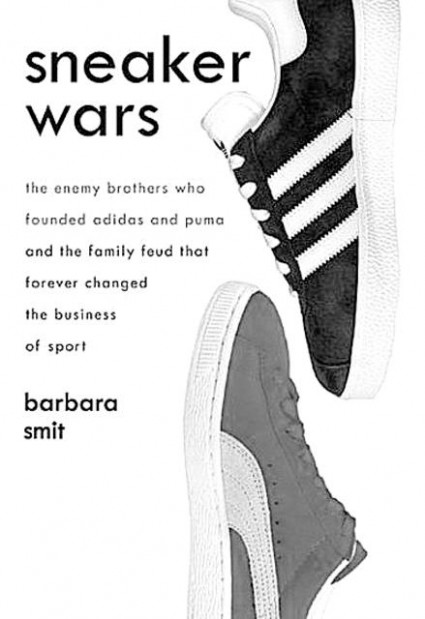
Two of the greatest brands in sports, Adidas and Puma, grew out of one small town in Bavarian Germany, where they were started by competing brothers, Adolf and Rudolf Dassler.
Barbara Smit's "Sneaker Wars" tells how the Dassler boys started making shoes in their mother's laundry room after World War I. It traces the growth of the business from that Herzogenaurach shed, its fraternal split into Adidas and Puma, exacerbated by World War II, jealousy and suspicion.
And how that competitive fire drove the Dasslers to help create the modern sports industry, for better or worse.
The first 50 years of the 90-year story, capturing the start, splinter and competitive rise, are the book's gem.
The early decades show the evolution of the company and amateur sports before both were altered (corrupted?) by bankers and greed.
People are also reading…
Smit traces the growth of the company, with Adi the tinkerer-craftsman using tools left by retreating World War I soldiers. Some of the first shoe-leather was scavenged from their helmets and bread pouches. Rudi, the charismatic salesman, joined his brother in 1923.
By the mid-1930s the Dasslers had a thriving business, buoyed by Adolf Hitler's fascination with sports as a promotional tool for his world view.
World War II drove a wedge between the brothers. It was fueled by envy over Adi's exemption from military service and Rudi's conscription, which he blamed on his brother.
Soon after the war they moved to opposite sides of the Aurach River. Adi formed Adidas, merging first and last names. Rudi settled on Puma.
The most successful athletes now are a bit like corporations and, as Smit shows, the Dasslers were partly to blame.
In 1936, Adi showed up at the Berlin Olympics with a pair of handmade spikes, found Jesse Owens and persuaded him to run in them.
The sight of Owens on the medal stand in Dassler gear helped make the brand among athletes. A trip to Europe for many elite athletes soon included a pilgrimage to Herzogenaurach to see Owens' spikes and get a pair of their own.
By the 1980s, both brands were losing market share in the United States to Reebok and Nike. That trend worsened when Nike signed basketball player Michael Jordan, who grew up an "Adidas nut," Smit writes.
Nike won Jordan over by offering to create his own shoe. Nike sold more than $100 million worth of Air Jordans in their first year.
Rudi died in 1974 at age 78.
Deutsche Bank seized control of struggling Puma rather than let the German icon go under. It was sold in 1989.
Adi died in 1978 at age 78. Three years after his son, Horst, died in 1987, the company was sold.
About the book
"Sneaker Wars: The Enemy Brothers Who Founded Adidas and Puma and the Family Feud That Forever Changed the Business of Sport" is published by Ecco (383 pages, $26.95).