

The late Wes Becker joined his first bowling league in the mid-1950s with no clue that the experience would change his life.
Before the end of the decade, he built and opened his first bowling center, Cactus Bowl, across the street from one of his five drive-in theaters, the old Cactus Drive-In (now the DeAnza). In the next decade, Becker would buy and build until he had five bowling centers scattered throughout the city.
But he cut his bowling teeth at Cactus Bowl, a center that started out with 24 lanes, each busy day and night. In 1963, Becker decided to expand.
"He (later) added another 28 lanes on the north side. We had a total at that time of 60 lanes," said his son, Wes Becker Jr. "It was the largest in the state of Arizona."
But the north-side addition proved to be a bust before long, and Becker converted the space into a skating rink and later rented the space to a furniture store and a trade school. Since 1993, Pima Community College has rented it for classes.
People are also reading…
The younger Becker said his father's passion for bowling turned into a business plan, which turned into empire building.
He bought the city's oldest alley, Lucky Strike, from owner Frank Hardy in 1965. Then he snagged the old Copa Lanes on South Craycroft Road; it's since closed.
In 1978, he bought the east-side Tucson Bowl from Jill Theis and her partners. The following year, he built Santa Cruz Lanes on the south side, and in 1980, he opened Fiesta Lanes on West River Road.
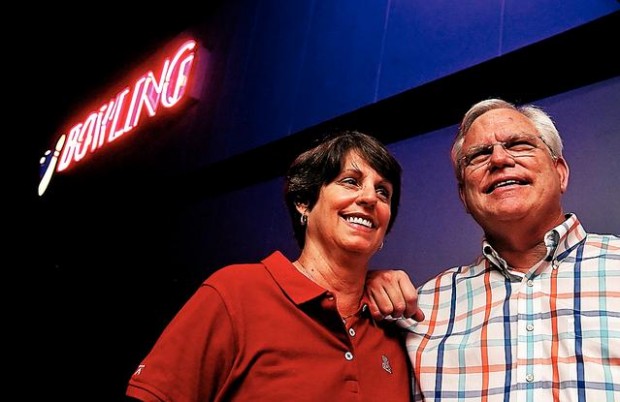
Theis, an East Coast native who started working in bowling centers as a teenager, came with the Tucson Bowl deal; she stayed on as a manager with a limited ownership stake. In 1997, she and the younger Becker became full partners, operating as Vantage Bowling Centers.
At the time of his death in 2001 at the age of 85, Becker Sr. was still involved in the business, his son said.
Becker said he is optimistic about the future, even in light of the economic downturn.
"Bowling as an industry is somewhat recession-proof," he said. "We're an inexpensive recreation, and when people cut out family vacations, they tend to stay home and use us as their recreation."


