

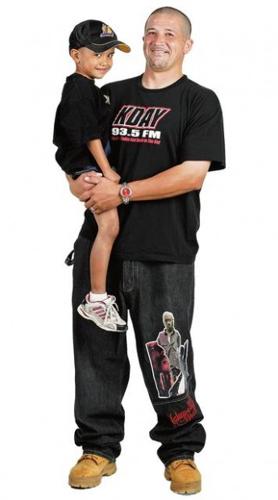
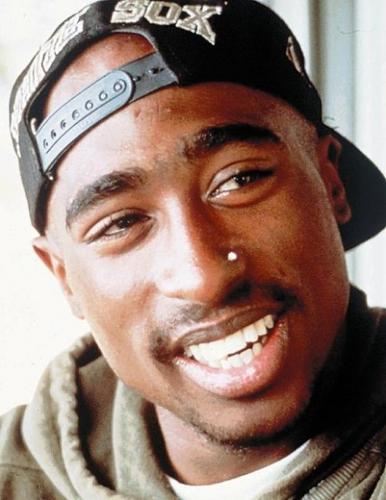
Wednesday will mark 10 years since the death of Tupac Shakur, an anniversary that reminds Gabe Molina how much the rapper is missed.
"His absence is conspicuous in hip-hop," says Molina, a die-hard rap fan and former emcee who can't stomach most of the music now doing it big on the Billboard charts. The father of four, a contractor for Southwest Gas who will be 40 years old this month, despises the bling-soaked ego trips and single-entendre sex rhymes that pass for rap these days.
"Braggadocio has always been a part of hip-hop, but it was just part of what Tupac and other artists like Public Enemy had to say," said Molina. "I admired him as a multi-faceted, deep-thinking individual. More than anything, he was real."
Molina was a founding member of 2 Def, an East Side rap crew that was featured in the Arizona Daily Star in 1988. The group opened for several rap headliners at the Tucson Convention Center and elsewhere.
People are also reading…
2 Def fizzled out after a couple of years, but Molina still finds himself writing rhymes. In addition to Shakur, who recorded under the names 2Pac and Makaveli, Molina says he's inspired by Malcolm X, Jesus Christ and his family.
Molina's first son is named Amaru, which was Shakur's middle name.
"I wanted to name him Tupac, but my wife said that was going too far," he said.
Five-year-old Amaru and his siblings are the reason Molina sold all his 2Pac records years ago. He didn't want his children exposed to the profanity, so he replaced the originals with "the Wal-Mart versions."
Censored or not, Shakur's vibrant storytelling and charismatic personality are still winning fans. His mother has released several 2Pac albums since his death (he left about 150 unreleased songs) and posthumous sales have topped the 20 million mark worldwide, adding to his title as the biggest-selling hip-hop artist of all time.
It's not hard to pinpoint the appeal. With sly humor and no sugarcoating, Shakur expressed the grand drama and brutal poetry of ordinary life, including the violent thug life that claimed so many of his peers.
The plight of the underclass and the fight for social and racial justice underlines much of his work.
"He didn't speak just to young black males," Molina said. "Look at me. I'm Mexican and his music speaks to me. Although I'm coming from a more Christian perspective these days, I can't deny the impact he had on me. He influenced my way of thinking."
Shakur was 25 when gunshots ripped into a BMW driven by Suge Knight following a boxing match in Las Vegas. He died six days later on Friday the 13th. The murder remains unsolved.
"I just started crying when I heard about it," said Molina, who was no longer performing by then.
Members of 2 Def were also touched by tragedy.
"One of the guys who did security for us, Marc Lemmon, was murdered," Molina said. "He got shot in the head in 1992. A few years later, our DJ committed suicide."
Another key member of the troupe is battling drug addiction, said Molina, a Tucson native who never got into the drug scene.
"I've seen what it does to people. I'm not going to run out in the street and get hit by a car just to see what it feels like."
Shakur wrote about those caught up in drugs with empathy and insight. It was a problem that hit close to home. His mother, a former member of the Black Panther party, overcame a cocaine addiction.
In 1997, Afeni Shakur, founded the Shakur Family Foundation (later renamed the Tupac Amaru Shakur Foundation). Its mission is to "provide training and support for students who aspire to enhance their creative talents."
On June 11, 2005, the Foundation opened the Tupac Amaru Shakur Center for the Arts in Stone Mountain, Ga.
It's a fitting honor for Shakur, a fine-arts student in high school who aspired to be a great Shakespearean actor.


