The hours are long. The weather is brutal. The tasks – picking apples, milking cows, pruning vineyards, cleaning barns – are laborious and monotonous. The pay is at or just above minimum wage.
Not many Americans want to work on a farm, according to local farmers. Tom Kappus, a fruit farmer in Burt, said he hasn’t had a local walk in for a job application in 15 years. So, farmers turn to immigrants, who eagerly take the jobs, and are often “conscientious” and “proud.”

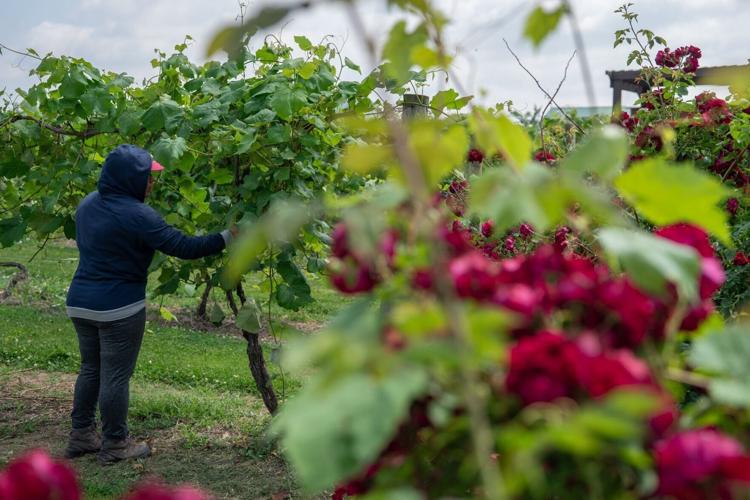
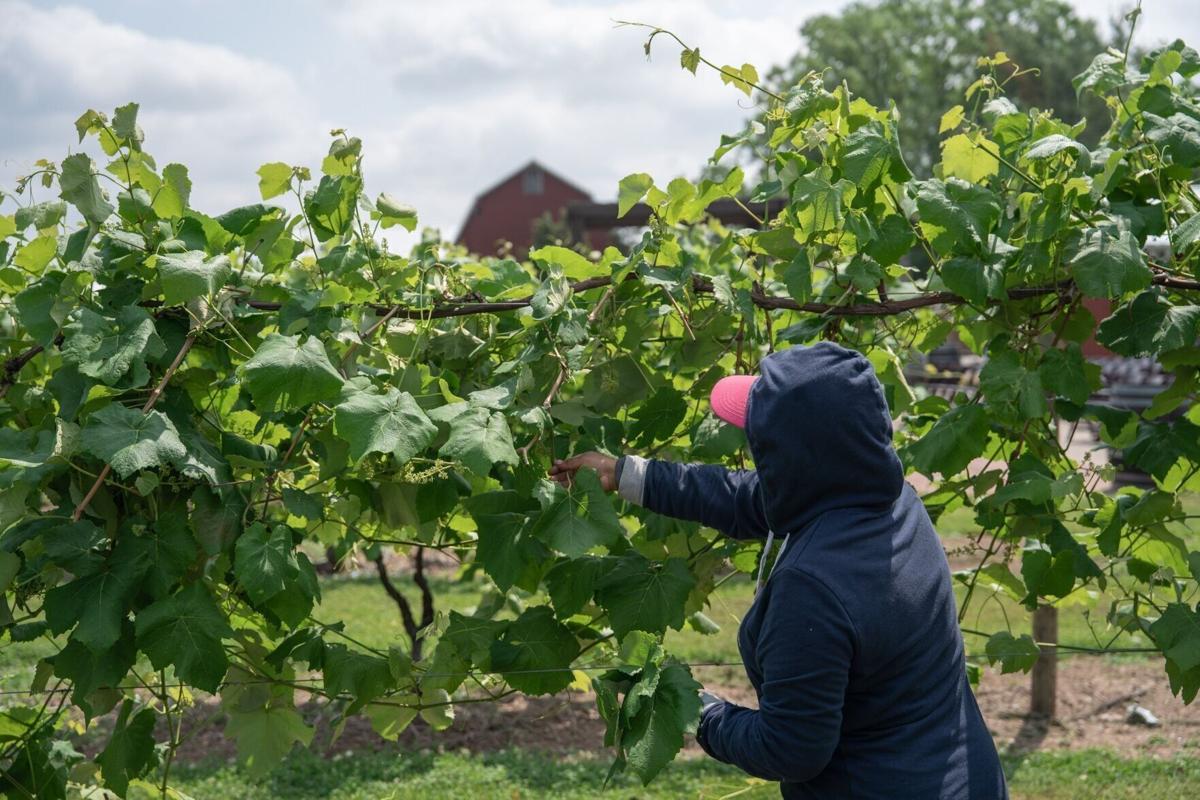
A worker clears leaves from a grapevine. Not many Americans want to work on a farm, according to local farmers, so farmers turn to immigrants, who eagerly take the jobs.
“Our farm would not survive without them,” Kappus said. “No farm would survive without them.”
The Trump administration’s intensified immigration raids and arrests have shaken the local agricultural community, which is dependent on migrant labor. Some farm workers are here legally through a federal program. Some are not. But farmers say all are essential to keeping grocery store shelves stocked with local milk, apples, cheese and grapes. Without them, many local farms could not function.
People are also reading…
As U.S. Immigration and Customs Enforcement agents roam the country to enforce President Trump’s immigration crackdown, farms that rely on immigrant labor are trying to keep their heads down to protect their vital workforce.
Meanwhile, many workers are terrified to leave their homes and run into an ICE agent. In rural communities with overwhelmingly white populations, migrant workers say they no longer feel comfortable going to Walmart. Delivery services bring groceries to their homes, which are often on their employers’ farms.
“We’re afraid to show our faces,” an immigrant farm worker told The Buffalo News.
“There’s more of a hunker-down mentality,” said a Niagara County dairy farmer who requested his name be withheld out of fear that his farm would be targeted for an immigration raid. “Keep yourself on the farm and at the house and off the roads.”

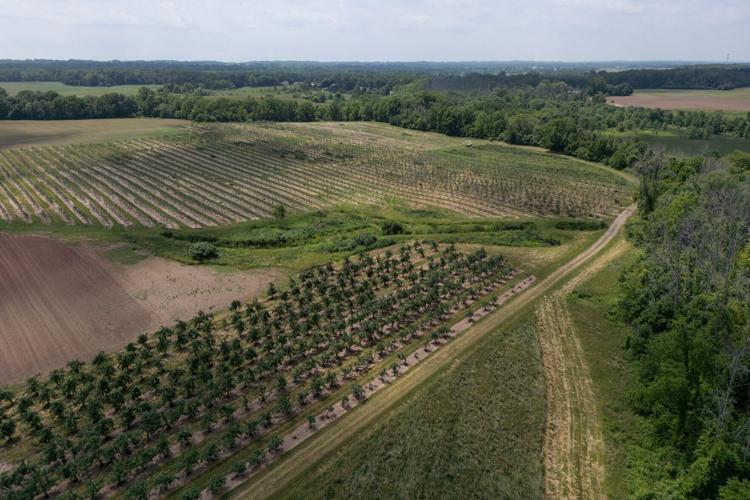
An aerial view of Becker Farms in Gasport.
Within a period of days, Trump recently paused ICE raids and arrests at farms, meat-packing plants, hotels and restaurants, then abruptly reversed course and lifted those restrictions.
“The administration’s ICE raids, continued threats and policy flip-flops have created fear and instability across the sector,” said State Sen. Michelle Hinchey, who chairs the State Senate’s Agriculture Committee, in a statement. “This uncertainty is not only disrupting the labor market – it’s putting the security of our food supply at risk. The strength and safety of our food system depend on both farmers and farm workers, and we cannot continue this rhetoric or these damaging actions.”
The New York Times has reported disagreement within the Trump administration about farm workers. The Times said top White House officials were caught off guard when Agriculture Secretary Brooke Rollins pushed Trump to make an exception for farm workers. Many of Trump’s top aides, particularly Stephen Miller, his deputy chief of staff, have urged a hard-line approach, targeting all immigrants without legal status to fulfill the president’s promise of the biggest deportation campaign in American history.
“The reality is that many of the people working on our farms today are hardworking individuals who came here simply seeking the opportunity to earn an honest living,” said State Sen. George Borrello, a Republican on the Senate Agriculture Committee. “But we cannot ignore the fact that a broken immigration system has left both these individuals and the farmers who rely on them in an impossible situation.”
At Becker Farms, owner Oscar Vizcarra said that he feels as though he could be picked up by ICE. Though he has lived in Gasport for decades and owns a successful farm, winery and regional agritourism destination, he looks different from most of his Niagara County neighbors. He was born and raised in Peru.
“Everyone that is in the agricultural business who looks different – Mexican, Peruvian, Ecuadorian, Guatemalan, you know, brown,” Vizcarra said. “They’re subject to this.”
‘Living in a constant state of fear’
On May 2, immigration officers stopped a bus of farm workers heading to an Orleans County farm.
ICE detained 14 workers while they were on their way to work at Lyn-Ette & Sons farm. Six of the workers were deported, according to United Farm Workers, a California-based labor group that has been helping to unionize workers on some local farms, including Lyn-Ette & Sons. Four of the workers have been released on bond. The other four workers are awaiting their bond hearing, said Armando Elenes, the UFW’s secretary treasurer. (Lyn-Ette & Sons declined The News’ request for comment.)
“It’s just created a huge amount of fear throughout the community,” Elenes said. “It’s just like living in a constant state of fear.”
At his fruit farm in Burt, Kappus employs 14 immigrant laborers from Jamaica through the federal H-2A program. The H2A program enables agricultural workers to spend 10 months each year legally working on American farms. Fruit farms often use seasonal H-2A labor, while farms that require year-round work, such as dairy farms, are more likely to employ undocumented workers.
“I can understand them deporting crooks,” Kappus said. “I don’t understand them coming after longtime workers who have been here for years and years working on farms and harvesting food and taking care of orchards or animals. They’re not crooks. They’re good people and they’re just looking for a place to make some money for their families.”

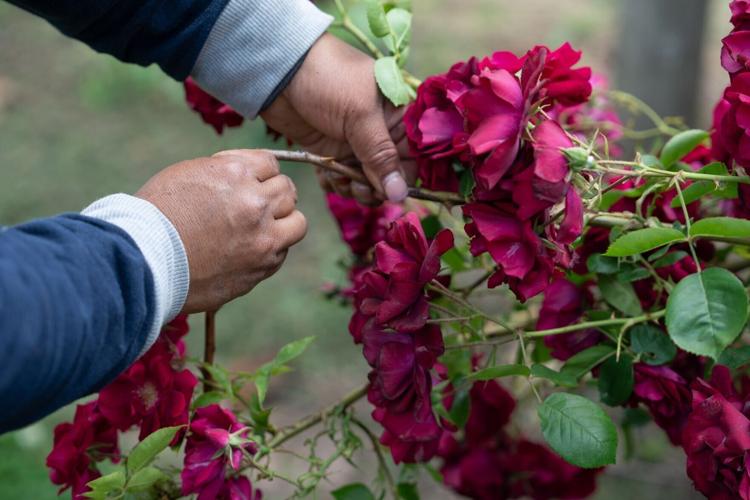
A worker prunes a rosebush.
At least 65% of the labor performed on a Niagara County dairy farm is done by Mexican immigrants. They come to the farm with working papers, said the farm owner, “but we don’t know if it’s all perfect.” He is “reasonably concerned” about a raid at his farm.
“They’re extraordinarily essential to our operation,” said the dairy farmer. “Unless we heavily invested in robotics and very large equipment, we right now could not function without them.”
Between 40% and 50% of the state’s workforce for farms, restaurants, construction and day care lacks proper documentation, according to estimates by Richard Ball, state commissioner of Agriculture and Markets.
“We do need an answer here,” Ball said in January during a state budget hearing in Albany. “We do need to have a legal workforce. Agriculture wants one.”
If ICE empties local farms of migrant labor – uprooting people who have spent their lives feeding Americans, and who have often started families here and joined the community – then the farms won’t be able to continue, Kappus said.

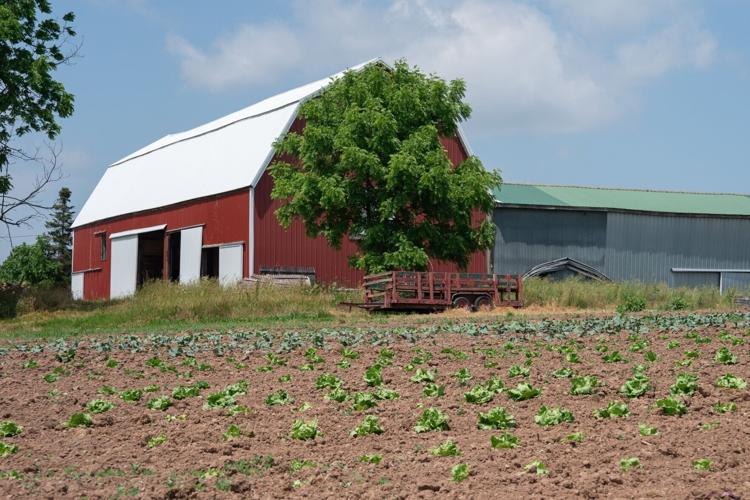
Lettuce grows in a field at Becker Farms in Gasport. “We cannot ignore the fact that a broken immigration system has left both (farmworkers) and the farmers who rely on them in an impossible situation,” says State Sen. George Borrello.
“Farmers won’t have enough workers to harvest their crops,” Kappus said. “You’re going to have a lot less food.”
Farmers want a better system that allows them to keep the immigrants employed on their farm and, if they’re here illegally, help them achieve legal status.
State Sen. Borrello wants to expand and streamline the H2A visa program, which he called “overly complex, time-consuming and costly.”
“We need a legal, reliable pathway for agricultural employers to bring in vetted, temporary workers in a way that protects both national security and our food supply,” Borrello said.
“Don’t take our workers,” said the Niagara County dairy farmer. “Give us a system.”