The stress of navigating an airport, from checking luggage to getting through security to boarding the plane, can take a toll on even the most well-prepared travelers.
It can be a greater challenge for those with functional needs.
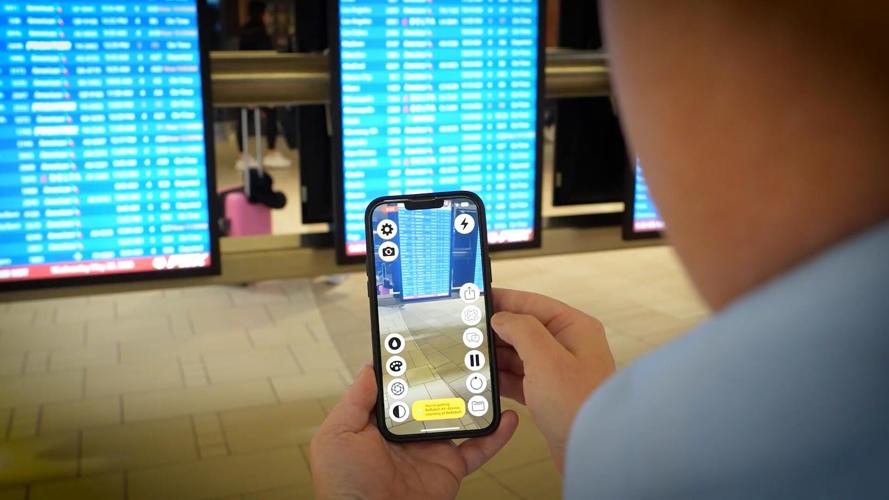
To make getting through the airport as comfortable as possible, Phoenix Sky Harbor International Airport offers a range of services to support the functional needs of people with disabilities. This includes a recently introduced mobile app-based assistive technology by ReBokeh, designed to support people with low vision. It uses the live camera feed on a person's phone to help them adjust the appearance of the world around them.
Collectively, the accessibility resources, programs and amenities that Sky Harbor offers are designed to give vacationers a more inclusive experience at Sky Harbor, said Ira McCullough, the airport's Americans with Disabilities Act and Title VI program manager.
People are also reading…
"We continue to look for new ways to enhance accessibility so every passenger can travel with confidence," McCullough said.
Here's a look at all the services, programs and technology available at Sky Harbor Airport to help guests of all abilities.
App-based assistive technology for low vision
Sky Harbor staff recently introduced a new assistive technology for vacationers with low vision, which provides overlaid, customized filters through a person's live camera feed on their phone, allowing them to adjust contrast, color hue, zoom and lighting.
ReBokeh's technology also includes an artificial intelligence tool that allows users to ask what's around them and what they're seeing.

A traveler uses the ReBokeh app on their phone for a clearer view of the departure board at Phoenix Sky Harbor International Airport. The adaptive technology for people with low vision was recently introduced at Sky Harbor.
"Traveling with low vision can present unique challenges, particularly when it comes to navigating a busy airport," ReBokeh founder Rebecca Rosenberg said in a statement. "We’re thrilled that Phoenix Airport is doubling down on its commitment to accessibility by leveraging ReBokeh’s technology to build a more independent and enjoyable experience for travelers with low vision."
Sky Harbor also offers real-time visual interpreting and wayfinding assistance through the app Aira, which is available in Terminals 3 and 4, the Rental Car Center and PHX Sky Train. It works by providing live, on-demand access to visual information with assistance from human agents via the person's phone.
Both ReBokeh and Aira are free to use. They're available for Apple devices via the App Store and Android devices via Google Play.
Hearing induction loop
Sky Harbor offers induction loop technology to improve communication access for the deaf and hard of hearing.
It works by using a telecoil to transmit paging and announcements directly to people who use hearing aids or cochlear implants. This allows people to hear announcements without background noise.
However, this technology isn't available airport-wide; it's only in the high-numbered D gates in Terminal 4 used for Southwest Airlines flights. People must be aware that the induction loop is not available in restaurants and shops in the concourse.
Sensory room
In the airport's Compassion Corner, located pre-security in Terminal 4 near security checkpoint B, air travelers with sensory overload can find a quiet space to calm down.
The sensory room is designed to support children and adults with autism and related disorders, as well as people who have Alzheimer's disease, dementia, brain injuries, anxiety or other sensory-related conditions. It includes a child-sized table and quiet activities for children.
The Compassion Corner also includes the airport chapel, open for people of all faiths to pray or meditate.
Compassion Cacti
The Compassion Cacti lanyard alerts airport employees that the person wearing it needs more time and assistance navigating airline check-in counters and security checkpoints. The lanyard is neon green and has a saguaro cactus pattern.
Introduced in 2020, it's Sky Harbor's answer to the Sunflower lanyard at London Gatwick Airport, which serves a similar purpose.
People who self-identify as needing extra assistance, as well as caregivers, parents and guardians, can apply for a Compassion Cacti lanyard on Sky Harbor's website. Requests are reviewed within five to seven business days.
Once approved, lanyards can be picked up at the Compassion Corner office by showing a photo ID ahead of or on the day of travel. Travelers can keep and use the lanyard for travel through Sky Harbor, but it will only be recognized at Sky Harbor, not in other airports.
Navigator volunteers and Navigator Buddies therapy dogs
Anyone who's flown Sky Harbor regularly is familiar with the friendly purple-vested volunteer guides, the Navigators.

Phoenix Sky Harbor.
Travelers who need extra assistance can reserve a Navigator Support Guide, a free service that can be reserved at the Compassion Corner. They can lead people to their destination within Sky Harbor, but do not serve as escorts.
Sometimes, Navigators can be seen roaming the airport with four-legged friends.
Navigator Buddies, Sky Harbor's therapy dogs, walk through the terminals and provide an outlet for travelers to de-stress by petting and enjoying quality time with the dogs. Each Navigator Buddy is registered and in good standing with pet therapy organizations like the Alliance of Therapy Dogs and Pet Partners.
Dementia Friendly Air Travel Workshop
Once a year, Sky Harbor offers a Dementia Friendly Air Travel Workshop, designed to help passengers with dementia and their caregivers understand how to navigate the airport and offer a more positive travel experience.
During this workshop, staff from the airport, airlines and the Transportation Security Administration share tips and answer questions from travelers.
Sky Harbor was the first airport to offer a dementia-friendly workshop when it debuted four years ago. Airports Council International-North America named Sky Harbor's workshop the best customer experience program at a large airport in 2023.
Wings for Autism events
In October, Sky Harbor and The Arc of Arizona organized Wings for Autism, an event designed to familiarize children with autism with the airport experience.
Families walk through everything from check-in to security and boarding the plane, with staff from American Airlines, Southwest Airlines and TSA involved in the process. Planes taxi on the airfield to familiarize children with what flying feels like.
About 300 people from 85 families attended in 2025, the event's 10th year at Sky Harbor, according to airport staff.
Sylvia Mejia-Bivens, the Phoenix Aviation Department employee who spent 10 years attending community events as the airport mascot Amelia the Airplane, said participating in Wings for Autism was her proudest moment in the role.
The 2026 Wings for Autism event is scheduled for Oct. 3. Registration opens at 9 a.m. Aug. 1; for more information, visit arcarizona.org.
Basic terminal accessibility features
To accommodate people with disabilities, Terminals 3 and 4 at Sky Harbor have these amenities:
Curb cuts, which are sloped ramps where the sidewalk meets the street.
Automatic doors.
Elevators.
Ramped access to all lobbies and gate areas.
Designated areas on inner curbs for vehicles with disability plates to load or unload.
Wheelchair accessible telephones and ATMs.
Accessible family restrooms with caregiver access, which have private areas for changing clothes or disposable undergarments.
Drinking fountains capable of refilling reusable bottles.