From the Quadrantids in January to the Perseids in August, 2026 has been filled with a slew of stunning meteor showers.
But the year isn't over yet.
Before we ring in 2027, stargazers across the U.S. will have their chance to witness the peaks of five more meteor showers. The celestial marathon is already underway with the dual Taurids streams, and will kick into high gear with the more notable Leonids in a matter of days.
The year then ends with two December meteor showers: the Geminids and the Ursids.
As the Orionid meteor shower winds down following its October peak, here's everything to know about how, where and when you can see each natural celestial display in the United States.

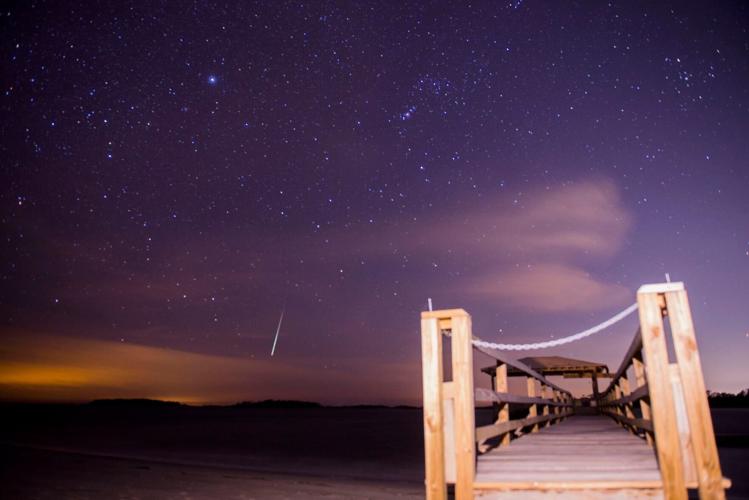
The Geminid meteor shower lights up the night sky Dec. 14, 2017, above Tybee Island, Georgia.
What are meteor showers? Here's what causes 'shooting stars'
People are also reading…
Named after star constellations, meteor showers occur when Earth passes through dusty debris trails left behind by comets and other space objects as they orbit the sun.
The debris — space rocks known as meteoroids — collides with Earth's atmosphere at high speed and disintegrates, creating fiery and colorful streaks in the sky, according to NASA. Those streaks, colloquially known as "shooting stars," are meteors no larger than the size of a pea that burn up in the atmosphere, NASA explains.
Meteor showers occur on a predictable schedule each year, with some lasting for mere days and others stretching on for weeks. But a meteor shower is at its best when the Earth passes through the densest part of the associated cosmic debris, otherwise known as the shower's peak activity.
Both Northern, Southern Taurids active now
Both the Northern and South Taurid meteors can be seen when the constellation Taurus is above the horizon between September and November, according to NASA's monthly skywatching guide.
That means both showers are now active, with the Southern Taurids due to peak first between Nov. 4-5 and the Northern stream peaking Nov. 11-12, according to the American Meteor Society.
Lasting for weeks, the Taurid meteor streams — both produced by debris left behind by Encke’s comet — tend to be slow-moving with higher visibility compared to other meteor showers. What also makes both the Northern and Southern branches of the Taurids notable is the increased reports each year of fireballs, large explosions of light and color.
Leonid meteor shower to be active, peak in November
Leonid meteors, which occur annually as Earth passes through debris from comet 55P/Tempel-Tuttle, will be the next meteor shower to become active.
Starting Nov. 6, the meteor shower will peak Nov. 16-17 before completely coming to an end in 2026 on Nov. 30, according to the American Meteor Society. At its most active, the Leonids could produce 15 visible meteors per hour, according to the nonprofit Planetary Society.
The Leonids are famed for their brightness, color and speed. They also produce what are known as "Earth-grazers," or meteors that have long and colorful tails that streak closer to the horizon, according to NASA.

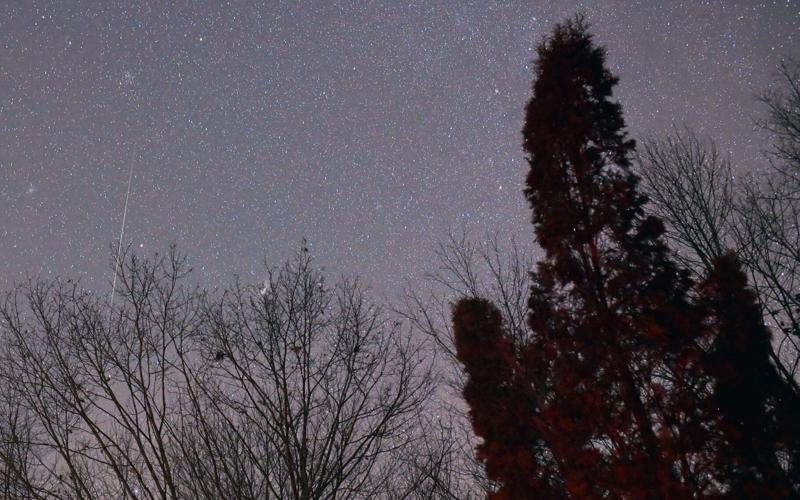
A meteor is visible at left, streaking across the night sky Dec. 13, 2020, over Massachusetts during the Geminid meteor shower.
Geminids, Ursids both active in December
The year ends with the peak of two meteor showers in December.
Active Dec. 4-17, the Geminid meteor shower is famed for its strong, bright and colorful fireballs that blaze across the sky at speeds reaching about 120 miles per second, according to NASA. Originating from an asteroid known as 3200 Phaethon, the Geminids peak Dec. 13-14 with 40 to 50 meteors visible per hour.
The Ursids then begin the day the Geminids end, remaining active through Dec. 26.
Because they peak a week after the famous Geminids (Dec. 21-22), the Ursids are often overshadowed. Most spectators report seeing only about 5-10 meteors per hour on average.
While the Quadrantids also begin at the end of December, the meteor shower doesn't peak until 2027.
Where are the best places to see meteor showers?
Most major meteor showers are easily visible in the Northern Hemisphere, which includes the United States.
Spectators will have the best luck at dark sky locations on cloud-free nights and away from city light pollution.
To find a dark area near you, turn to DarkSky International. The U.S. nonprofit maintains a list of designated dark sky communities around the world, including 179 in the United States.
What time are meteor showers visible in the US?
In general, the best time to see meteors is between midnight and dawn.
Visit the website Time and Date to find the best times and viewing directions for your location.
When, how to see meteor showers: Viewing tips
Here are some general viewing tips that NASA often provides before a meteor shower becomes active.
Find an area far away from street lights and the light pollution of cities.
Depending on the time of year, come prepared with a sleeping bag, blanket or lawn chair to sit in.
Lie flat on your back and look up, taking in as much of the sky as possible.
Within 30 minutes, your eyes should adapt so that you can see streaking meteors. But be patient, NASA warns: Most activity is visible until dawn.