It’s a holiday for the history books for two local landmarks.
The Windsor Park neighborhood on the east side and Tohono Chul Park in the northwest are two of Tucson's newest additions to the National Register of Historic Places.

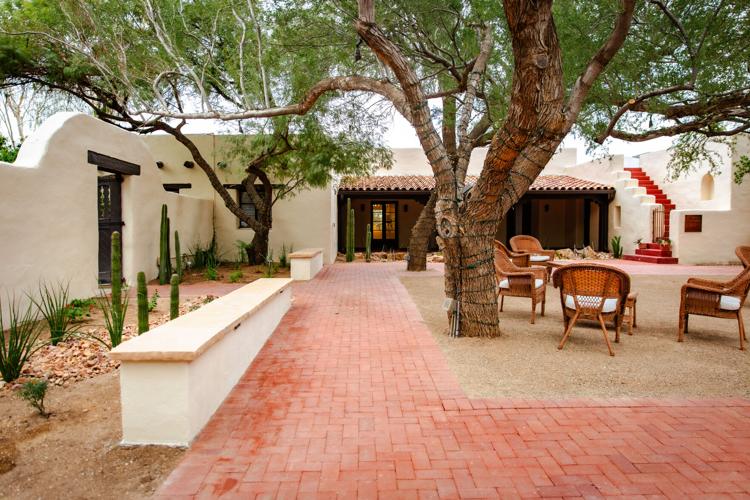
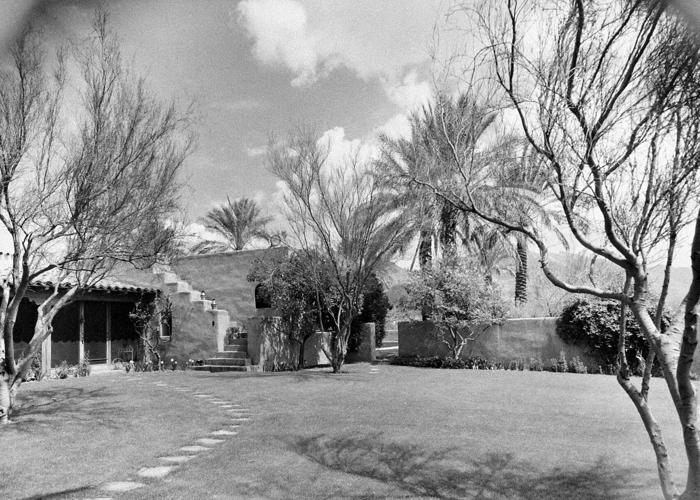
Its historic buildings, landscaped areas and contributions to the evolution of botanical gardens helped land Tohono Chul Park on the National Register of Historic Places.
On Monday, Tohono Chul officials announced that the public botanical garden and nature preserve near Ina and Oracle roads had been designated as a national historic district on Oct. 15.

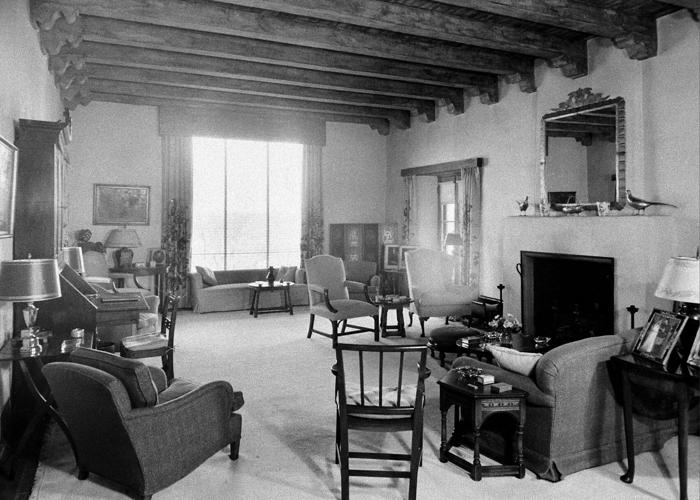
An undated photo shows the interior of what is now Tohono Chul’s exhibit house back when it was a private residence.
Windsor Park, a 1960s subdivision at Speedway and Camino Seco, joined the national list as a historic district on April 30.
Tohono Chul was recognized for its historic buildings and landscaped areas, as well as its role in the evolution of botanical gardens in the latter part of the 20th century.
People are also reading…
It also earned designation as a historic designed landscape, just the second public garden in Arizona after Boyce Thompson Arboretum near Superior to receive that title.

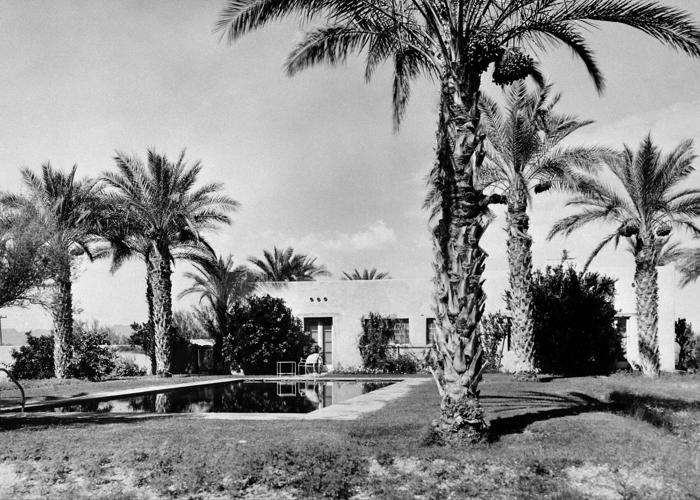
An undated old photo shows what the Children’s Garden at Tohono Chul Park used to look like when it was a private residence with a swimming pool.
Tohono Chul officials said they pursued the National Register listing to formally document the park’s historic significance and honor the vision of its founders, Richard and Jean Wilson, who wanted their beloved suburban desert oasis preserved instead of sold off for development.
“It took courage to make that vision a reality,” said Jamie Maslyn Larson, president and CEO of Tohono Chul. “This listing helps tell that story, and it reminds us to carry Tohono Chul’s history with us as we plan for the future.”
The nonprofit botanical attraction recently unveiled an ambitious, 15-year master plan that would dramatically reshape the entrance to the grounds and make other improvements while maintaining the tranquility of the gardens that currently attract more than 100,000 annual visitors.
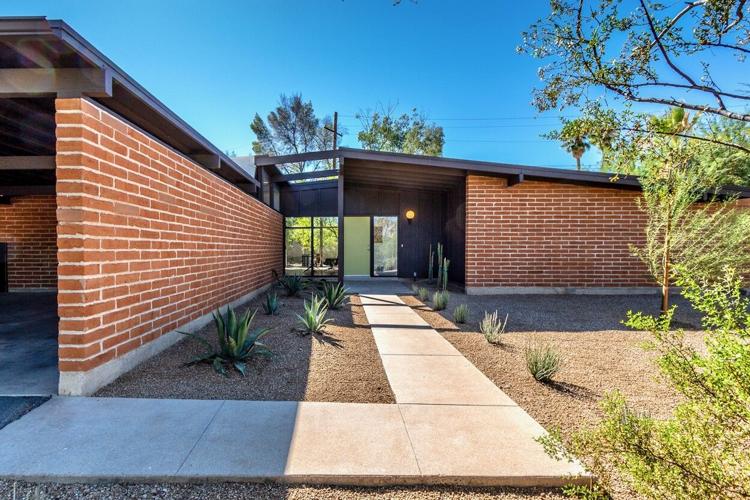
Windsor Park was nominated for the register because of its distinctive, mid-20th century modern homes, which incorporate regional forms, materials and desert landscaping to give them their uniquely Tucson character.

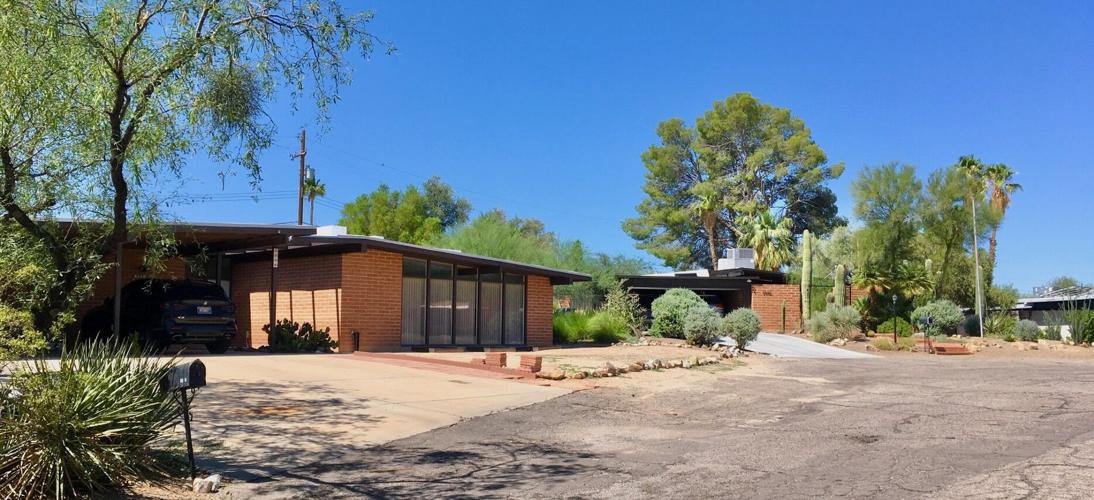
Burnt adobe bricks, large window walls and desert landscaping are signature features of Tucson's Windsor Park subdivision, which has been added to the National Register of Historic Places.
The 51-acre subdivision northeast of Speedway and Camino Seco was developed in three phases from 1961 to 1969 by Herbert Oxman using designs by the architecture firm of Ambrose, Swanson and Associates. It includes 128 single-family homes built of burnt adobe and slump block masonry with large window walls.

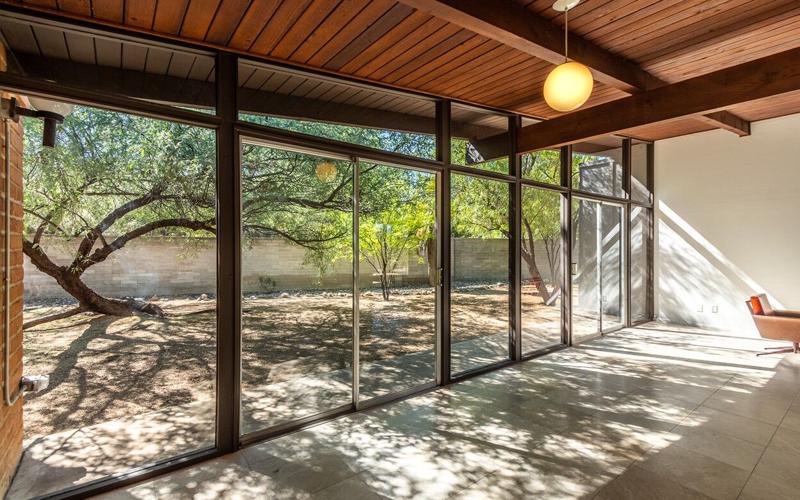
A wall of windows looks out on native desert trees in the historic Windsor Park neighborhood on Tucson’s east side.
The neighborhood is also significant for its use of the native desert landscape already on site, an unusual feature for mid-priced housing from that era.
A 2016 eligibility assessment by the City of Tucson Historic Preservation Office identified Windsor Park as a top-tier candidate for the National Register and a “highest priority” subdivision for the city’s preservation efforts.
The nomination for listing the neighborhood described it as “an exceptional regional example of Modern middle-class production housing” and said it “represents perhaps the highest aspirations of mid-20th century Modern subdivision living in Tucson.”
The listing effort was led by the board of the Windsor Park Community Neighborhood Association and its president, Andrew Denman. The office of architect Chris Evans prepared the nomination, with partial grant support from the Southwestern Foundation for Education and Historical Preservation.

Roughly 60 years after it was developed, the Windsor Park subvision northeast of Speedway and Camino Seco has been added to the National Register of Historic Places.
The only other Tucson-area properties to be added to the register in 2026 were Mission Garden, the agricultural museum at the base of "A" Mountain, on June 1 and Villa del Rio, a 1970s townhouse development on Sabino Canyon Road north of Tanque Verde Road, on March 30.
They join more than 210 other historic properties and districts in Pima County deemed worthy of preservation by the National Park Service, which administers the register created 60 years ago by the National Historic Preservation Act of 1966.



 ‘Bear Down’ at 100: Seven things you might not know about the U of A legend