

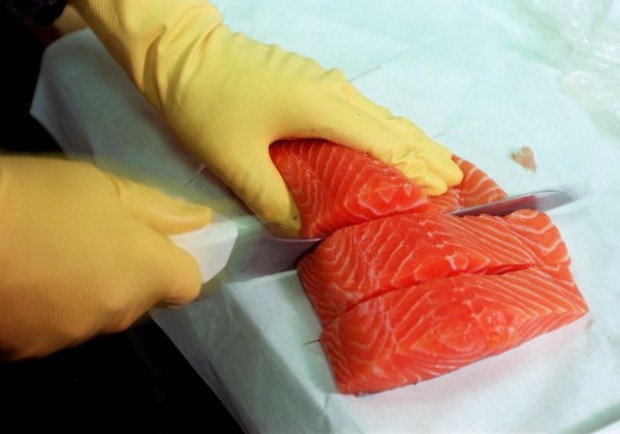
ATLANTA — Farm-raised vs. wild salmon? Which is healthier? Which is safer?
If you are confused by these questions, you are not alone. And while there is no right answer, there are benefits and risks for each.
The benefit for farm-raised and wild salmon is the high level of omega-3 fatty acids — the long-chain fats found in fatty fish that offer protection from a variety of ailments, including heart disease and stroke. Eight ounces of cooked wild Atlantic salmon has about 4 grams each of EPA and DHA (two different omega-3 fats), while the same amount of farm-raised salmon has about 4.8 grams. Health experts suggest consumers aim for 5 grams per day, so you can see why salmon is an attractive (and tasty) way to get omega-3s.
The pros and cons of each:
Wild salmon
People are also reading…
Pros: Good source of omega-3 fatty acids, low in mercury.
Cons: Expensive. Availability depends on season and harvest limits.
Farm-raised salmon
Pros: Good source of omega-3 fatty acids. Low in mercury, affordable and available year-round.
Cons: Depending on where the fish are raised, can contain PCBs and dioxin — toxins found in the fish food that make their way into the fish flesh. Seafood Watch of the Monterey (Calif.) Bay Aquarium advises against eating farm-raised salmon for environmental concerns (although its Web site, www.montereybayaquarium .org, states that some farms are improving their practices.
What can you do? To make eating farm-raised salmon more healthful, remove the skin before cooking because contaminants are concentrated in the skin, and grill the fish. When scientists measure PCBs, they don't take into account that cooking can reduce PCB levels by 30 percent to 50 percent. As the fish cooks, the fat drips off, reducing the level of PCBs.