

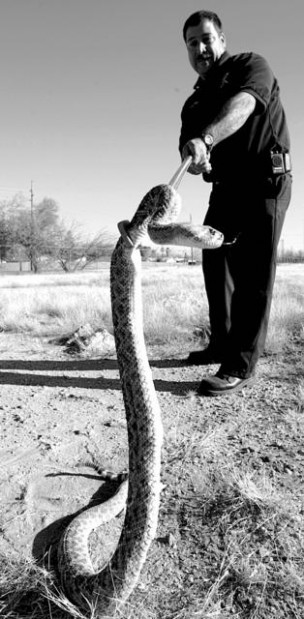
Blame the economy if your encounter with a snake lasts a little longer than you'd like.
Northwest Fire/Rescue District is getting pickier about the snake calls it will answer.
Northwest firefighters will no longer respond to a snake call unless they can determine that the situation is a true emergency, said Katy Heiden, a Northwest Fire spokeswoman.
Callers will be asked if anyone has been bitten or injured. If the answer is no, the caller will be asked about the location.
If the snake is in an unfenced yard or open area, callers will be advised to keep children and pets away from the snake until it goes away.
However, if the snake is in the house, the garage or an enclosed yard, firefighters will come out. They will also come out if the snake is near a school, day-care center or bus stop, Heiden said.
People are also reading…
If the situation is deemed not to be an emergency, the caller will be advised to call a professional removal service.
In past years, the department has received dozens of snake calls a day during peak summer months.
While many calls were from people who had snakes in their yards, many more were from people who spotted one in a wash or open area and by the time firefighters arrived, the snake was gone, Heiden said.
"In addition to reducing fuel costs and wear and tear on fire engines, eliminating the non-emergency snake calls will allow firefighters to respond more often to emergency fire and medical calls directly from stations rather than from non-emergency snake calls that may have taken them to a far end of their response areas," said Northwest Fire Chief Jeff Piechura.
The new policy went into effect Sunday.
The Tucson Fire Department will continue to respond to all snake calls, said Capt. Tricia Tracy, a TFD spokeswoman.
The city will cover the cost of the removal by a professional company as long as the snake is in an enclosed area and cannot leave on its own.
If that is not the case, callers will be responsible for the cost should they request professional assistance, Tracy said.
There is no cost associated with removal in the Northwest Fire District as the firefighters remove the critters on their own, Heiden said.
Rural/Metro Fire Department does not charge either and does its own snake removal. It responds to all snake calls, said spokeswoman Anne-Marie Braswell.
Discourage rattlesnakes
Rattlesnakes eat mice, rats and rabbits, so getting rid of rodents can help keep them away. If you see a non-venomous snake in your yard, it's best to leave it be because it will take care of the rodents for you.
Get rid of wood and junk piles and other places snakes may hide. Rattlesnakes like to move into existing spaces, rather than dig their own dens, so fill in rodent holes and abandoned burrows.
If you encounter a rattlesnake:
Back slowly away from it. If other people are around, tell them to look out for the snake. Restrain pets and keep an eye on the rattler until it moves out of the area.
Call the fire department or a pest-control service if the snake is in your house or posing a threat.
If someone gets bitten:
Stay calm. Try to keep the victim from moving too much.
Remove constricting items such as jewelry and watches if they're near the bite.
Immobilize a bitten extremity and keep it below heart level.
Immediately take the victim to the nearest medical facility.
Tips for hikers, joggers and walkers:
Rattlesnakes blend in with their surroundings, so watch where you step.
Wear closed-toed shoes or boots when you run, hike or walk in areas where rattlesnakes may be lurking.
Carry a flashlight at night, especially as nights get warmer and rattlesnakes are more active.
Stay on well-lighted walkways and pathways that are clear of brush.
Source: Star news archives


