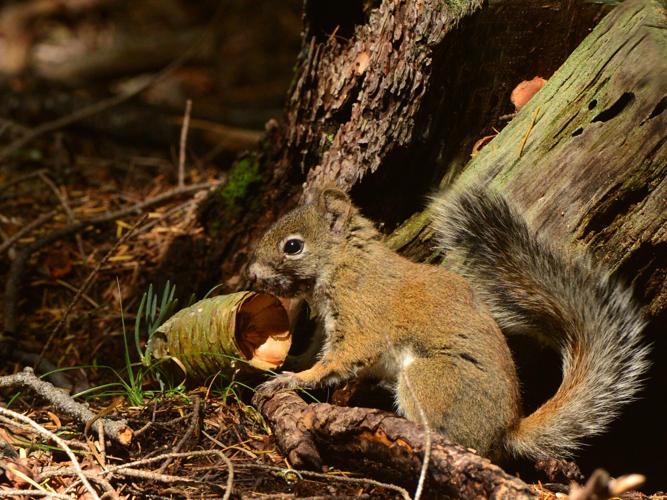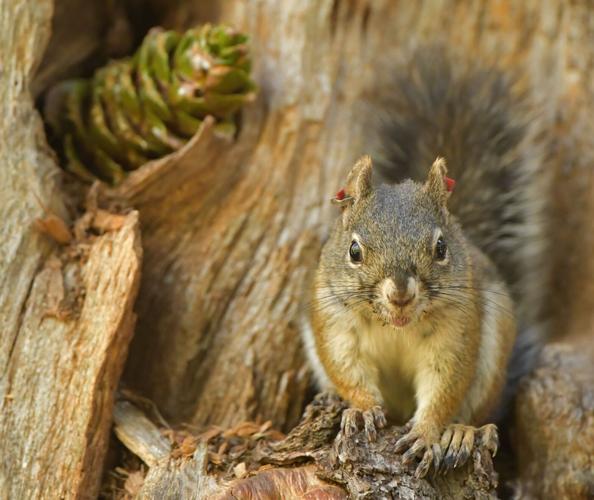
It’s been a tough year, but the Mount Graham red squirrel got through it better than a lot of us did.
The population of endangered rodents held steady in 2025, according to the annual count by state and federal wildlife managers in the Pinaleño Mountains, 150 miles east of Tucson.
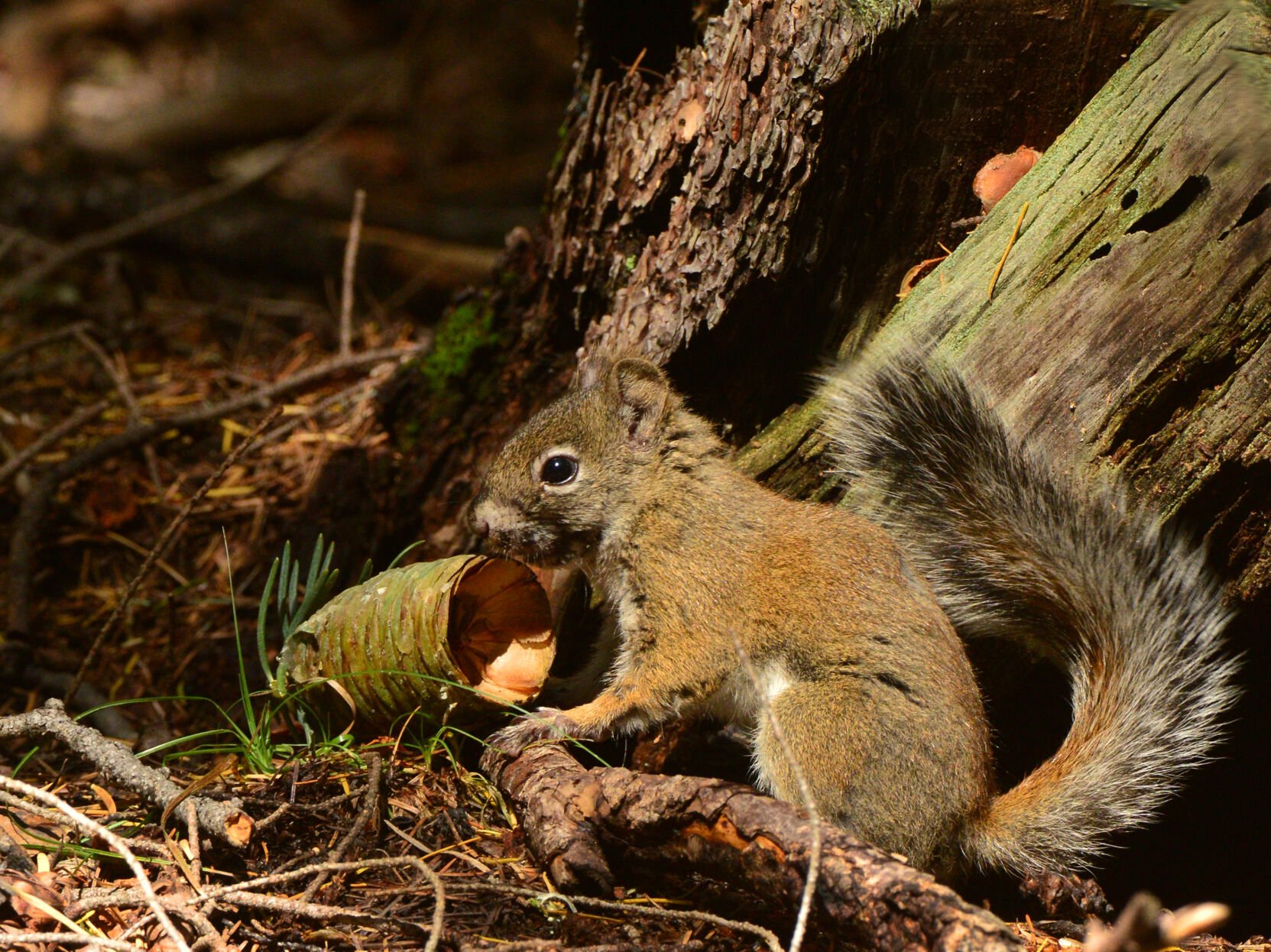
The population of endangered Mount Graham red squirrels held steady over the past year, according to the latest count by state and federal wildlife managers.
The estimate released on Monday showed 232 red squirrels, down just two from the 2024 count, despite unusually dry conditions in the only place on Earth where the subspecies is found.
“After a rough year with little to no winter or spring precipitation, we were pleased to find the population persisting under these conditions,” said Holly Hicks, small mammal project coordinator for the Arizona Game and Fish Department.
People are also reading…

An undated photo shows a Mount Graham red squirrel and a pine cone, the subspecies' main source of food.
The squirrels are monitored by an interagency team that includes Game and Fish, Coronado National Forest and the U.S. Fish and Wildlife Service. The critters are too fast and elusive to track individually, so biologists estimate the overall population by counting the number of conifer-cone food caches, known as middens, that the animals maintain within designated census plots.
Hicks said the plots are designed to “capture the majority of red squirrel habitat in the Pinaleño Mountains, enabling new middens to be detected as they are created.”
It’s not an exact science, though. Last year, for example, the initial population estimate of 233 was later revised upward to 234.

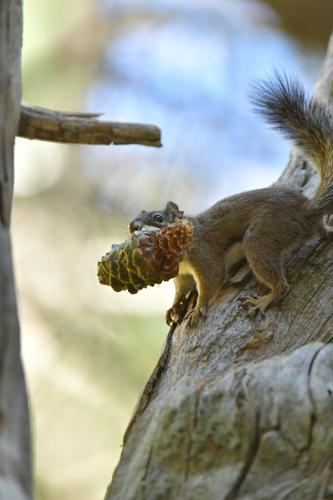
A Mount Graham red squirrel carries a pine cone in an undated photo. The endangered subspecies has seen its numbers rebound since a wildfire in 2017.
The Mount Graham red squirrel was thought to be extinct until it was discovered again in the high-elevation forests of its namesake peak in the 1970s.
Since the subspecies was listed as endangered in 1987, its population peaked at about 550 in the late 1990s, then plunged to just 35 after the 2017 Frye Fire, a lightning-sparked blaze that burned 48,000 acres in the Pinaleños, including about 40% of the census plots.
The population has since recovered to what biologists consider its typical range of between 200 and 300 individuals.
They measure about 8 inches long, with fluffy, 6-inch tails and grayish-brown coats highlighted in orange and yellow. They are highly territorial and have lower reproduction rates than other, similar squirrels.
The primary threats to their long-term survival are habitat loss and a lack of sufficient food due to drought, wildfire, insect infestation or competition from non-native Abert’s squirrels.
“Seeing the population hold steady this year despite the challenging conditions is such an encouraging sign for this endangered subspecies,” said Brittany Garza, the Fish and Wildlife Service’s lead biologist for the Mount Graham red squirrel.
Ongoing conservation efforts include habitat monitoring; collecting, storing and planting conifer seeds; reducing insects to protect trees; and controlling other species that compete with the squirrels for food and habitat.
Scientists at the University of Arizona are conducting research on the life cycle of the subspecies and strategies for augmenting its population.
The Arizona Center for Nature Conservation at the Phoenix Zoo has kept a handful of Mount Graham red squirrels in captivity since 2014 in hopes of establishing a breeding program. Though they have learned a lot about the animals’ behavior and biology over the past 11 years, researchers at the zoo have yet to successfully produce any squirrel offspring.