Rep. Juan Ciscomani and Sen. Mark Kelly have partnered on legislation that would upgrade Chiricahua National Monument to a national park.
The Republican congressman and Democratic senator introduced companion bills earlier this month to elevate the status of the roughly 12,000-acre monument about 120 miles southeast of Tucson.
Sen. Kyrsten Sinema co-sponsored the Senate version of the Chiricahua National Park Act.
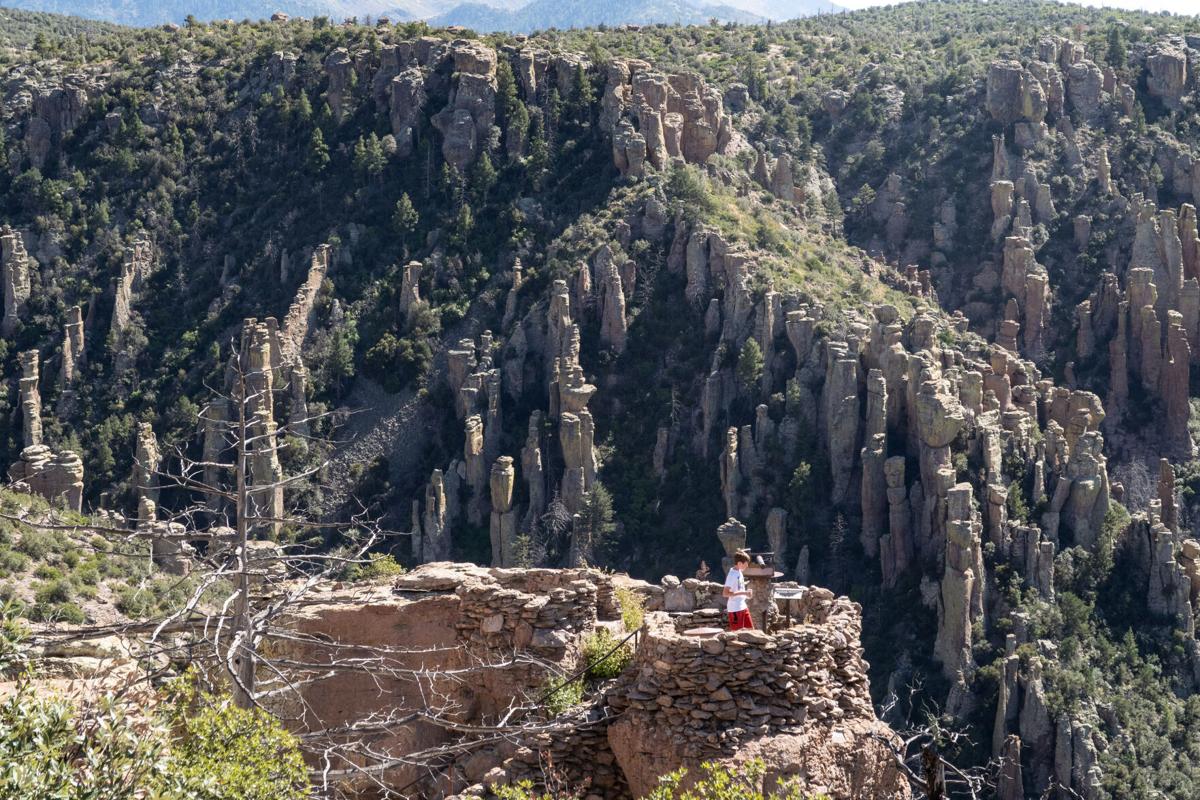
The area in Cochise County features slim columns of rock called hoodoos that attract visitors from around the world. The gray, chimney-like, rhyolitic formations are the eroded remnants of a volcanic eruption 27 million years ago that buried the area under about 2,000 feet of ash. The Chiricahua Apache Indians called it the “Land of Standing Up Rock.”
People are also reading…
“These unique formations draw visitors from across the nation and around the world to our state, and this tourism is an important part of our regional economy,” Ciscomani said in a written statement. “With this legislation, the Chiricahuas will finally receive the designation they deserve. It is long overdue.”
The park and the existing wilderness designated within it would also continue to protect one of Arizona’s most biodiverse sky islands.
“Our bipartisan legislation to designate Chiricahua National Monument as a national park would further promote conservation, boost tourism, and create economic opportunities in Southern Arizona,” Kelly said.
If approved, Chiricahua would become Arizona’s fourth national park, joining the ranks of Grand Canyon, Petrified Forest and Saguaro.
This is not the first time such legislation has been introduced. A grassroots campaign has lobbied for the status change since as early as 2015.

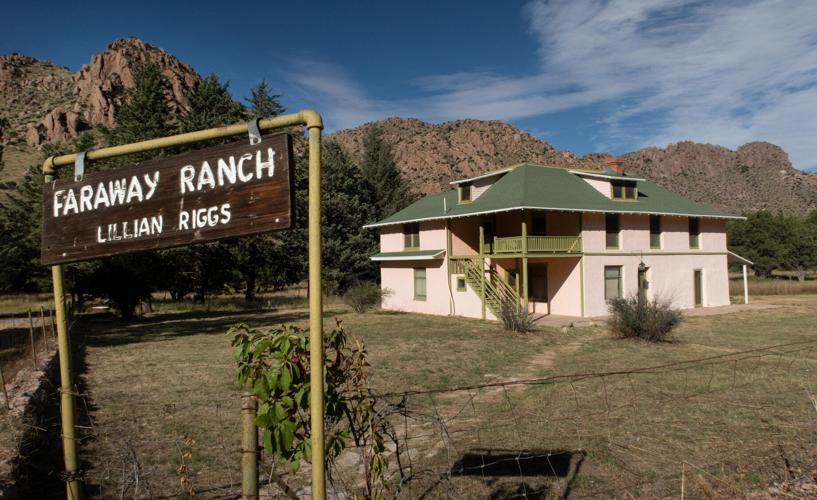
Faraway Ranch was the home of Swedish immigrants, Emma and Neil Erickson, who settled on the 160-acre homestead in the late 1880s. It is now part of Chiricahua National Monument near Willcox, Ariz.
Then-Rep. Martha McSally introduced a bill to upgrade the monument to a park in 2016, but the measure failed to advance. She tried again as a senator in 2019 with the same result.
Kelly and Sinema finally got the bill passed unanimously in the Senate in 2022, but the legislation stalled in the House, as did a related bill from then-Rep. Ann Kirkpatrick.
Kirkpatrick’s version included specific language prohibiting future mining in the park. It also mandated consultation with affiliated American Indian tribes to protect the park’s cultural and religious sites and allowed members of those tribes to collect plants there for noncommercial religious or cultural uses.
President Calvin Coolidge established Chiricahua National Monument by proclamation in 1924. A decade later, the Civilian Conservation Corps began improving the road and building trails and structures there.
Today, the monument includes 25 campsites and 17 miles of hiking trails.
It is unclear if an upgrade in status would increase the budget and staffing for the area, which is already managed by the National Park Service.
Park officials say the wildflowers there rival the 2019 "super bloom."
But communities near the monument, some of which are struggling, welcome the tourism boost the status change could bring. The Cochise County Board of Supervisors and the cities of Benson, Bisbee, Willcox and Huachuca City are all backing the new legislation.
“National Park designation for the Chiricahua National Monument would alert more travelers nationwide to the unique beauty and history of Southeastern Arizona,” said Cochise County Supervisor Ann English, a member of Ciscomani’s Citizens Advisory Council. “For no additional cost, adding this designation would put it on the ‘bucket list’ of park enthusiasts and be a needed economic boon for the area.”
Arizona's National Parks and Monuments

Saguaro National Monument in Tucson was created in 1933, expanded in 1961, and became Saguaro National Park in 1994. There are two units: East…

Fort Bowie was an Army outpost the served as the staging point for the hunt for Apache Indian leader Geronimo. It had a short and bloody histo…

Established in 1937 by Pres. Franklin Roosevelt, Organ Pipe NM in Southwestern Arizona encompasses more than 330,000 acres, much of it wildern…

Chiricahua National Monument near Willcox, Ariz., established in 1924, is a wonderland of standing-up rocks: pinnacles, spires, sheer stone co…

The site protects one of the largest prehistoric structures ever built in North America.

-


- Updated
The Franciscans began work on the mission at Tumacacori in 1800, but the bell tower was never finished. President Theodore Roosevelt proclaime…

Under-the-radar and usually not crowded: The three national monuments easily accessible from Flagstaff – Wupatki, Sunset Crater and Walnut Can…

The Grand Canyon in Northern Arizona was designated a national park in 1919. Along with Yellowstone and Yosemite, it is one of the crown jewel…
WATCH: Mule train supplies remote outpost in Saguaro NP
Watch Now: The Douglas Spring Trail east of Tucson
WATCH: Rangers live at Manning Camp atop Saguaro National Park
WATCH: Fort Bowie National Historic Site
WATCH: The beauty of Organ Pipe Cactus National Monument
WATCH: Chiricahua National Monument
WATCH: Tumacacori, a monumental mission
Eva-Marie Hube is a Univeristy of Arizona journalism student apprenticing with The Arizona Daily Star.