
SIERRA VISTA — The scene on the giant video screen looked eerily familiar to Sgt. 1st Class Lilly Walton, a military-intelligence soldier who spent a year in Iraq.
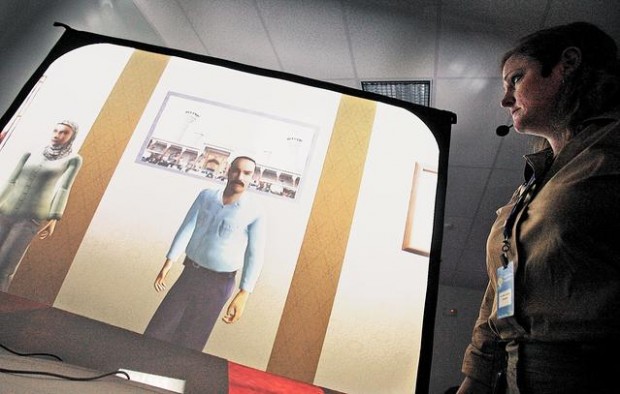
Onscreen, a life-size Iraqi shopkeeper was speaking Arabic and gesturing as he might on any street corner in Baghdad.
Walton faced the screen and asked the virtual shopkeeper if he knew anything about homemade bombs being transported through his neighborhood.
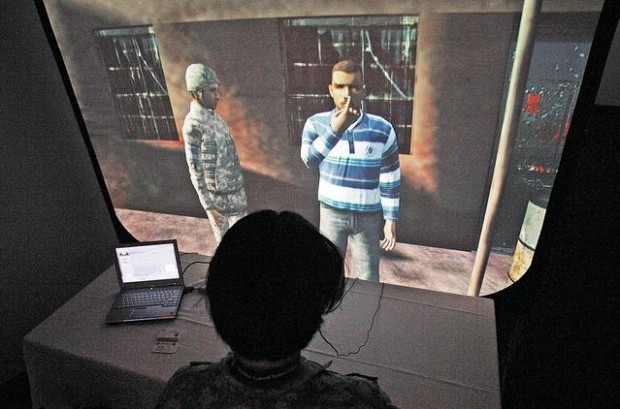
The shopkeeper replied through a virtual translator, a life-size U.S. soldier.
"I want to help any way I can, but I have to do it away from my neighbors' eyes," the shopkeeper said. "We have lost so much. We just want the fighting to be over with."
Moments later, the Iraqi stepped forward and touched his nose — a cultural sign, analysts say, of his willingness to cooperate.
People are also reading…
Walton, 35, said the video exchange is close to what she witnessed in real life while deployed in 2004 and 2005.
"It's pretty incredible," she said, referring to the virtual-reality technology, coming soon to Fort Huachuca, the home of Army intelligence training 75 miles southeast of Tucson.
Army officials have been showing off the setup this week at a cultural-awareness training conference in Sierra Vista.
Testers are putting the finishing touches on the new training system, which aims to sharpen the skills of Army interrogators — or "human intelligence collectors," as the service now prefers to call them.
An off-the-shelf video war game injected with artificial intelligence, the setup is programmed with the speech patterns, dress, mannerisms and taboos common to Iraqi culture.
The 3D avatars are so lifelike that they blink, shrug and turn their heads like real people.
The system also can be programmed to incorporate the front-line experiences of soldiers just back from deployment, allowing troops who are leaving for war to get a quick grasp of the current situation overseas.
The name for the new technology is a mouthful in military-speak: the Intelligence and Electronic Warfare Tactical Proficiency Trainer Human Intelligence Control Cell.
The system, which costs about $56,000 per unit, is expected to arrive for good at the post sometime this summer. A handful of additional systems will go to other posts around the country that are home to Army intelligence units, officials said.
Lt. Col. Cherie Wallace, who is based at Fort Huachuca and oversees the testing and training for new military-intelligence technology, said the new system offers many advantages for troops and for taxpayers.
It's effective, user-friendly and relatively inexpensive, she said. It also has the potential to be adapted to all sorts of other Army uses, Wallace said.
"We think this capability will flourish," she said. "Soldiers will want more of it once they see what it can do."
For Walton, the biggest selling point is the realism it injects into the interrogator's refresher training. Being overseas gave her a firsthand glimpse of how lives are saved when soldiers know the right questions to ask, she said.
Walton said she was part of a 70-vehicle convoy on a road that had been "daisy-chained" with three homemade bombs wired together. Intelligence soldiers got wind of the plan, and she said the convoy was able to travel safely without being hit.
The virtual-reality system allows soldiers to practice questioning in variety of settings: on the street, in a military holding cell or inside a business, for example.
To increase the chance of gaining Iraqi cooperation, soldiers also need to be on guard for cultural pitfalls such as inquiring about the well-being of an Iraqi man's wife, which is considered extremely rude. The virtual translator is programmed to warn interrogators when they stray into that kind of sensitive territory.
General Dynamics C4 Systems of Orlando, Fla., developed the new training system by adapting a video war game called "Far Cry."
A team of software engineers and scenario developers and a graphic artist spent several months turning the concept into reality, said Susan Lansverk, a senior instructional designer for the firm.
Further refinements already are in the works, she said, such as efforts to make the screen characters capable of reactive emotions like fear or anxiety, which can affect the level of willingness to cooperate.
Alan Proffitt a former military-intelligence officer who now teaches computer-engineering technology at the University of Memphis and has a background in artificial intelligence, said it makes good sense for the Army to incorporate virtual-reality applications into intelligence training.
"It's cheaper, and you get a lot better training with the realism it offers," said Proffitt, who spent 28 years in the Army Reserve, about a third of it in the military-intelligence field.
The U.S. military historically has been weak at understanding the mind-set of enemies, Proffitt said. By promoting cultural awareness, the new training system may help change that, he said.
"I think that's the hard part for the Army. We tend to go over there and fight with our machinery and our tactics without a really innate understanding of the psyche of the other guy," he said.
"If we could do that, maybe we could forecast what the other guy will do next. There's probably someone working on that right now."
On StarNet: Find more news on the war in Iraq at azstarnet.com/attack
 Japanese company invests in mine near Mount Lemmon