These pilots, and about a thousand other crews like them, are on the front lines of Ukraine's drive to knock one of Russia's most potent weapons out of the war: the Shahed drone.
"Even if you use 50 drones to shoot down one Shahed, it's worth it," said Borys, 47, commander of the crew, who was a TV news producer before the war upended his life. He asked for his full name to be withheld in line with standard Ukrainian military practice. "One Shahed can fly in and destroy something far more valuable."
The low-cost, long-range attack drones designed by Iran became the scourge of Ukraine. Moscow adapted the design of the Shahed, which it calls the Geran, to include improved navigation and engines as well as larger warheads.
People are also reading…

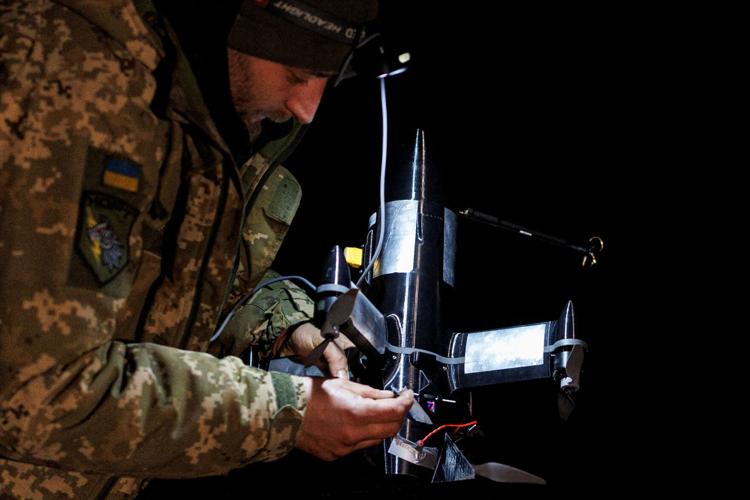
Yuriy, a service member of a air defense unit, prepares a P1-Sun FPV interceptor drone for launch March 18 in Ukraine's Kharkiv region.
While Ukraine downs most Shaheds and other long-range drones, those that get through — more than 1,000 out of about 6,500 launched in March, according to Ukrainian air force data — wrought havoc on military infrastructure, cities and energy facilities, depriving millions of people of heating and lighting.
In February, new Defense Minister Mykhailo Fedorov announced a drive to reach a target of neutralizing 95% of all Shaheds and other long-range attack drones Russia launches. The air force data, compiled by Ukrainian military charity Come Back Alive, shows the interception rate that month was just more than 85%.
With Russia's land campaign slowed to a crawl, Fedorov said tightening air defenses could be vital to Ukraine's ability to survive another year of war.
According to Reuters interviews with Ukrainian officials, manufacturers and soldiers, the campaign is yielding gradual results. Fedorov said April's interception rate went up to 90%.
Reuters couldn't independently verify the data on drone launches and interceptions. The Russian defense ministry didn't respond to a request for comment.

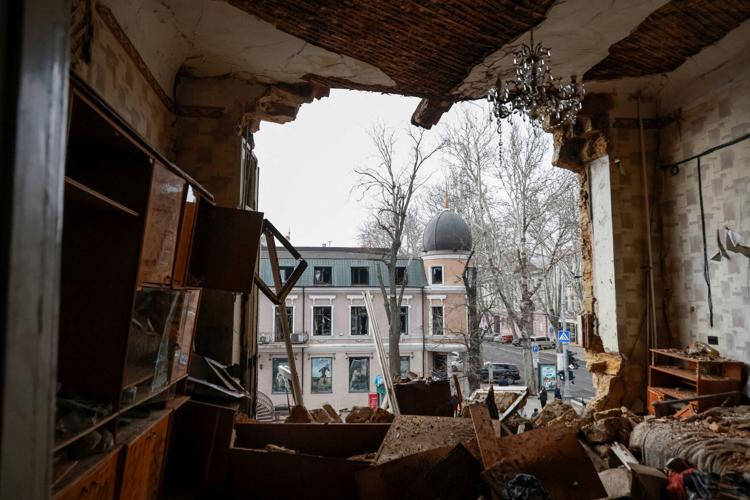
A room is damaged March 19 in an apartment building hit by a Russian drone strike in Odesa, Ukraine.
Moscow denies targeting civilians and said the purpose of its air assaults is to degrade Ukraine's military. Ukraine also fired thousands of long-range drones, also known as unmanned aerial vehicles, at targets in Russia that included energy facilities.
The Ukrainians involved in the interception drive cautioned, however, that getting a nationwide system involving thousands of air defense teams up to speed would take months and gains could prove short-lived in the technological race with Russia.
The first interceptor to destroy a Shahed in early 2025, for example, became ineffective after four months because the Russians realized they could outrun it by increasing the Shahed's speed, according to Taras Tymochko, a specialist in the technology at Come Back Alive.
As a consequence, interceptors — which must travel faster than targets to catch them — had to be upgraded to fly more at more than 180 mph, Tymochko said.
Now, about 15% to 20% of Shaheds that Russia sent are powered by jet engines rather than the usual propeller ones, allowing them to hit speeds of almost 250 mph, according to Yuriy Cherevashenko, a senior commander in Ukraine's air force.
In response, Fedorov said Ukrainian manufacturers are developing jet-powered interceptor drones.

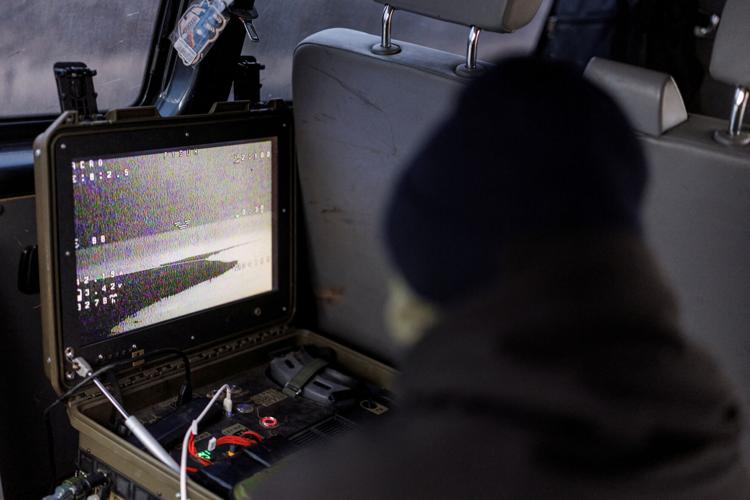
Service members in an air defense unit fly an interceptor drone March 18 in Ukraine's Kharkiv region during a Russian attack.
Battle of low-cost drones
Resembling miniature planes with pointy noses and triangular wings, Shaheds imported from Iran first appeared in Ukrainian skies soon after Moscow's 2022 invasion.
Now, Russia makes thousands a month in its own factories and they make up the bulk of its fleet of long-range drones.
"As Russia builds out more and more of these UAVs, they represent an existential threat to Ukraine," said Samuel Bendett, a senior fellow at the Washington-based think-tank Center for a New American Security. "Therefore taking them down is of the utmost importance."
The costs have not been made public, but U.S. think-tank the Center for Strategic and International Studies estimated last year that the Russian Shahed models cost $35,000 apiece to produce.
By comparison, each Ukrainian interceptor drone costs several thousand dollars, with the cheapest models costing less than $1,500, manufacturers say. They are typically 3D-printed plastic domes containing a brick of explosives and powered by four small propellers.
Soldiers have a window of only a few minutes from the moment a Shahed pops up on their radar before it moves out of range. They must direct an interceptor toward the dot until they spot the Shahed through their drone's camera, then fly at the target and detonate.

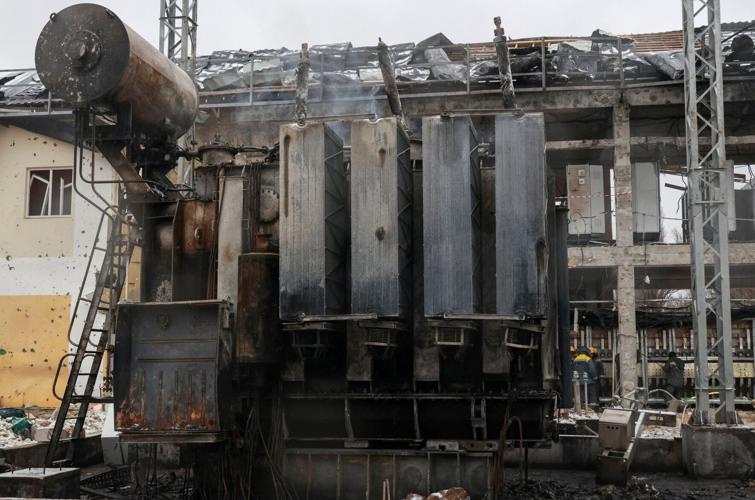
A power substation is damaged Feb. 18 after a recent Russian drone and missile strike in Odesa, Ukraine.
Being able to spot a target highly depends on the weather, but Fedorov said Ukraine is working on automated drone guidance systems to be more effective in adverse conditions.
Swarmed by more than 500 drones some nights, Ukraine quickly developed a nationwide, multilayered system to down drones with equipment including electronic warfare, interceptor drones, pickup trucks with heavy machine guns, helicopters and fighter jets.
Interceptor drones now down 40% of Russia's Shahed-style weapons and other long-range attack UAVs, according to Cherevashenko, up from about 25% in winter.
Cherevashenko said one of the major challenges was Russia's use of artificial intelligence to create fresh approaches and flight plans, making it hard for Ukraine to keep up.
He also highlighted the use of "mesh networks," or groups of drones that act as signal transmitters to one another, allowing them to defeat Ukrainian navigation jamming.